Summarize this article in:


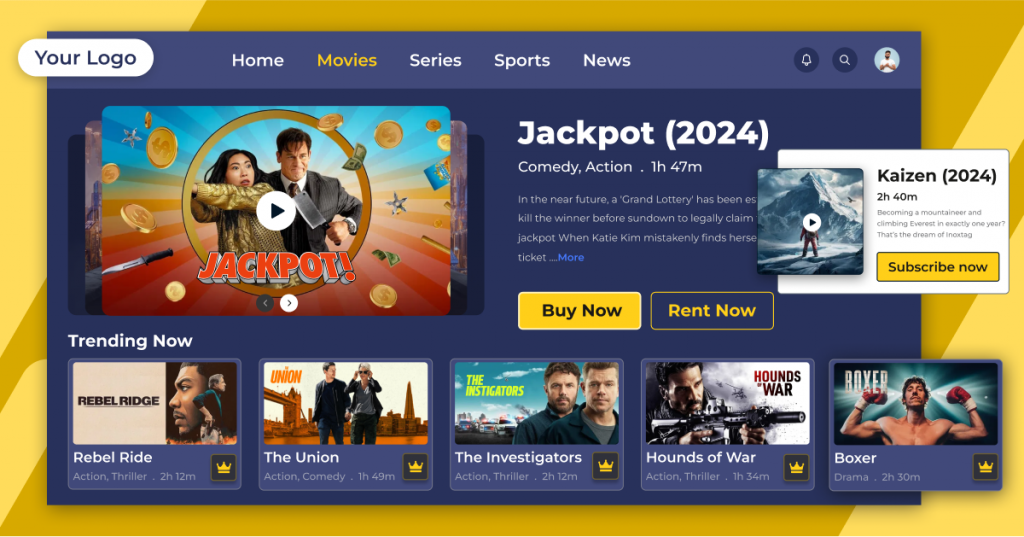
In this article, you will learn about how to make money with videos, 15 proven ways to monetize your videos, and its use cases. Additionally, it discusses key characteristics that should be considered in a platform to maximize revenue.
The video monetization industry is booming, and everyone is wondering how to make money with videos online. Indeed, by 2030, the industry is projected to generate $20.13 billion, while 90% of the Internet population will be consuming online video content.
With the number of options available, it’s easy to get lost in jargon. You might ask yourself if you should monetize with ads, create a subscription streaming service, or sell content on a pay-per-view (PPV) model or hybrid monetization.
So let’s put aside all those buzzwords and take a closer look at how to monetize video content that will last beyond the first few weeks. This blog will detail 15 different ways to make money with videos and who can make money based on use cases. Let’s get started.
What is Video Monetization?
Video monetization is the process of generating revenue from video content by turning video views into revenue per video using various video monetization models. It turns your videos into money-making tools for your business.
Typical revenue sources include subscriptions, advertising, pay-per-view, and sponsorships. The key to a successful video monetization strategy is to select your target market, content distribution plan, and monetization methods that work for your content and business objectives.
- Fully Customizable
- Lifetime Ownership
- On-Premise/On-Cloud
- 100% White-label
- Zero Revenue Share
- Hire Developers
Who Can Make Money With Videos?
The answer is simple: Video monetization can be profitable for anybody who is interested in video marketing. Here is a clear breakdown.
Content Creators
This is the most prominent group that consists of vloggers, gamers, and influencers. They earn money from ads on their platform, brand sponsorships, and merchandise. Growing a loyal audience is crucial for them to get regular video revenues.
Educators & Course Creators
Teachers and experts can turn their knowledge into cash with online courses and membership sites. They create subscription-based platforms with tutorial video content and educational information, which offer a steady income.
Fitness Trainers
Fitness instructors are not confined to the gym today; they’re providing workout videos and fitness challenges through on-demand video apps. They offer real-time streaming classes and exclusive content to paying members, leveraging their expertise to build a successful video business.
Broadcasters & Media Companies
The traditional broadcasters and the media houses are pushing their boundaries by establishing digital video platforms. They use AVOD (Advertising Video on Demand) and SVOD (Subscription Video on Demand) platforms to provide content globally. This helps monetize current content libraries as well as create new, exclusive digital content.
Sports Organizations
Whether it’s a local football club or a worldwide sporting brand, there are a massive number of sports organizations developing live streaming platforms for sporting events and exclusive behind-the-scenes material. They sell their video footage using Pay-Per-View (PPV) events, sponsorships, and premium memberships for their fans.
Churches & Religious Organizations
Faith groups are taking advantage of live streaming to reach their congregation around the globe. They earn money from tithes, donations, and virtual events, fostering a community and financial support for their mission with video monetization.
Small & Medium Businesses
Video is a sales tool that can be used by any business. Whether you are providing product demonstrations, customer feedback, or “how-to” guides, video can help you build trust with your audience and convert them into customers. They can even create their own subscription video-on-demand platforms for specific training or exclusive videos for clients. As long as you have valuable content and an audience that is interested in it, you can make money from videos.
- SVOD: Unlimited access to the library (e.g., Netflix)
- TVOD: pay-per-view of individual courses or rentals
- AVOD: Free content, fully supported by video ads
- PPV: One-time tickets for special, live events
- Hybrid: Combines ads, subscriptions, and transactional tiers into one
- SSAI: Overcomes ad blockers by stitching ads at the server side
- CSAI: Adds interactive ads in the media player
- Sponsorships: Allow brand partnerships to be placed natively
- Affiliate Marketing: Commission made through link placements in descriptions
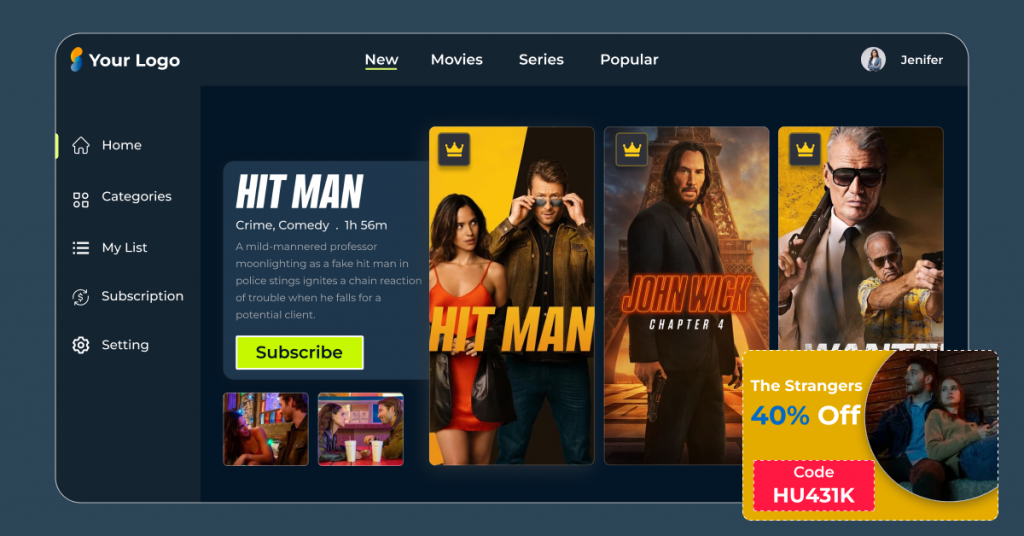
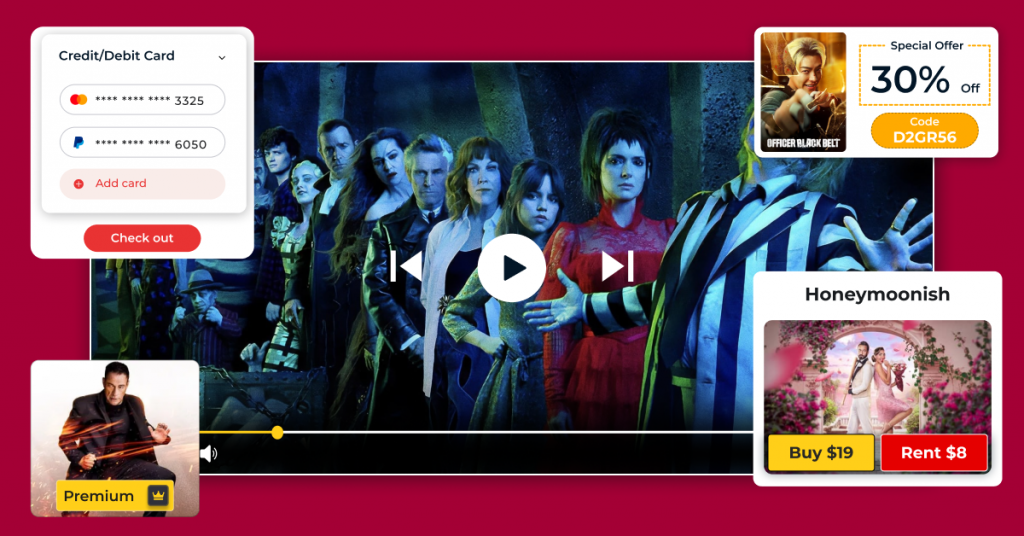
- Coupons & Promotions: Strategic discounts to convert hesitant viewers
- Catch-Up TV: Watch reruns of linear TV shows at a later time
- In App Purchases: Accessing content through a mobile or TV app store
- Third-party ads: Generating additional income with third-party ad networks
- Freemium: Free basic service plus a premium service for additional costs
- Video Paywall: High-value content that needs to be purchased for viewing
How to Make Money With Videos in 2026? 15 Proven Ways to Monetize Videos
No matter what type of videos you create or own, there are various ways that you can monetize videos (and earn consistent revenue!).
1. Subscription Video on Demand (SVOD)
SVOD enables people to subscribe to your library for a monthly or annual subscription. Ideal for creating a steady income and a Membership Site with content available only for members. Examples of this include Netflix or Disney+. In 2025, SVOD stood as the top market leader in the VOD market with a share of 58.3% according to Global Market Insights.
The best approach to this paywall is to have multiple paywall levels, meaning multiple subscription costs and content. For instance, with Netflix pricing, you may possibly acquire different prices depending on the screen size and video quality (HD/UltraHD).
Flexible Plans: Give monthly, quarterly, or yearly plans as per user requirements to reduce churn.
Value Proposition: Make sure to have the value of each tier (standard access to archive vs. early access to premiums).
Start Building Your SVOD Platform
Planned to start a subscription service, now start to build a Subscription video on demand platform with advanced monetization and content management capabilities.
2. TVOD (Transactional Video on Demand)
Provides viewers with the option to rent the content (helpful for movies, events, or special tutorials). A low-cost and low-entry-barrier model. You can start out just with one high-quality video. It is an ideal approach to sell videos online without a vast video library. A TVOD can be used to monetize your live stream or exclusive premiere.
Turn Your Streaming Vision Into Reality
Take the next step toward launch by exploring a Transactional video on demand platform with advanced monetization and content management capabilities.
3. AVOD (Advertising Video on Demand)
AVOD is an ad-supported free content model, and the global AVOD content market is expected to reach over $20 billion by 2031. With this model, you can build a big audience base in a short period of time without needing to introduce a paywall. That’s what YouTube, Tubi, and Pluto TV are doing. AVOD supports pre-, mid-, and post-roll video advertising monetization and offers access to AVOD platforms in order to maximize fill rates.
| Ad Placement Type | Strategic Benefit | Industry Insight |
| Pre-roll video ads | Is shown at the beginning of the video, resulting in better visibility | It is widely used on the most popular platforms |
| Mid-roll ads | Higher completion rates | Unlike the situation with pre-roll ads, viewers are in the stream when mid-roll ads play, meaning that they are more likely to watch the ads |
| Post-roll ads | Non-intrusive | Plays at the end of the video and sustains more completion rates |
Quality over Quantity: Customers will be put off by too many advertisements in the video. A balance between monetization and the entertainment of viewers is crucial.
Turn your streaming vision into a deployable product with an Advertising Video on Demand Platform.
4. PPV (Pay-Per-View) / Premium VOD
The model is appropriate for the events that cost more, like a sporting event, a concert, or an exclusive webinar where the viewers are paying to watch once, and you don’t intend to offer them the opportunity to watch again. This is ideal for high-quality content and time-sensitive information.
If you’re serving the most exclusive releases, then use premium video on demand. The most popular PVOD is UFC on ESPN+, which allows fans to subscribe and watch UFC on TV live.
5. Hybrid Monetization
Combines SVOD, TVOD, and AVOD models into one platform. Ad-supported free trial (AVOD), premium subscription (SVOD), and special event access (PPV). This is the “flexible approach” (or HVOD) that is aimed at earning money from several audiences simultaneously.
SSAI (Server-Side Ad Insertion)
6. SSAI (Server-Side Ad Insertion)
SSAI sends an ad directly to the server where it seamlessly inserts itself into the online video streaming, preventing buffering. This allows them to avoid ad blockers, enabling you to monetize your ad inventory and ensuring a positive viewer experience.
7. CSAI (Client-Side Ad Insertion)
CSAI places the ads dynamically in the player/browser. This will allow for smart targeting of viewers’ data and will provide real-time ad performance insights. For maximum filling, you can make use of third-party ad integration.
8. Sponsored Content & Brand Sponsorships
There are direct sponsorships, which are when a brand will sponsor your work, and it will be a part of your posts. These Brand Sponsorships are negotiated directly with you, and are not the same as traditional ads, as they give you control over pricing and creative integration.
Sponsored content integrates an advertiser’s message into a video within the brand’s regular programming, thus avoiding any traditional ad blocking. Creators must be honest and ethical when signing a paid partnership. A great example is the disclosure labels found on YouTube – for instance, the labels used to mark paid promotion.


9. Affiliate Marketing
You can make money with the products or services you’re marketing in your videos and by placing affiliate links. No need to design and make products. Match people’s needs to what you have. It’s a frictionless way of selling a line of products or merchandise without making an upfront investment in inventory or any complex logistical arrangements.
10. Coupons & Promotion
This is providing short-term discounts and promo codes to encourage viewers to convert. This approach can help grow subscribers, improve engagement, and help to drive revenue during slow periods.
11. Catch-Up TV
It is mainly used by traditional broadcasters to enable viewers to access shows that have already been broadcast. You’ll not only be able to get more play time for your content with this, but you’ll also be able to monetize replays just like you do premieres.
12. In-App Purchase
Native video app deployments for iOS, Android, or Smart TVs deliver in-app purchases directly within the app. This will enable viewers to access the exclusive bonus content, individual episodes, or virtual merchandise conveniently via the device’s in-built payment gateway.
13. Third Party Ad Integration
This means that you will need to link with multiple other ad networks in order to get better ad fill rates and targeting power. This will make sure that you’re always presenting the most relevant and profitable ads to your audience. Make use of third-party ad integration for better optimization of your video content management system.
14. Freemium Model
This is a great way to engage customers with free, basic content and then upsell them to premium tiers with more exclusive access, advanced features, or ad-free viewing options. This reduces the entry costs and provides an upgrade path.
15. Video Paywall
A video paywall is a tool to restrict access to premium videos behind a paywall. Ideal for high-value content, live events, or gated zones in a larger, free platform. A video paywall can be used to control access to your most important video content.
How to Choose a Platform to Monetize Video Content?
The key to selecting the right partner is evaluating architectural skills, which affect your bottom line. Make sure your platform offers these must-haves:
- 10+ Hybrid Monetization Models: It needs to be compatible with a variety of revenue models, not just SVOD and AVOD, so you can develop custom hybrid models to maximize revenue on each audience segment.
- Studio-Grade Security: Multi-DRM integration, dynamic watermarking, and secure access tokens are essential for protecting high-value premium content from piracy.
- Robust Video CMS: A centralised video content management system is essential for easy bulk uploads, automatic transcoding, and smooth video metadata scheduling.
- 100% White-Label Customization: To create real brand authenticity, the infrastructure needs to provide the option to strip away all the third-party branding, granting you 100% control of the player UI and web/TV apps.
Enterprise solutions such as VPlayed are designed to meet every single one of those requirements exactly – if you want to keep 100% of your revenue with a zero-revenue-share approach while also ensuring you enjoy maximum security, monetization flexibility, and complete brand ownership.
Different Platform Categories to Monetize Your Videos
Understanding monetization models is just the first step. Executing those models requires choosing platforms that support your strategy while balancing factors like audience reach, revenue share, technical control, and operational costs.
1) Social Video Platforms
Social video platforms like YouTube, Facebook, and TikTok represent the most accessible entry point for video monetization. However, social media video monetization operates primarily through revenue-sharing arrangements.
Some popular revenue-sharing programs are:
1) YouTube’s Partner Program
2) TikTok Creator Fund
3) Facebook Content Monetization Beta
Social video platforms work better for audience building, content idea generation, and passive income from your videos. Blend the social media reach with your own online video platform to engender a resilient, sustainable creator business.
2) Video On Demand (VOD) Platforms
Unlike social video platforms, VOD platforms support multiple monetization models simultaneously. You can offer SVOD subscriptions for your content library, sell individual videos via TVOD, and implement PVOD early-access windows, either in a standalone model or a hybrid model.
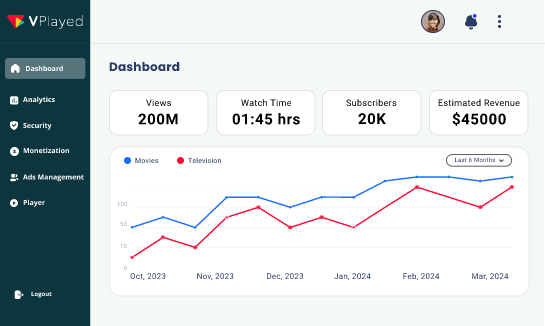
VPlayed, a white-label VOD Platform, seamlessly integrates 10+ monetization models into its infrastructure and content workflow. Most importantly, the platform allows you to retain 100% of the generated revenue, eliminating the need for any revenue-sharing arrangements.
Start Building Your Video Platform
Turn your streaming vision into a deployable product with an Video on Demand Platform.
3) Membership & Fan-Support Platforms
If you’re interested in diversifying income from your videos, you can deploy membership videos. Strive to create exclusive content that helps you build long-term relationships while generating ample revenue.
Take Patreon, for example, which empowers creators with membership features to turn casual visitors into loyal membership/subscription holders.
While you can start off with Patreon, it is advisable to launch your exclusive membership video platform with integrations for Discord, X (formerly Twitter), and website embed for effective membership management.
4) Educational & Course-Based Platforms
Leveraging your expertise while searching for how to make money with videos is the right thing to do. For that, educational course-based platforms play a vital role, allowing students and learners to access video on demand from anywhere at any time.
You can offer a one-off virtual masterclass (for instance, how to master content creation), slash tiered pricing on your content library, or build an e-Learning course platform that offers extensive courses with LMS integration.
Launch your Educational streaming platform with a solution built to simplify deployment and accelerate time-to-market.
5) Sports Streaming Platforms
From PPV events to subscription-based access and sponsorship integrations, sports streaming platforms open up multiple revenue streams for content owners and broadcasters. In addition to event broadcasting, sports streaming platforms offer interactive features like live chats, highlights, and multi-angle viewing that enhance fan engagement and boost viewership.
Take the First Step Toward Platform Launch
Build a feature-rich sports streaming platform with infrastructure designed for performance and monetization.
Conclusion: Making Money with Videos
The key to making a simple video library a successful income generator is selecting the correct framework from these 15 choices. You can deploy pre-roll video ads, set up a strict video paywall, restrict high-ticket events using pay-per-view video, and create a video-on-demand website; the point is alignment. The monetization strategy should align with your target audience’s behavior and overall business objectives.
Don’t let technical jargon slow down your execution. Stick to your specific scenario, take advantage of a solid video content management solution, and begin to monetize your creative content and start a profitable business now.
- Request Demo Book a Live, Personalized Demo
- Contact Sales Reach Out to Our OTT Experts
Frequently Asked Questions (FAQ):
1. What Is Video Monetization?
Video monetization is making money by monetization models and inserting ads in the videos shared in the VOD platform. You can utilize different monetization models like advertising, subscriptions, one-time transactions or through coupons & promotions, to monetize your videos.
2. What Are The Benefits Of Video Monetization?
One major benefit is to earn money through various streams and other benefits include
* Quick Return on investment
* Accessible on every device
* Increased audience base
* Increased social and brand awareness
3. How Do You Monetize Videos?
To monetize videos online, identify your niche, understand your audience, choose the right monetization models, customize and build Your Own VOD Platform and look for external Monetizing Opportunities like affiliate marketing and merchandise selling within the platform.
4. How to Choose Video Monetization for Your Business?
To select the best video monetization model for your business, start with understanding your target audience, invest in different monetization plans like ads, subscriptions, pay-per-view, sponsorship and analyze the video viewing habits and content’s nature to invest in the right content in the market.
5. What Are the Common Methods of Video Monetization?
Common video monetization methods are advertising, pay-per-view, merchandise sales, sponsorships, live sales, affiliate marketing and tipping.

Senior Analyst specializing in Online video platforms, OTT, VOD, and white label video streaming solutions. Expert in analyzing industry trends, technologies, and monetization strategies to help businesses optimize their streaming services. Passionate about innovation and the evolving digital video landscape.