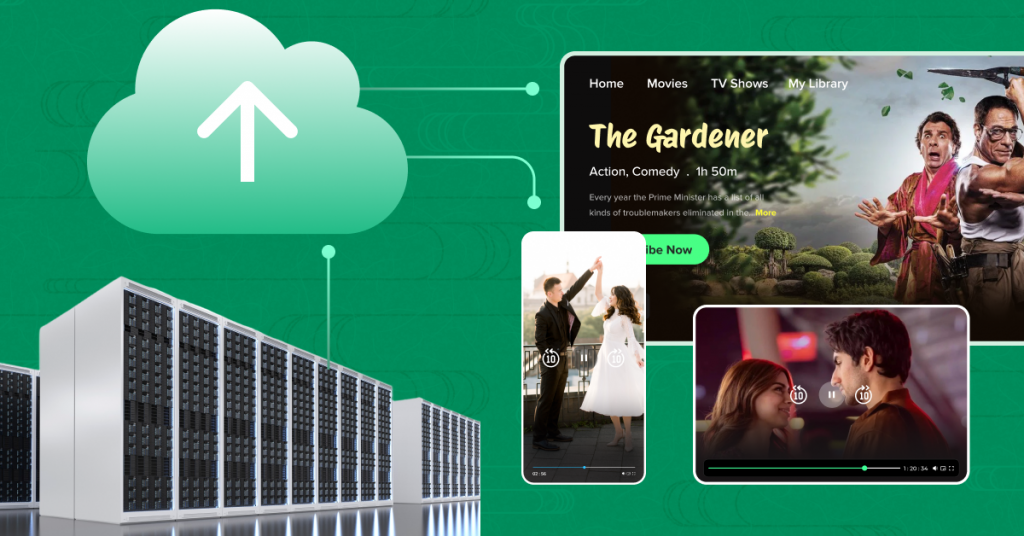
- Cloud streaming is a technique for streaming video over the cloud rather than on-premise servers or hardware-based systems.
- This blog will outline the concept of cloud streaming, its benefits for businesses, and its significance for scalable and reliable video streaming in 2026.
- It also details the important features to consider when selecting a cloud video streaming platform, such as security, monetization, analytics, scalability, AI features, and multi-cloud compatibility.
Popular cloud providers like Amazon Web Services (AWS), Google Cloud Platform (GCP), and Microsoft Azure now power streaming (both live and VOD) use cases. Content owners, broadcasters, and media enterprises can distribute content worldwide without any hiccups. Verified Market Research forecasts cloud video streaming to reach USD 29.46 billion by 2032.
If your content workflows involve delivering it over the internet, chances are cloud infrastructure is already a key part of your system. That’s why it’s all the more important for you to stay updated on cloud-based video delivery in 2026.
This blog takes a straightforward approach to elucidating cloud streaming: how it works, what the advantages are, and the ideal features of a cloud streaming platform.
What is Cloud Streaming?
Cloud streaming is an infrastructure that delivers content (video, games, audio) from remote servers to devices over the Internet. Instead of downloading or saving files locally on the devices, cloud infrastructure enables instant on-demand access to content on any device.
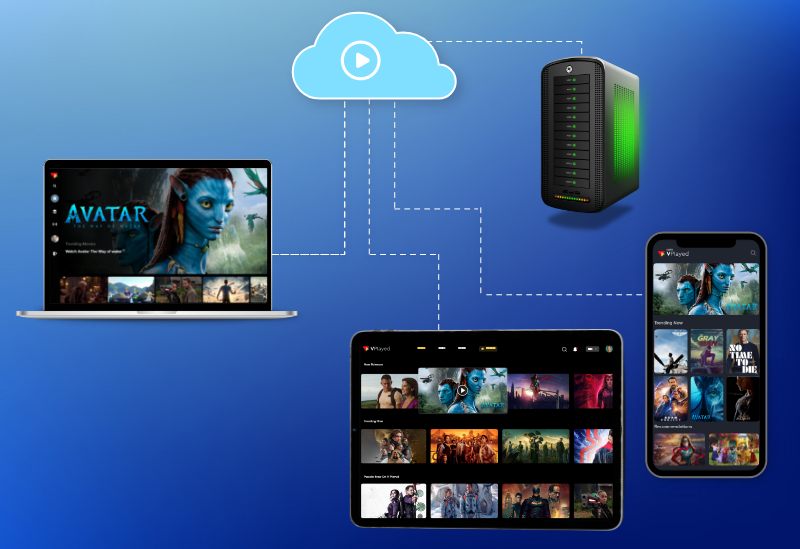
Unlike hosting content on premises, cloud remote servers encode and transcode the uploaded raw video files in various formats according to viewing preferences. But what differs the cloud streaming from traditional streaming is that it reduces the latency and eliminates the need to download video files on devices.
For instance, a cloud TV platform leverages cloud computing to deliver TV content and apps over the internet. You can also use a FAST channel platform to stream free, ad-supported shows on the cloud. This fundamentally shifts the computational burden from traditional networks to centralised server networks.
- Fully Customizable
- Lifetime Ownership
- On-Premise/On-Cloud
- 100% White-label
- Zero Revenue Share
- Hire Developers
How Does Cloud Streaming Work?
Cloud streaming relies on a distributed streaming architecture that processes, stores, and delivers video content through cloud infrastructure rather than local servers. This setup allows content owners and broadcasters to stream video across locations and devices. The process can be understood through the following steps:
1. Upload & Ingestion: Cloud streaming begins when a content owner uploads the raw video content to a video CMS software, where it enters the cloud video pipeline for further processing.
2. Encoding & Transcoding: Then, raw video files are subjected to encoding and cloud transcoding, which converts them into multiple formats and resolutions. This step ensures the multi-device compatibility factor, as video content can adapt to different devices, screen sizes, and network conditions.
3. Adaptive Streaming: Now, the video is packaged using adaptive streaming protocols such as HLS and MPEG-DASH. These protocols ensure that the video player only requests small chunks of video rather than a single large file.
4. Distribution (via Cloud): The packaged video content is distributed through a content delivery network (CDN), which leverages Edge servers to host and distribute video segments closer to the viewers.
5. Playback: When a viewer plays the video, the video player requests video segments from the nearby location. The player dynamically switches between quality levels to maintain smooth playback, completing the end-to-end content delivery workflow.
All these steps operate within distinct cloud deployment models. These include private, public, multi-cloud, and hybrid cloud environments. The goal of this cloud architecture is to help video streaming businesses optimize their operations and innovate at scale.
What Are The Advantages Of Cloud Video Streaming?
Cloud video streaming offers significant advantages like scalability, global reach, and flexibility by leveraging geographically distributed servers. This enables on-demand access from any device with smooth and uninterrupted playback. There is much more to the beneficial angle of cloud video streaming, starting with:
1. Scalability & Flexibility
Consider an enterprise conglomerate hosting a live product launch streamed to a global audience. Viewer traffic is unpredictable, with traffic often shooting up. An online video platform built on cloud infrastructure automatically provisions resources through auto-scaling, enabling effective traffic spike handling without manual intervention. As demand rises, elastic scaling ensures additional compute and bandwidth are allocated instantly using on-demand infrastructure.
2. Cost Savings
Unlike on-premise hosting, which requires a massive upfront investment (mostly on purchasing and maintaining physical servers), cloud video streaming operates on a pay-as-you-go pricing: you pay for the resources you consume. This results in reduced CapEx (Capital Expenditure) and allows broadcasters to divert investment to essential services.
This model benefits video streaming businesses with fluctuating demand, as they can allocate cloud resources based on traffic inflow.
3. Global Reach & Performance
Cloud video streaming relies on global servers rather than localized infrastructure. This means cloud-based platforms distribute video closer to viewers, resulting in faster content delivery. It also makes it easy to run a live linear channel that broadcasts 24/7 without buffering.
Video delivery is further amplified by the use of CDN nodes and strategically placed edge locations. As these nodes store video content near the end users, the data now travels a shorter distance (than what it usually does), thereby minimizing latency and delivering smooth playback. This helps media companies and broadcasters reach international audiences without any complexities.
4. Accessibility & Device Compatibility
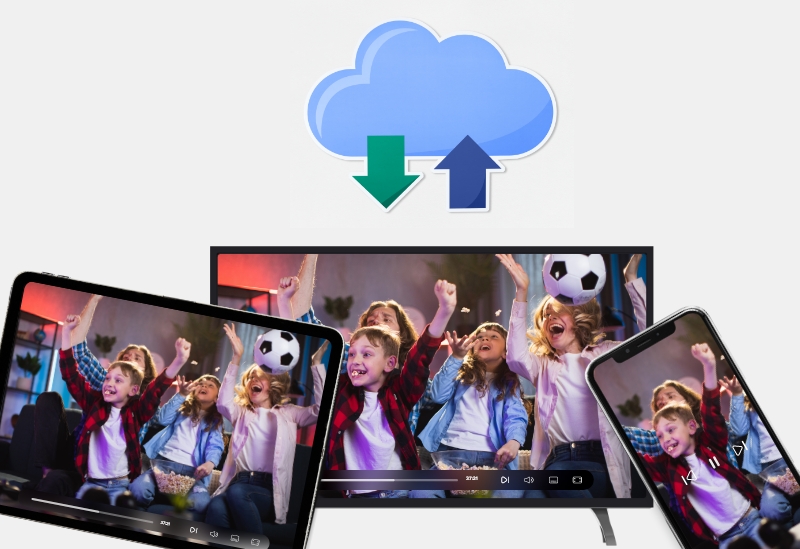
Cloud video streaming supports cross-platform streaming across different devices and operating systems. With device-agnostic video streaming, businesses can deliver a consistent viewing experience without needing separate workflows for each device type.
An enterprise delivering internal training videos to a distributed workforce can use cloud video streaming. Employees may watch on-demand training sessions on smart TVs in conference rooms, continue learning through mobile apps while commuting, or access content via web browsers on desktops.
5. Reduced Operational Burden
Unlike on-premises video hosting, which typically requires dedicated teams to manage servers, storage, networking, and ongoing maintenance, managed streaming services shift these responsibilities to the cloud playout.
On the other hand, media-tech enterprises implementing managed streaming services experience a 20% reduction in operational costs. This approach coaxes media enterprises and broadcasting companies to focus on content creation, platform optimization, and business growth rather than infrastructure management.
6. Faster Deployment
Cloud infrastructure can leverage pre-configured environments and SaaS deployment models that reduce setup time. This enables a quick go-to-market, allowing teams to focus on content and user experience rather than backend complexity.
With the cloud scalability and video streaming server in place, content creators can go from configuration to platform launch within a few days. This rapid platform launch is an invaluable asset for streaming businesses responding to market opportunities.
7. Enhanced Security
As cloud infrastructure is increasingly centralized, security controls can be applied more consistently and at scale. Cloud video streaming platforms support secure video streaming by implementing standardized protection mechanisms across the entire delivery pipeline. Technologies such as DRM (Digital Rights Management), AES video encryption, and secure token authentication are centrally managed, reducing gaps that often arise in fragmented or on-premises environments.
8. Smooth User Experience (Ux)
Interrupted and clunky playback can result in an annoying user experience, whereas smooth and reliable playback can yield a smooth, uninterrupted viewer experience.
This experience is enabled through Adaptive Bitrate Streaming, which allows the HTML5 video player to switch between different quality levels. As a result, viewers experience consistent playback with minimal buffering, leading to higher engagement and retention.


What Features You Should Look For in Cloud Video Streaming Platform?
A cloud video streaming platform’s core features include cloud transcoding, unlimited cloud storage, real-time analytics, and mobile compatibility for broad access. Other relevant features focus on keeping users engaged (AI Streaming-powered recommendation engine, interactivity tools, cross-platform support) and generating revenue (multiple monetization models).
1. Content Management and AI Tools
Built-in content management capabilities allow businesses to upload videos, apply metadata, and categorize libraries. Many platforms now incorporate AI capabilities for content tagging, thumbnail generation, and basic moderation. These tools improve searchability by automatically generating metadata and making video libraries easier to navigate for users.
Moreover, cloud platforms often support live-to-VOD recording, allowing live streams to be automatically captured, stored, and made available as on-demand content.
2. Security and Compliance
Security and compliance are the cornerstones of cloud video streaming platforms. For instance, these platforms use Digital Rights Management (DRM) to control how video content is accessed, viewed, and shared. DRM enforces rules around playback permissions, device limits, and content availability, helping prevent unauthorized distribution.
To protect and monetize videos, leverage cloud platforms with AES-256 encryption to secure video files (in transit) against interception. Single Sign-On (SSO) integration simplifies authentication while eliminating the need for multiple login systems.
3. Monetization and Engagement
Cloud-based streaming platforms support multiple monetization models, starting with the flexibility of pay per view, recurring revenue from subscriptions, unsolicited token of affection in the form of donations, and many more options.
In-video ad insertion enables ads to be displayed before, during, or after video playback. This allows content owners to monetize video content without disrupting the overall user experience.
4. Scalability and Integration
Cloud video streaming platforms are built on a cloud-native architecture that ensures dynamic allocation of resources like compute, storage, and bandwidth. What differs cloud video streaming from an on-premise model is that cloud capabilities allow you to integrate video streaming directly into existing websites, applications, or workflows. There is no need for complex and intensive resources to integrate (like on-premise)!
5. Advanced Analytics and Insights
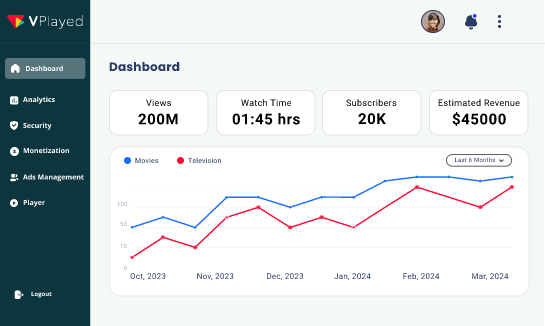
Media enterprises and broadcasters get access to real-time analytics that help them monitor the content performance, with metrics like viewer counts, watch time, and playback quality. Together, analytics and continuous support enhance reliability and operational confidence for businesses using cloud video streaming platforms.
6. Multi-cloud Architecture
A multi-cloud architecture allows cloud video streaming platforms to operate across multiple cloud providers rather than relying on a single vendor. This approach helps organizations avoid single vendor dependency, reducing the risk of service disruption, pricing constraints, or platform lock-in over time.
By distributing workloads across different cloud environments, businesses can enhance resilience and improve availability. If one provider experiences outages or performance issues, streaming services can continue operating through alternate cloud resources.
Conclusion
Cloud streaming offers unparalleled scalability, effective resource allocation, and cost efficiency. Having said that, cloud capabilities can be an expensive proposition when not used with calculated measures. Its impact is spread across video streaming verticals, from media enterprises to independent content creators, and broadcasters to production houses.
As outlined in this blog, cloud streaming combines technical capabilities such as adaptive delivery, security controls, analytics, and multi-cloud resilience with business advantages like faster deployment, cost efficiency, and improved user experience. At the same time, it addresses modern requirements around scalability, compliance, and cross-device accessibility.
Cloud streaming makes it much easier and cheaper to run your video business without buying heavy physical servers. If you are ready to start your own broadcasting business, you can create an online TV channel right in the cloud
Your cloud streaming journey begins with a single step, which is to seek a white-label video streaming platform (like VPlayed). Embrace the cloud capabilities and unlock a world of possibilities for your video content and revenue.
- Request Demo Book a Live, Personalized Demo
- Contact Sales Reach Out to Our OTT Experts
Frequently Asked Questions (FAQ):
1. What Is A Cloud Video Platform?
Video streaming in an online platform assists to stream & store data of any type in the cloud. A cloud streaming service will let host video, deliver it whenever you want at reliable means. Some of the popular cloud video streaming services include Netflix, Hulu, etc. You can let your videos be scalable and be the best fit for any audience across web, mobile & TV screens.
2. Why Is Cloud Video Streaming Beneficial For Business?
By scaling on cloud streaming platforms you can get a chance to increase the bandwidth of media playbacks that tends to provide better video streaming performance in addition to viewing experience. Also another advantage that most enterprises get is with network capacity of handling video streaming due to heavy traffic. That’s where streaming on cloud is found as the best resolution to monetize effectively.
3. How To Choose The Cloud-Based Video Streaming Solution?
It is necessary to find a cloud-based streaming provider who can assist you to have specific streaming workflow where your business needs are met appropriately. Some of the essential components include: customizabilty at maximum level, see if it provides multi-device support across major platforms, in-built video player, robust CMS to manage assets, get to grab special insights from the centralized dashboard in order to understand audience viewing trends & much more.
4. What To Look For In Top Cloud Video Streaming Platforms?
In the cloud video streaming market there are key features which can help users to seamlessly share their content with the world. Some of them comprise of: livestream recording where viewing isn’t compromised at any time when it comes to quality, HTML 5 video players are compatible across devices, virtual universal viewability in multiple formats, keep every data secure against unauthorized breaches & making it more quick-responsive within the streaming service, & many more.
5. What Are The Benefits Of Cloud Video Streaming?
The best cloud video streaming is much more a cost-effective solution. It is because you don’t have to invest in the complex infrastructure that is required in-house & run the server. Also additional hardware comes with it which makes it quite a large investment that you would comes across. Alongside, video streaming has made its way largely into every industry with many businesses leveraging the same without having any technical expertise on, to run it. Also many customers find the need to scale up their videos which is accelerated by platform’s speed & its efficacy.
6. Does cloud streaming require internet?
Yes, cloud streaming requires the internet as it works by using a global network on remote servers to store, process, and deliver video content, transcoding it into adaptive formats like HLS for seamless playback across different devices, bandwidths, and screen sizes without requiring users to download or install anything.
7. What is the cost of cloud streaming?
The cost of cloud streaming is subjective based on project needs; it can range from $0.01–$0.10 per GB for bandwidth, $0.005–$0.02 per minute of transcoding, and $10–$100 monthly for storage, depending on the provider, content volume, encoding needs, and global delivery requirements, with flexible pricing models based on actual usage.

Senior Analyst specializing in Online video platforms, OTT, VOD, and white label video streaming solutions. Expert in analyzing industry trends, technologies, and monetization strategies to help businesses optimize their streaming services. Passionate about innovation and the evolving digital video landscape.