Summarize this article in:


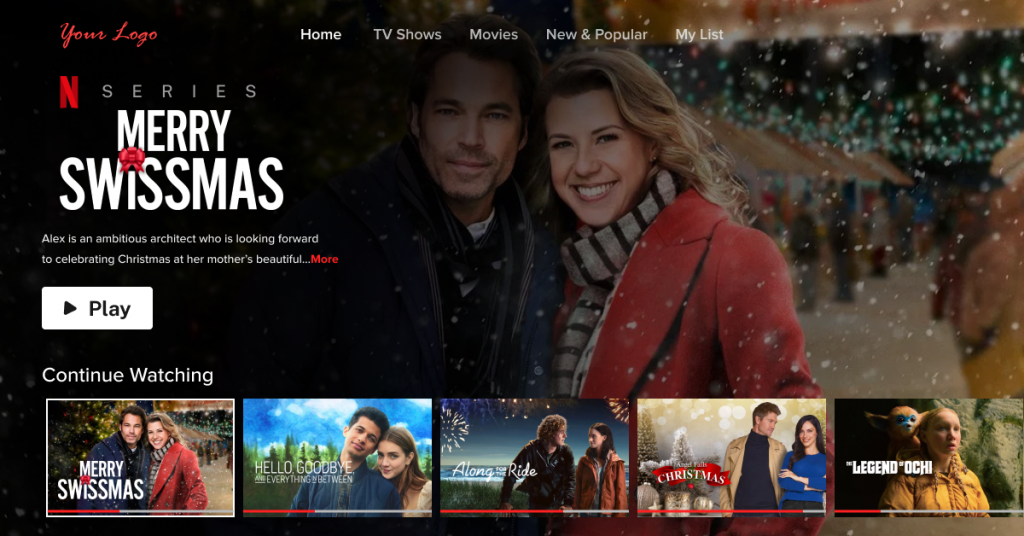
- Niche and Target audience: Find a profitable niche and create a viewer persona to figure out the type of content to offer.
- Monetization model: Pick a monetization model based on target audience and content type
- Select video streaming platform: Based on monetization needs and content delivery method, pick a platform
- Acquire content: Create licensing agreements, secure content, and organize them in neat playlists and customize UI for a better user experience
- Launch and promote: Test the platform rigorously and then launch across devices. Gather feedback and improve.
Here is a quick overview of how to create a streaming service like Netflix:
Since its launch, Netflix has redefined entertainment, making movie streaming more accessible. Many want to create a video streaming website like Netflix, as it disrupted cable television and introduced binge-watching on demand.
A report from Data Bridge Market Research predicts that the global video streaming website will expand from $12.92 billion in 2024 to $55.55 billion in 2032, representing a compound annual growth rate (CAGR) of 20%.
Video streaming platform address the growing demand for flexible viewing and personalized content experiences. For content creators/owners, these platforms provide viable business models, driven by the global appetite for accessible entertainment.
In this blog, we’ll explore what it takes to build a video streaming website. From development steps to must-have features, monetization strategies, and security protocols, we’ve got everything covered.
Learn the Fundamentals First
Understanding the basics of Video Streaming meaning can make the implementation process far more effective.
Why Build a Video Streaming Website Like Netflix?
Creating a platform such as Netflix is no longer just an ambitious tech initiative, but a very lucrative business in a growth-oriented industry. The audiences are looking for unique niche content and flexible viewing options, allowing new platforms to claim a big share of the market.
With the rise of streaming adoption globally, there are opportunities for businesses to invest in their platform to gain a slice of the fast-growing digital economy.
Let’s look at some statistics that illustrate the market potential:
- Video streaming market size: Expected to grow from $852.25 billion in 2025 to $2,102.73 billion by 2030 at a 19.3% CAGR
- Asia-Pacific video revenue: Forecasted to reach $196 billion by 2030, with all of the net revenue growth driven by online video on a 7% CAGR
- Global TV and video market: Set to break the $1 trillion barrier by 2030, all by digital formats.
- Smartphone adoption: A mobile-first approach is essential as smartphone adoption is projected to grow at a 16.2% CAGR in OTT consumption.
With this trend in the market, it’s the best time to launch your streaming platform and take a stake in this growing digital economy.
- Fully Customizable
- Lifetime Ownership
- On-Premise/On-Cloud
- 100% White-label
- Zero Revenue Share
- Hire Developers
Who Should Create a Video Streaming Website like Netflix?
The Netflix-style website isn’t exclusive to the entertainment industry. It’s a great platform for anyone with valuable video content that wants to directly connect with a global audience. Here is who should build one:
Fitness & Educational Platforms:
Traditional broadcasters and video production companies can go direct-to-consumer. They retain control of their programming and rather than relying on platform algorithms to suggest their videos.
Enterprises
For large companies, it’s possible to develop in-house video centers for induction training and other staff training programs. This will provide secure access to proprietary knowledge and help monitor engagement using subscriber data.
Regional Streaming Platforms
Localized content providers can cater to specific languages and cultures. They can have an impact on their home markets by producing documentaries or films. Furthermore, niche creators and broadcasters looking to expand beyond simple VOD can easily create an online TV channel to broadcast live and scheduled content 24/7.
Independent Filmmakers/Niche Content Creators
Indie directors produce documentaries and short films without the backing of a movie studio. Niche creators profit through fanbases directly. For them, white-label solutions are the best option. They do not require the creation of the website from the ground up but offer subscriber details and community functions.
How to Create a Video Streaming Website like Netflix? in 7 Easy Steps
Creating a video streaming website like Netflix is easier when you have the right roadmap. Here are 7 easy steps to get started with.
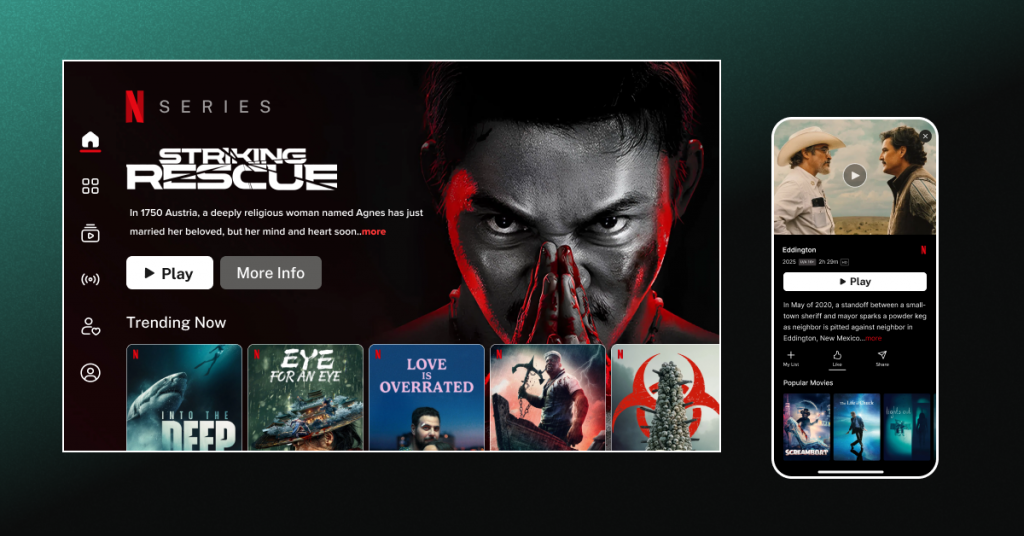
1. Define Your Streaming Niche and Target Audience
To create a video streaming website like Netflix, start by figuring out your niche and what your target audience expect
Here is a checklist to get this foundational step right:
- Decide your content type: Think about whether you want to offer movies, TV shows, or documentaries, or whether you want to go niche-based, like education, fitness, or faith-based content.
- Confirm a delivery format: Based on your content type, decide between live or on-demand delivery
- Brainstorm content ideas: List 20 titles and find new content angles
- Measure audience interest: Use tools like AnswerThePublic, Google Trends, or Ahrefs to establish demand and check the competitors in the same space
- Define your ideal audience: Find the goals and values and how your unique perspective will address their pain points
Pro Tip: Having all these mapped out will give much faster traction and keep your audience engaged in the long-run.
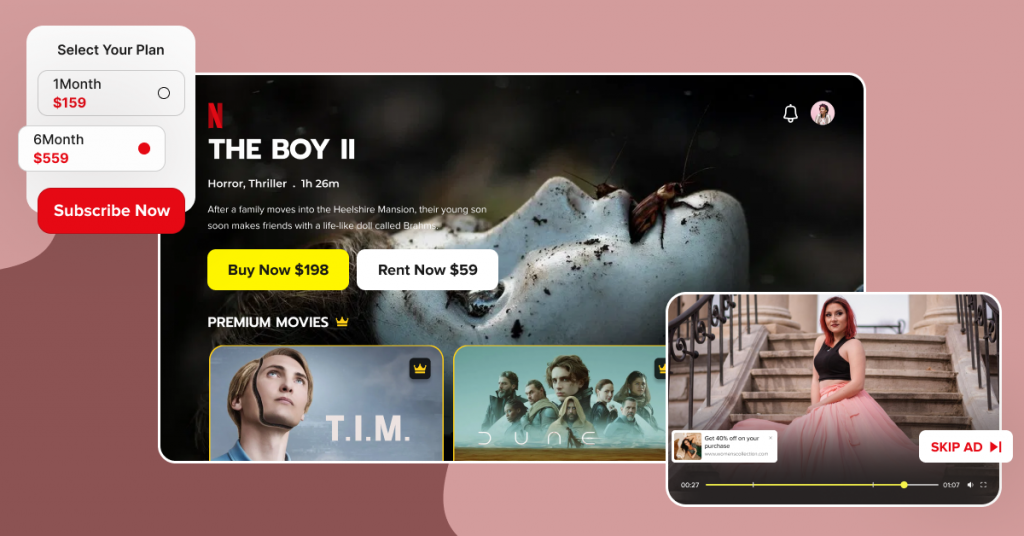
2. Choose the Right Video Monetization Model
The right video monetization model depends on your audience and content type. Gauge competition to see what the audience expects before settling on a monetization model.
- Subscription: Choose SVOD if you plan to offer episodic content with weekly or regular updates. You can create subscription tiers for recurring revenue for monthly or annual subscriptions, for unlimited access to your content.
- Ads: AVOD is best for broad appeal. It brings a massive audience to the platform quickly since it eliminates the paywall. Additionally, modern platforms also leverage a dedicated FAST channel platform to deliver continuous, linear, ad-supported viewing experiences.
- Pay-per-view: Offer TVOD if you plan on offering standalone exclusive premieres.
- Hybrid/Freemium: This is a combination of ads, subscriptions, and pay-per-view. This helps reach both casual and premium audiences.
Pro Tip: If your competitors rely solely on subscriptions, you can adopt a hybrid model with a free ad-based tier along with a premium subscription upgrade. This lowers the entry barrier while also upselling a premium video on demand plan. This helps capture even cost-conscious viewers.
3. Select a Professional Video Streaming Platform
Selecting a white-label video streaming platform is a wise choice since provide a shortcut to launching your service, bypassing months of custom coding.
You need the right infrastructure to bring your video streaming platform goals to life.
Here are some of the features to look for:
- Adaptive Bitrate Streaming: To create a video streaming website that delivers flawless buffer-free playback, you need ABR that adjusts the video quality based on the viewer’s network conditions.
- Multi-device compatibility: To enhance convenience, make sure the platform is compatible with mobile, web, laptops, tablets, and smart TVs.
- Flexible monetization models: You need a platform that supports multiple monetization models to reach every audience segment.
- 100% revenue retention: Make sure the platform you choose isn’t taking a chunk of your earnings with mandatory revenue sharing. It is better to opt for one-time licensing platforms with complete branding control.
- Content security: Your platform should support multi-DRM, advanced encryption, geo-restrictions, and dynamic watermarking to protect your hard work.
- Operational control: Bonus points if your platform supports live-to-VOD for repurposing content and analytics to track viewer behavior.
Pro Tip: Choose a platform that offers complete source code ownership rather than a SaaS subscription. This would give you data ownership and long-term cost savings.


4. Secure and Organize Your Video Content
Decide how you want to acquire content. You can source from independent producers, distributors, or third-party imports. Start planning your content licensing agreements and how you want to organize your content.
Once you have secured the content, ingest the video and turn it into a transcoded file. Constant bitrate maintains playback quality. Acquiring media builds your content library, but organizing is what retains the viewers.
- Implement rich metadata: Make searchable metadata using synopsis, descriptions, and cast member details.
- Structure collections: Organize videos into genres and categories. You can also make dynamic rows and seasonal groupings for recent releases
- Enable user features: You can let your users create their own personalized playlist with a watchlist option.
Pro Tip: Choose a video streaming site that has a robust CMS that can automate these workflows. This will help ensure that your library remains scalable and easy to manage.
5. Customize Your Netflix-Style Streaming Website
Your development team will personalize the UI and homepage to reflect the uniqueness of your content. UI is one of the critical components that helps retain viewers.
Key customization elements include:
- Visual layout and carousels: Organize content with dynamic categories and continue watching rows to get them to their favorite shows immediately. It is better to build your video streaming website with a drag-and-drop builder so later, you can manage layouts effortlessly.
- Banner placements: This is to showcase your latest content. This has to be with eye-catching visuals and high-quality thumbnails so that it improves engagement.
- User Profiles: This will help viewers to maintain their own personalization with saved favorites, watchlists, history, and recommendations.
- Search and Navigation: Searchable categories help users find the content they are looking for by using specific keywords, like genres or categories.
Pro Tip: It is best to avoid static or cluttered layouts. Make sure the final UI is modular and lets you move content rows around based on seasonal popularity and content trends.
Check out the Advanced Features
Check out the essential OTT platform features required to launch and scale your streaming service.
6. Launch Across Web, Mobile, and Smart TVs
Before the app is launched, the development team will make sure to test the app thoroughly. Rigorous load and performance testing is done to guarantee whether your servers can handle a high number of concurrent users. This will keep the playback buffer-free.
Device compatibility is also verified across web browsers, iOS, Android, and major Smart TVs. DRM and data security protocols are implemented to safeguard data from unauthorized access and piracy.
Pro Tip: Soft launch first on one device and then expand to other devices. This type of phased approach will help you catch issues early on without affecting a large segment of the audience.
7. Promote and Grow Your Streaming Business
You have to promote your video streaming website to reach your target audience.
Here’s how to promote:
- Market your streaming service through email marketing with a unique value proposition.
- Share trending clips and behind-the-scenes on social media platforms to build community engagement
- Run paid advertising on Google, Meta, social media, and connected TV platforms to reach targeted audiences.
Pro Tip: Retention over acquisition should be your priority. Even a 5% subscriber retention can improve your profit by 25%. So, make sure the platform has everything to attract viewers as well as keep them hooked.
Now that you know how to build a video streaming website, now check the Video Streaming App Development designed to accelerate deployment.
Key Features Needed to Create a Video Streaming Website Like Netflix
The success of a streaming site relies on its features. These are the must-have features that enable a Netflix experience.
- Personalized Profiles & Recommendations: Users want customized experiences. A smart machine learning-based recommendation engine distributes relevant media based on the viewer’s viewing history and preferences for maximizing viewer engagement.
- Clean UI/UX & Interactive Player: Users can easily find videos with a clean interface and advanced category filters. The interactive player offers ease of playing the content with custom speed settings and variable quality.
- Cross-Device Syncing via CDN: Users frequently switch between a Web browser, a mobile application, or a smart TV. A global Content Delivery Network ensures minimal latency and fast resume across all devices.
- Adaptive Bitrate Streaming: These protocols, such as HLS or MPEG-DASH, ensure that your stream adapts to network bandwidth fluctuations, offering a seamless and buffer-free streaming experience.
- Video CMS: A video CMS is a powerful tool that enables an administrator to organize assets efficiently. Automated video transcoding is used to automatically transcode heavy video files to various optimized formats.
- Digital Rights Management & Analytics: Studio-grade Digital Rights Management protects all assets against unauthorized distribution and piracy. Furthermore, real-time data can also be used to monitor audience behavior, which can help improve long-term subscriber retention.
Why Start from Scratch When VPlayed Provides a Complete Video Streaming Solution?
It may seem complex at first to create a video streaming website. But VPlayed takes all the stress out of the process. It is like getting a ready-to-go streaming solution that ticks off everything we have discussed in the previous steps.
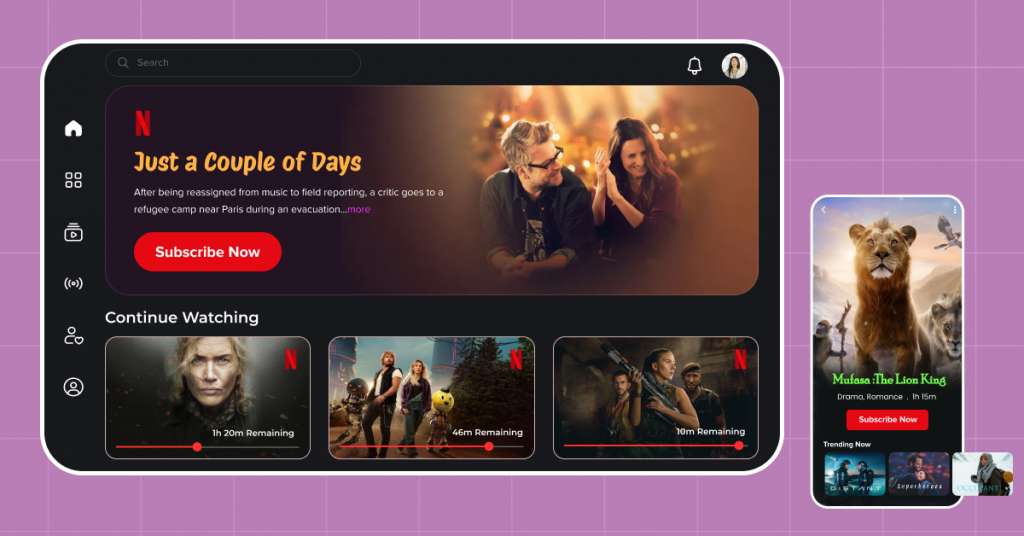
Here’s how VPlayed covers all the bases for you:
- Tailored to Your Niche – Whether you are in entertainment, education, fitness, or even niche hobbies, VPlayed offers to build a video streaming website like netflix that can adapt to your needs.
- Licensing & DRM Protection – With built-in DRM and secure video encryption, your content stays protected from unauthorized use. You can finally say goodbye to piracy while ensuring your video streaming website remains safe.
- Powerful Platform Features – An easy-to-use CMS with various types of CMS options, live streaming, multi-device support, and more. VPlayed gives you all the features you need to run a video streaming website.
- Flexible Monetization Models – SVOD, AVOD, TVOD, or a combination (Hybrid); VPlayed lets you choose how to make a video streaming website profitable, with simple payment integrations.
Discover Platforms That Match Your Needs
Now that the implementation workflow is clear, check the best Advertisement video on demand platforms for your use case.
- Scalable Infrastructure – As your user base grows, VPlayed’s cloud based video streaming infrastructure and CDN-powered delivery guarantees your video streaming website stays fast and responsive.
- Advanced Security – With secure logins, encrypted data transfers, and geo-blocking, your streaming website is as safe as a vault.
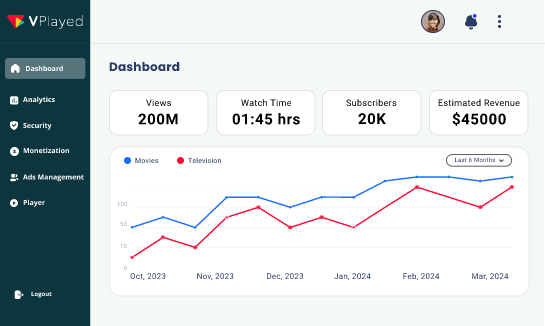
- Marketing & Analytics – Built-in marketing tools and a complete analytics dashboard help you grow your audience, track performance, and make the necessary changes to your strategy.
Discover the essential technologies and monetization strategies needed to create a PPV streaming website.
What is the Cost to Build a Video Streaming Website?
To create a video streaming website it can cost as low as $25,000 or as high as $50,000 or more, depending on the customization requirements, additional features, and project scope.
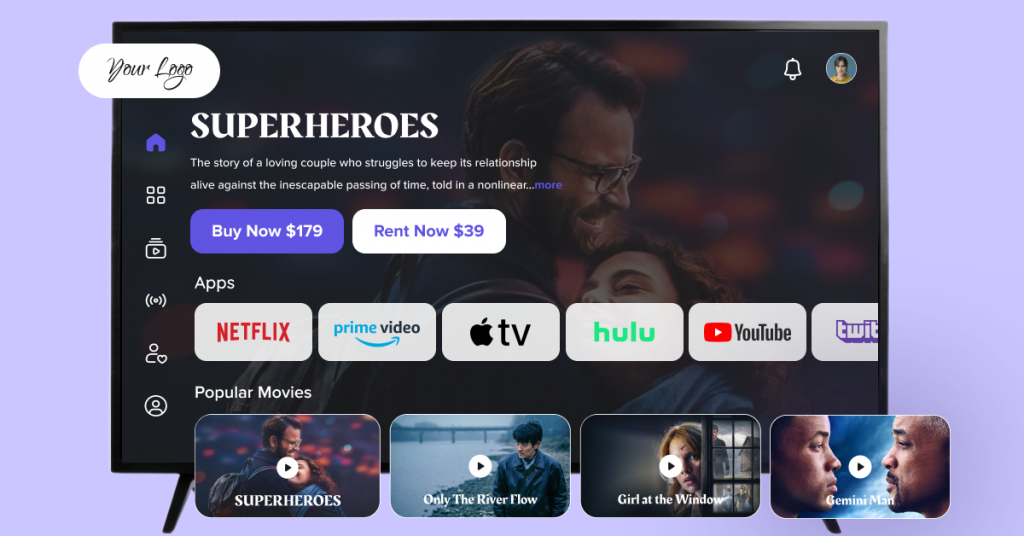
The cost for using VPlayed depends on several factors:
- Customization: Whether you want a basic white-label VOD solution or a highly customized website, VPlayed offers flexibility to create a streaming website meet your needs.
- Features: The more advanced features you add (like live streaming, adaptive bitrate streaming, DRM protection, or monetization options), the price will adjust accordingly to the way you build a video streaming website.
- Scalability: As your website grows and lands on more devices VPlayed’s cloud based playout infrastructure will scale smoothly to handle the increase in traffic.
Generally, The good news here is, with VPlayed you get a 100% customizable streaming website that has everything you need to launch and keep your budget intact.
What’s great about VPlayed?
No hidden costs. Everything you need is included in the website and the price will be exactly what we discussed during your initial call. No surprises whatsoever!
Conclusion
We have reached the end of the blog, and now you have a comprehensive roadmap to create a video streaming website like Netflix.
From identifying your streaming niche to monetization model, and integrating key features to implementing all-important security protocols, these 7 steps serve their very purpose: to help you build a streaming app or develop a video streaming website and venture into the thriving video streaming industry.
Ready to take your first step? Use this blog/guide as your blueprint, tweak it according to your needs, and begin your chapter in the entertainment industry.
If you need any assistance, remember that VPlayed offers a ready-to-go video streaming solution with impeccable Netflix-like features and functionalities.
- Request Demo Book a Live, Personalized Demo
- Contact Sales Reach Out to Our OTT Experts
Frequently Asked Questions (FAQ):
1. What is a Video Streaming Website?
A video streaming website offers videos to viewers over the internet without having to download the files. It is an online platform that streams movies, live events, educational videos, or any niche-based videos, and it often recommends content based on the viewer’s preferences.
2. How To Create A Video Streaming Website Like Netflix?
To create a video streaming website like Netflix, you have to first figure out your niche, target audience, and how you want to monetize. Then look for a video streaming platform that will suit your needs and customize your UI. Finally, launch and promote your platform strategically.
3. How Much Does It Cost To Build A Video Streaming Website?
No-code SaaS platforms with ready-made templates cost $100 to $600/monthly. Mid-market platforms with built-in CMS and live-streaming capabilities cost between $25,000 and $60,000. Enterprise platforms with multi-DRM security and AI recommendation engine cost between $150,000 and $300,000+. A SaaP platform like VPlayed with complete source-code access and one-time licensing costs $35,000 to $50,000 based on customization needs.
4. How do streaming websites like Netflix make money?
Streaming websites like Netflix make money mostly through subscriptions, ad-based monetization, and pay-per-view for exclusive content. They use a mix of all three, using a hybrid model to reach and monetize every audience segment. The right approach depends on the type of content and target audience.
5. What are the Essential Features of a Video Streaming Website?
Essential features of a video streaming website include adaptive bitrate streaming to maintain a buffer-free experience, DRM for content protection, and smart search for easy navigation. For easy scheduling and organizing, a video content management system can help. Also, multi-device capabilities improve reach.
6. What are the Benefits of Creating a Netflix-like Video Streaming Website?
The foremost benefit of creating a Netflix-like website is getting predictable revenue through subscription tiers, ad-based and pay-per-view models. Also, it lets you build your own brand authority and reach global audiences without any algorithmic restrictions of third-party platforms.
7. How long does it take to develop a video streaming website like Netflix?
Developing a video streaming website like Netflix takes 6 to 18 months. Some SaaS platforms offer 2 to 4 weeks of deployment. There are SaaS-based white-label platforms like VPlayed that offer deployment in as little as 2 days.
8. Can I build a Netflix-like streaming website without coding?
Yes, there are no-code platforms with ready-made templates available to launch a Netflix-like streaming platform with quicker launch times. But the catch is that they are restrictive in terms of customization and monetization models. If you desire complete customization, go for a SaaP platform like VPlayed that will give you full source code ownership, complete customization and monetization freedom as well as rapid launch.

Senior Analyst specializing in Online video platforms, OTT, VOD, and white label video streaming solutions. Expert in analyzing industry trends, technologies, and monetization strategies to help businesses optimize their streaming services. Passionate about innovation and the evolving digital video landscape.