

Summarize this article in:


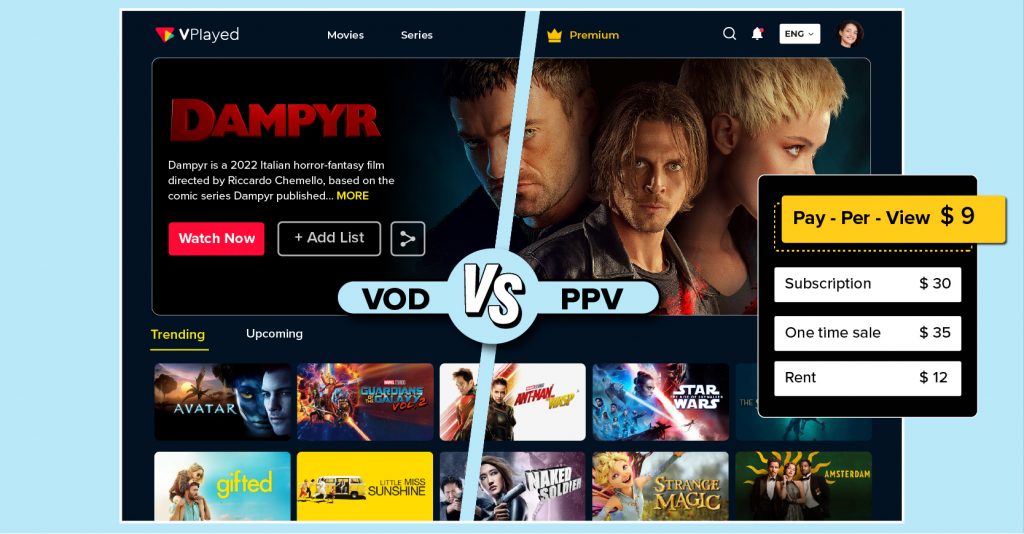
It’s hard to imagine a day without consuming video content. Whether you are an active or passive consumer, videos have become an integral part of our daily lives.
Along with consumption, the landscape of video monetization is evolving, and monetization models are emerging.
Video on demand (VOD) and Pay per view (PPV) are two common sources of video consumption.
As a content creator or platform owner, choosing between them can significantly impact your revenue and audience engagement.
This article will give a clear definition of each (VOD and PPV), along with the key differences between video on demand platform and PPV, benefits, and so on. It will give you a definitive answer on which is best for your content creation journey.
- Fully Customizable
- Lifetime Ownership
- On-Premise/On-Cloud
- 100% White-label
- Zero Revenue Share
- Hire Developers
What is Video on Demand?
Video on Demand is a content library made available on demand for viewers, typically through an online video platform.
Viewers request content through the platform, which connects them with the nearby servers that deliver the content, ensuring a smooth playback and video viewing experience.
For content owners and broadcasters, VOD offers a flexible and scalable approach to monetize their video content.
Whether opting for a subscription video on-demand model or advertising, VOD enables precise tracking and analysis of viewer data, facilitating informed decisions for future content marketing and distribution.
How Does Video on Demand Work?
VOD works by storing and streaming videos on a server. Viewers can access internet-connected gadgets such as a computer, smartphone, tablet, or TV.
When a viewer selects a video to watch, the VOD system delivers it to the device through the platform via a stronger internet connection.
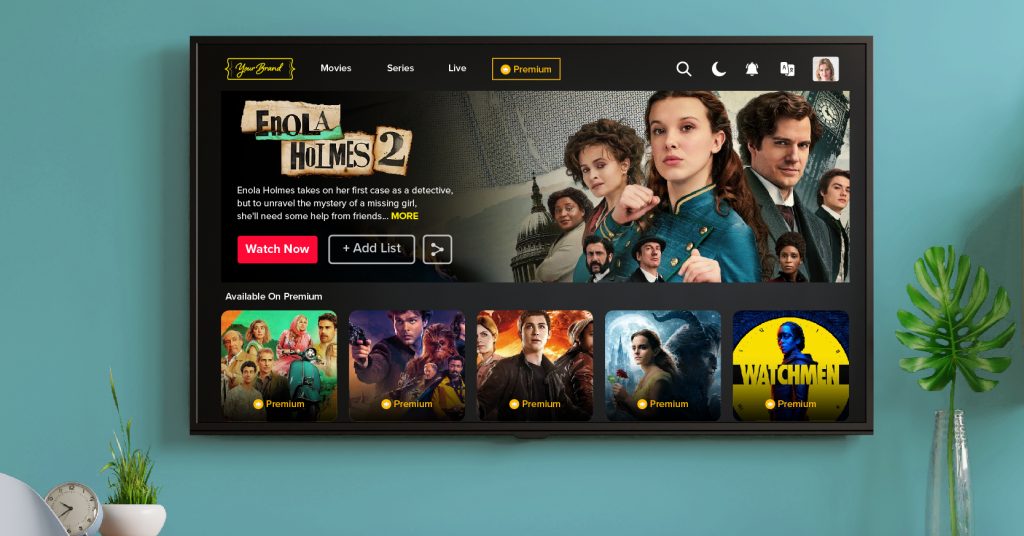
To ensure smooth, buffer-free streaming, VOD solution utilizes adaptive bitrate streaming technology. This technology automatically adjusts the video quality based on the viewer’s internet speed and device capabilities. This ensures that the video is streamed smoothly without any buffers or interruptions.
And, for content owners, this means they can earn handsome revenue via subscription fees or advertising on the platform.
Top 7 Benefits of Using Video on Demand:
Video on Demand has evolved in 2026 and brings enormous benefits supporting every industry from entertainment, fitness, retail to education. Keeping this in mind, let’s explore the multiple VOD benefits it has to offer.
1. On-Demand Video- 24/7
One of the most considerable advantages of VOD is that you can get access to videos any time and at any place you choose.
To watch a film or series at any moment on the TV demands scheduled timing whereas VOD movies are available to the audience all the time,
people working late shifts or night shifts can comfortably watch everything, starting a movie or series in the morning, and finishing it in the evening is made easier without missing anything.
Such convenience is enhanced on streaming white label platforms with advanced features to speed up, slow down, change audio, or add subtitles whenever needed. This makes it ideal for busy people with limited free time.
2. Endless Content Variety and Customization
One of the VOD’s extensive advantages is the availability of various content, which is not available in TV streaming. VOD providers usually create their own content by putting in a bunch of resources.
However, on the other hand, VOD allows end-users to choose their content to its taste.
In a specific way, some OTT platforms send individual suggestions related to the user’s search or based on viewing history, which drives new content discovery. With a video CMS software, these platforms can also categorize, personalize, and deliver early access to movies or series that are not yet premiered in cinemas.
Planning To Start a VOD Streaming Entertainment Business?
3. Budget-Friendly for Binge-Watchers
For a long time, broadcaster video on demand content to the audience was associated with high prices, whereas VOD is cost-effective with flexible pricing.
However, with the introduction of VOD technology, content creators and distributors can reach a larger audience at reduced costs.
VOD services usually offer more than one subscription plan, including free content, with which a user can develop a preference and subscribe according to it.
This flexible pricing structure is a core part of the video on demand business model, allowing platforms to serve both paid subscribers and free viewers through ads.
As such, users subscribing to free content will benefit significantly.
Freely accessible white label OTT platform with advertisements has given viewers an opportunity to access video content, who cannot afford paid subscription plans and owners a source to generate revenue from advertisements.
Consequently, one can pay depending on what she/he wishes to watch. When a user prefers to watch one given a new film that premieres once, it will reduce the cost due to their watching frequency.
4. Freedom from Fixed Broadcast Schedules
As mentioned before, viewers will benefit from freeing them from the fixed hours of a Tv broadcast. For example, the viewer will be able to see her/his favorite media content without restrictions.
Viewers will be able to take content, including the one that had been previously missed or on record. This advantage will be useful for viewers with an unstable schedule and for people living in different time zones.
In addition, this opportunity can reduce needless stress, thereby contributing to the overall improvement of people’s health and saves a lot of money.
Nonetheless, students who are in the process of learning a new language or mastering a specific skill set can do it easily by rewatching the same content as many times as necessary to be understood.
5. Seamless Access Across Devices and Locations
Modern VOD business models are built to support seamless accessibility across devices and locations, ensuring users never feel restricted by hardware or geography.
A survey finds that 84% of people watch chosen content on different devices, however, some change the content type.
That is pretty much true, users can finish watching a TV show on one device and continue from the moment they stopped on another.
But, how is this even possible?
Well, it became possible thanks to VOD app development providers who developed apps to suit the following devices:
smartphones, tablets, smart TVs, gaming consoles, and others. Such freedom influenced the possibility of watching your favorite TV show bindings.
People watch while going to work, or waiting in line at the store; watching content becomes part of daily chores.
Do not forget about a handy feature-offline viewing. Some OTT platforms allow users to download chosen movies or TV shows to their devices.
This is pretty much convenient when you are traveling where the internet is expensive or there’s no internet connection at all.
6. Personalized Viewing Experience with Recommendation Algorithms
VOD providers also use recommendation algorithms for content viewing to the viewers that they might like on their viewing history.
The algorithms maintain the user’s watch history, viewing genres, and other forms of watched content to ensure a personal view.
This feature leads to prolonged viewer time and increased the viewer’s fidelity.The viewer can also watch other new forms of media they could have overlooked.
Additionally, VOD platforms allow the viewer to add films to the user’s watchlist and make a playlist that they watch on any device.
This enables the user to add a playlist on their mobile phone and watch the same content on their TV without having to search for them. This reduces the time for searching and curating your watchlist.
7. Enhanced Audience Engagement and Video Analytics for Content Creators
To sum up, VOD platforms provide analytics and statistics about the audience’s preferences and views. This source can help in forming future content creation plans.
In addition, VOD platform providers include different engagement opportunities like comments, likes, and shares, so viewers can be more involved in communication with the creators and the audience. And likewise, these platforms are also ahead by giving all these exceptional VOD features to creators and video influencers.


What is Pay Per View?
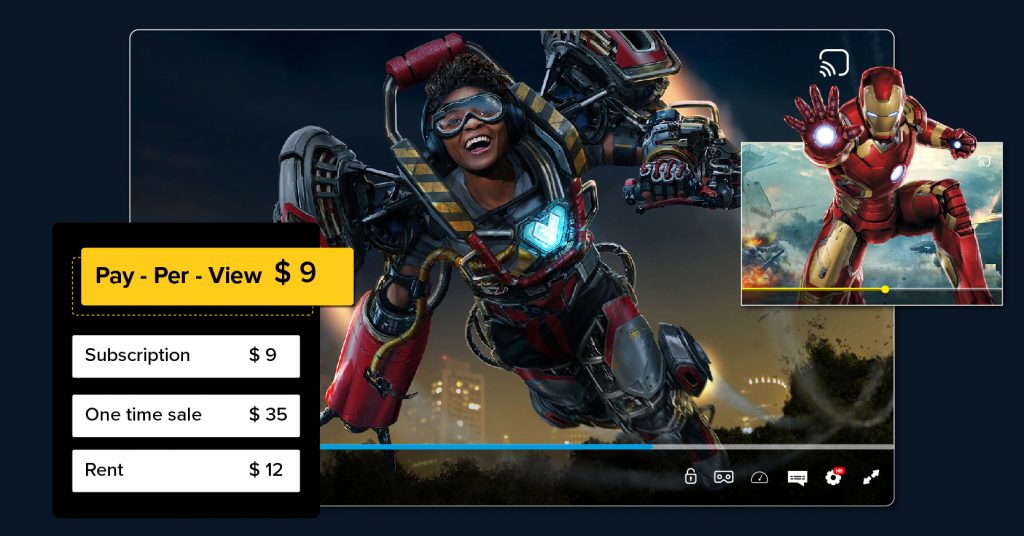
Pay per view is a video monetization model that facilitates access to the content in exchange for a one-time fee. Viewers request content access through pay per view platforms, often for a live event, exclusive content, or a program.
Pay per view offers the flexibility of transforming live events into on-demand videos through Live to VOD solutions.
Live to VOD allows event organizers to repurpose live-streamed PPV content into on-demand videos, ensuring continued monetization even after the live event has ended.
Content owners can make money with videos while offering time-sensitive access, often behind paywalls. Unlike subscription, viewers have the liberty to pay for the content they wish to watch.
How Does Pay Per View Work?
Pay per view works on a per-transaction mechanism, where time-sensitive content access is exchanged for a one-time fee.
The mechanism begins when a content owner or broadcaster makes content or an exclusive event available for purchase.
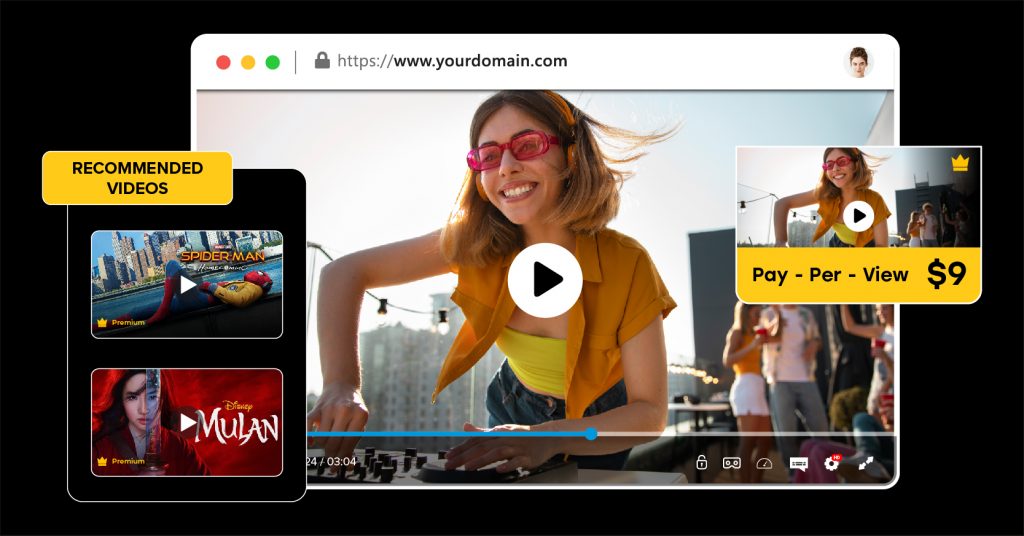
Viewers receive time-specific access to content that is behind robust paywalls. If the access is for a live event, viewers could watch the broadcast as it happens (most probably, near-zero latency).
If the access is for pre-recorded content, viewers can access it on demand with optimal playback, a process further strengthened with video on demand hosting that ensures high-quality delivery and secure access.
This model is ideal for content creators, broadcasters, and live event organizers to monetize their video/event, often in a direct and transactional method.
Top 7 Benefits of Pay Per View(PPV)
PPV has revolutionized the way entertainment is consumed, making it definitely an attractive option for both content providers and viewers.
How?
Because it has opened up many new revenue streams for content owners or providers.
With that being said, let’s quickly see the top 7 benefits of pay-per-view in detail.
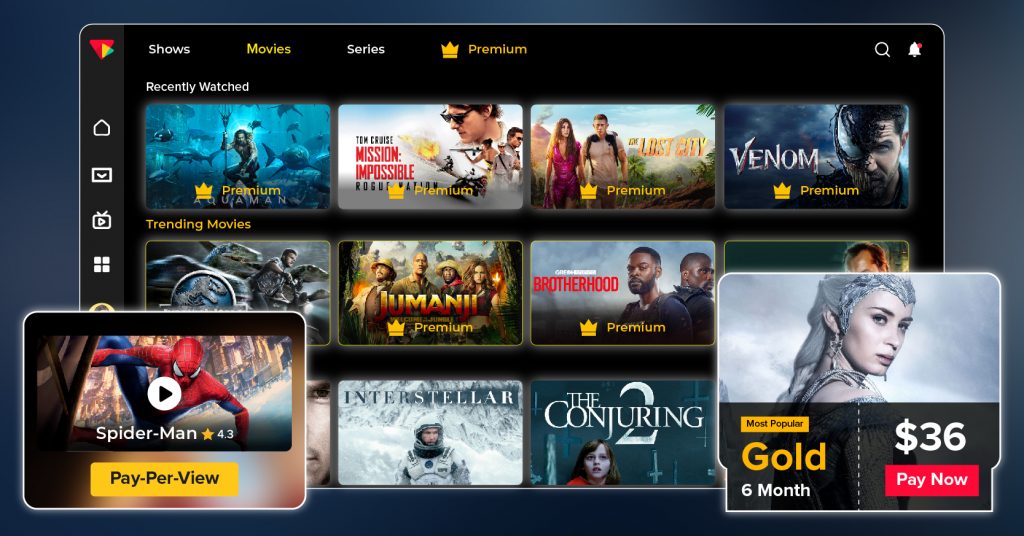
1. Flexible Pricing Options
PPV makes the final payments adjustable for the end users. A person can select the payment amount depending on service usage.
For example, a movie can be rented out for a day or a week, whether it’s high definition or low visual quality of the content. PPV charges are mostly based on such factors.
2. Access to Live Events and Premium Content
Pay-per-view is a model that permits users to access live events by incurring expenses for each view. These events can range from concerts to sporting events and even award shows.
The system can also allow users access to premium content not available via other media platforms.
Some of the content may be specific movie titles, documentaries, and TV shows not found on basic cable or your regular streaming platform.
The feature permits you to view the content only on an event-by-event basis without the need to subscribe to a certain service or recurring payment.
This feature gives the viewer the flexibility to fit their specific needs and preferences.
These events include calling up a few friends to watch a live event, catching up on Thursday’s TV show, or just enjoying a movie by yourself.
3. No Subscription Required
Another added advantage of pay-per-view is that a viewer is not required to subscribe to gain access to the service or enter a long-term agreement.
This means viewers have access to premium content on a single-use basis, free from add-on charges or long-term contracts.
Instead of a channel subscription or package, the viewer can choose to pay to watch a single piece of content.
This is perfect for anyone with a busy lifestyle or interested in a single event.
Best of all, as long as there is no subscription, there is nothing to worry about in terms of cancellation fees or hidden charges. Instead of add-on charges, the viewer pays only for what they want to watch.
This gives the consumer control of his or her entertainment budget while also ensuring peace of mind.
4. Immediate Access to Content
One of the most obvious benefits of pay-per-view is the freedom to choose without having to register for certain providers or agree to a contract that is in effect for an extended period.
See, the most significant advantage in this context is that the audience can only access premium content once without having to worry about continuous fees and commitments.
Viewers can then refrain from subscribing to a wide range of channels and instead opt to view just the channel they are interested in.
In some circumstances, a person’s program might be so tight that the only content they might have to watch is on PPV and cannot be used for other purposes.
This heightens the excitement of making the most of PPV, but additionally, uninterrupted access implies that there will be no yearly or monthly fees paid, which will mark the difference in what viewers need from pay-per-view.
With minimal to no purchase commitments, someone may feel that no additional costs will apply and that common cable services will have a detrimental impact on their viewing plans.
Time and date schedules for seeing a program will be a difficulty with PPV, which may ruin an evening since a show may be scheduled for later that day, mainly due to a busy program that prohibits movements from focusing on it.
This implies that a person may experience the show with PPV, such as a broadcast on the web, and enjoy the pleasure of a movie later that night.
This may be due to a shortage of TV, but access to PPV will enable entertainment no matter the time or location.
5. PPV is Easy to Use and Convenient
Furthermore, PPV systems are usually easy to navigate. They have simple menus and a generally intuitive structure that allows one to find and access desired content in a matter of minutes.
This ease of use also ensures that individuals of all ages and technical abilities widely enjoy PPV.
A decent navigation system is not the only reason why PPV is so convenient.
Users can watch from their laptops, smartphones, tablets, or even smart TVs. Moreover, PPV gives its customers the possibility to choose since a wide array of diverse programs can be accessed online.
One can watch the latest blockbuster hit or proceed to a retransmission of a football match. This and many more become possible thanks to the pay-per-use nature of the PPV streaming platforms.
Finally, PPV also gives users a level of control, meaning they can skip commences, rewatch their collective scenes, etc.
6. Increased Revenue Opportunities
Perhaps, the most straightforward advantage of PPV is that content providers can monetize their content without using advertisement.
PPV is by definition revenue links to the number of views and purchases made to access the content. This is a significant advantage for niche content providers; who have relatively small audiences.
Content providers can maintain their quality mostly via the fee charged for access. They may not be able to generate the same revenue otherwise.
PPV is a great way to monetize live events other than content. Sports leagues can offer premium PPV streaming to live games.
Fans who find it difficult to attend the stadium in person can still feel the environment and entertainment of the game from the comfort of their house.
In conclusion, providers can build substantial revenue, build an audience, and establish a loyal viewer base with PPV.
7. Better Control Over Content (for Content Owners)
Greater access to content control is the most authentic advantage of pay per view video platform. Every content owner gets the choice to choose the video to monetize and to make it available to every viewer.
In an event if the producer likes to use a PPV model, they limit the access to the available videos only for those who paid for it. This strategy inhibits piracy and unauthorized protection.
In the event that the producer would like to use a PPV model, they can limit the access to the available videos only for those who paid for it.
This strategy is frequently used to limit piracy and legitimate unauthorized protection. It also drives actionable intelligence.
The result is a treasure trove of data that can provide actionable intelligence via analytics for content creators.
Tracking data on the content’s performance will provide some insights for the content owner. This data will in turn promote engaging content creation and will allow more targeted marketing.
Difference Between Video on Demand and Pay Per View:
The fundamental difference between video on demand (VOD) and Pay-per-view (PPV) lies in their payment models and content accessibility.
VOD offers a library of content accessible at any time for a subscription fee or charge for every view. It gives viewers much-needed flexibility in what they watch and when they want to watch it.
And for content owners, it gives them an opportunity to earn revenue continuously.
In contrast, PPV charges viewers a one-time fee for specific content (which is often live content). The access is given only for the duration of the event.
While VOD streaming caters to creators with broader interests and a vast library, pay-per-view targets niche, time-sensitive events. It gives content owners direct revenue from every purchase but is limited to a single viewing.
Let’s understand other crucial differences between VOD and PPV from the table below:
| Difference | Video on Demand (VOD) | Pay Per View (PPV) |
| Access | Unlimited viewing for a fixed fee | Single viewing for a fee |
| Content availability | Wide range of content available at all times | Limited selection of content, often for a specific event or timeframe |
| Cost structure | Subscription or rental model | Individual purchase or rental |
| Content format | Can be TV shows, movies, or any other types of videos | Often used for live events or specialized or niche content |
| Viewing device | Can be accessed on a variety of devices, including TVs, PCs, and mobile devices | Often accessed through cable or satellite TV providers, PC and gadgets as well |
| Viewing restrictions | Generally no restrictions on when content can be viewed | Limited time frame viewing, typically 24-48 hours |
| Revenue model | Monthly subscriptions or rental fees | Revenue based on the number of viewers who pay for access |
| User experience | Provides a more customizable viewing experience with the ability to pause, rewind, and fast-forward content | Limited user control, with content often presented as a live broadcast or stream |
Conclusion:
Ultimately, both video on demand (VOD) and pay per view (PPV) can be powerful tools to serve your target audience.
The right choice depends on what you want to accomplish and who you want to serve.
You can build a VOD platform that a wide range of users can utilize; however, you’ll sacrifice consistent engagement and retention, because PPV viewers only engage with the platform when they view the content.
VOD platforms offer a wide range of content libraries and unlimited access for a fixed fee, while a one-time fee for PPV content tends to fluctuate depending on the exclusivity of the content.
The optimal path, for most content owners and broadcasters, is to build both. With VPlayed’s self-hosted solution, you get the best of both worlds.
- Request Demo Book a Live, Personalized Demo
- Contact Sales Reach Out to Our OTT Experts

Monika Gopinath is an accomplished digital marketer with over seven years of experience specializing in the VOD solution provider Industry. I am a passionate writer and avid blogger. I enjoy sharing insights on digital marketing, industry trends about VOD.





I appreciate the details between What Does PPV Mean and VOD. It’s helpful to have all the information in one place to make an informed decision.
I want to make a fitness video on a VOD platform for my clients. It will be best to have a subscription-based monetization system also known as PPV where users may purchase and see movies with the option to pay in advance.
Interesting blog! Pay per view video on demand is a great way to monetize exclusive or one-time content. It gives creators more control over pricing and revenue per viewer.
Good web site you’ve got here about video on demand vs PPV. It’s difficult to find high quality writing like yours these days. I honestly appreciate individuals like you! Take care!!
Compared to PPV View Streaming ,I personally prefer VOD because I like having access to a library of movies and shows without having to pay for each individual one. It’s just more convenient for me.