Summarize this article in:


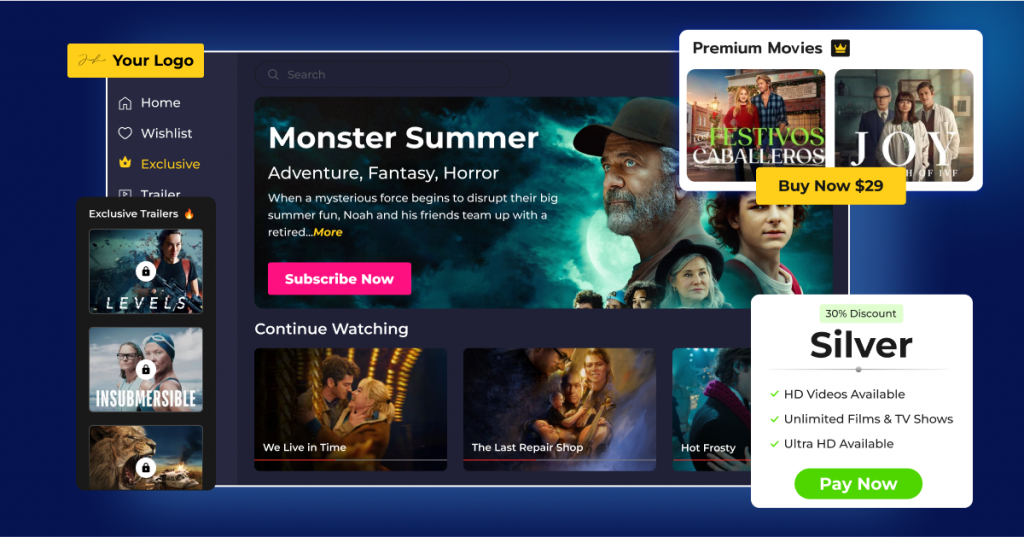
This blog reviews the 10 best pay-per-view platforms for 2026. It compares their strengths and explains which platform suits different streaming use cases. It also covers dedicated recommendations for creators, enterprises, and OTT businesses, along with pricing and detailed features like security and monetization.
Pay-per-view (PPV) is a powerful business model for content creators and media companies looking to monetize exclusive content. It enables creators to profit from individual video events and releases, as opposed to subscriptions.
The transactional video on demand (TVOD) market is growing. It is forecasted to reach $230.6 billion in global revenue by the end of 2026 (Global Market Insights). As more businesses adopt PPV, platform capabilities have become a key differentiator. Competition is now focused on improved security and scalability.
Here’s an overview of the top pay-per-view platforms for multiple industries in 2026. It also explains how pay-per-view works and what to consider when making a selection.
Before implementing these strategies, understand the foundational concepts on what is pay per view?
- Fully Customizable
- Lifetime Ownership
- On-Premise/On-Cloud
- 100% White-label
- Zero Revenue Share
- Hire Developers
Best Pay Per View Platforms at a Glance (2026)
| Platform | Best For | Pricing Model | PPV + Live |
| VPlayed | Custom OTT & enterprise PPV platform | Tailored pricing | Yes |
| Kaltura | Education & enterprise video streaming | Custom/Usage-based | Yes |
| Brightcove | Enterprise broadcasters | Custom pricing | Yes |
| IBM Streaming | Corporate events & webinars | Subscription plans | Yes |
| Uscreen | Creator monetization | Subscription + fees | Yes |
| Vimeo OTT | Creator-led streaming | Subscription-based | Yes |
| Muvi | No-code OTT platforms | Tiered pricing | Yes |
| Dacast | Event streaming & broadcasters | Tiered pricing | Yes |
| JW Player | Publishers & media companies | Custom pricing | Limited |
| Vixy Video | Secure video hosting | Custom pricing | Yes |
How the Listed Pay-Per-View Video Platforms Were Evaluated?
The following platforms were chosen based on their ability to handle high-stakes transactional content. These six definitive evaluation criteria guided our selection process:
1. Security Infrastructure
We assessed how effectively each platform prevents stream piracy. We prioritized providers offering studio-grade multi-DRM technology to lock down premium broadcasts and stop unauthorized video distribution.
2. Monetization Flexibility
A professional PPV platform must accommodate precise ticket-based pricing rules. Our evaluation focused on the ease of setting up integrated paywalls that handle international user transactions smoothly.
3. Concurrent Scalability
Platforms were tested on their structural stability during high-profile live events. We looked specifically at whether the system handles massive, sudden audience surges without dropping the stream feed.
4. Content Management Efficiency
We evaluated the administrative backend of each provider. The focus here was on finding a robust Video CMS that cuts down on manual labor when organizing large media libraries.
5. White-Label Ownership
We examined the depth of layout control available to media businesses. Providers scored higher if they allowed operators to completely strip away third-party logos from the video player layout along with complete source code ownership.
6. CDN Delivery Performance
Reliable global streaming requires a high-performance network foundation. We prioritized platforms built on top-tier multi-CDN architectures to eradicate viewer buffering issues globally.
Pay Per View Video Streaming Platforms Reviewed for 2026
You may wonder how these pay per view platforms were evaluated. Each platform was assessed based on monetization capability and live streaming support while also considering content protection and scalability.
VPlayed: Best pay per view platform for live-streaming, VOD, and white-label customization
Kaltura: Educational content with interactive features and agentic AI tutors
Brightcove: Enterprise PPV platform for global video distribution
IBM Video Streaming: Corporate broadcasting with Watson AI support
Uscreen: Creator-focused PPV platform with Netflix-style video catalogue
Vimeo OTT: Cross-destination simulcasting of concurrent PPV videos
Muvi: No-code platform with global currency payment support
Dacast: Live to VOD archiving with multi-tier ticketing
JWX: Embeds directly into existing corporate websites
Vixy Video: Branded video channels with tokenized delivery
This guide does not present a universal ranking. It shows where each platform fits best based on business needs.
1. VPlayed
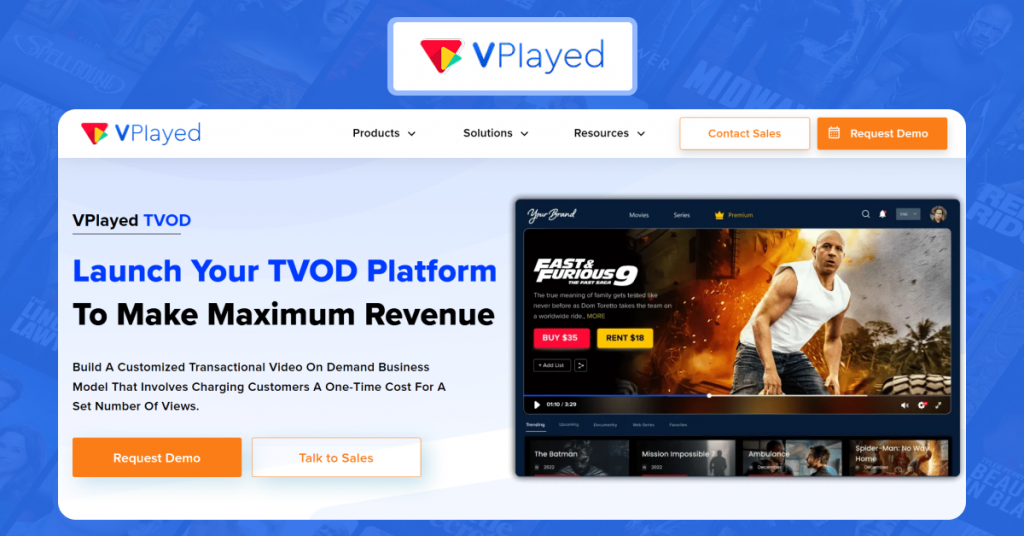
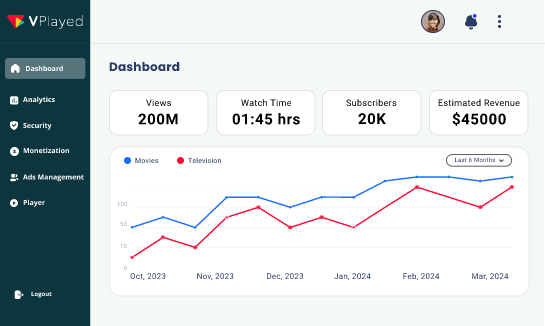
VPlayed is a pay-per-view streaming platform that offers time-limited access to content for one-time pricing. It supports both PPV live streaming and PPV video-on-demand. The platform supports white-label customization and self-hosted infrastructure for broadcasters and media enterprises that need complete ownership. Businesses can also combine PPV with subscription tiers and ads.
Key Features
- 10+ video monetization models: Lets you combine PPV, SVOD, AVOD, and hybrid models
- Localized payment gateways: Accepts local currencies via 30+ global payment providers.
- Flexible deployment: You can choose on-premise or on-cloud deployment based on needs
- Content protection measures: Multi-DRM, dynamic watermarking, screen-recording prevention
- Replay access: Allows ticket holders to rewatch events within a timeframe
- Live-to-VOD conversion: Automatically converts for extended sales
- Coupons and offers: Improves engagement and seasonal sales
- Real-time analytics: Tracks PPV event purchases, viewer behavior, and revenue
- High level of customization with white-label deployment
- Supports multiple video monetization models – PPV, SVOD, AVOD and Hybrid
- Flexible deployment options (self-hosted or managed)
- Strong content security with DRM and access controls
- Implementation scope requires technical planning depending on customization level
- Pricing is not standardized and varies by deployment requirements
Pricing
VPlayed follows a custom pricing model based on business requirements, features, and deployment scope. A demo or consultation is required to receive detailed pricing.
Where VPlayed fits well:
- Event-driven streaming use cases
- Organizations looking for white-label PPV implementations
- Businesses requiring branding control and deployment flexibility
Choose the Right Pay Per View Platform
Once you know what this platform does, learn how to build the Pay per view platform it with the right streaming infrastructure.
2. Kaltura
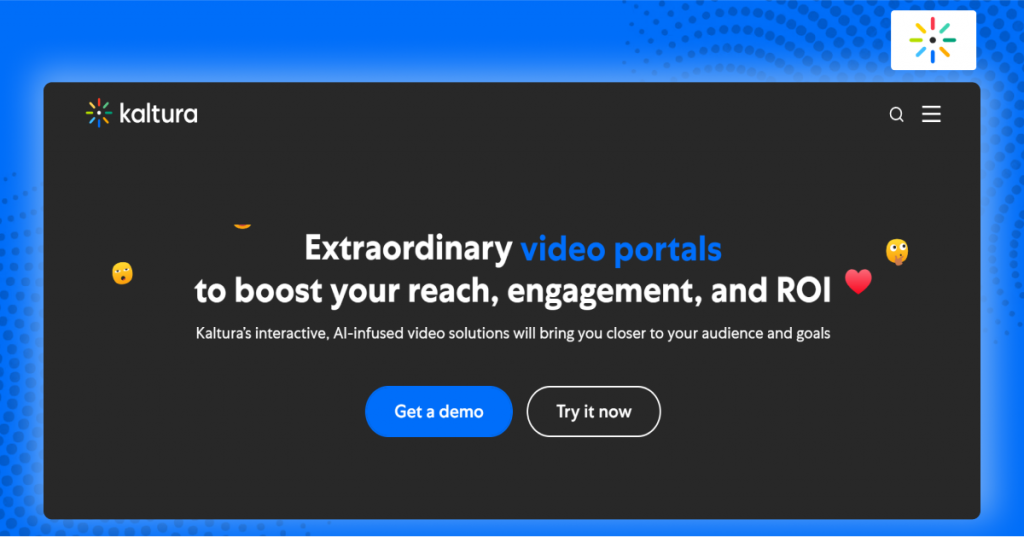
Kaltura is a cloud-based pay-per-view video platform that is predominantly used in educational institutions. It uses single-purchase paywalls to support one-time ticket sales for webinars, conferences, virtual events, and educational content. It offers video management features, audience analytics, and interactive video elements to keep learners engaged.
Key Features
- Granular access with SSO: Provides secure access for specific user groups
- Agentic AI tutors: Built-in AI assistants for personalized learning support
- Video content management system: A centralized video library that manages and distributes content
- Deep LMS integrations: Seamless connections with Canvas, Moodle, and Blackboard
- Pay-per-view live streaming and video-on-demand: One-time ticket sales apply to both real-time and pre-recorded content
- VAST and VPAID compliant: Supports standardized digital ad frameworks
- API-first architecture: Supports custom tech stack integrations
- Supports both on-demand and live streaming for PPV use cases
- Strong analytics and reporting for audience insights
- Scalable cloud based playout infrastructure
- Flexible API integrations for customization
- Platform complexity may require onboarding and setup effort
- Pricing and feature access can vary depending on use case
Pricing
Kaltura offers tiered pricing based on use case:
- Virtual classroom plans starting around $17/month
- Webinar and business plans starting around $250/month
- Enterprise pricing available on request
Build the Education Streaming Platform Your Audience Needs
Ready to build your own Education streaming platform? Explore a solution built for faster deployment and scalability.
Where Kaltura fits well:
- Educational streaming and institutional deployments
- Organizations requiring compliance-driven workflows
- Enterprise environments with structured content governance
Curious to see how it fares against other platforms? Check out our Kaltura alternative guide
3. Brightcove
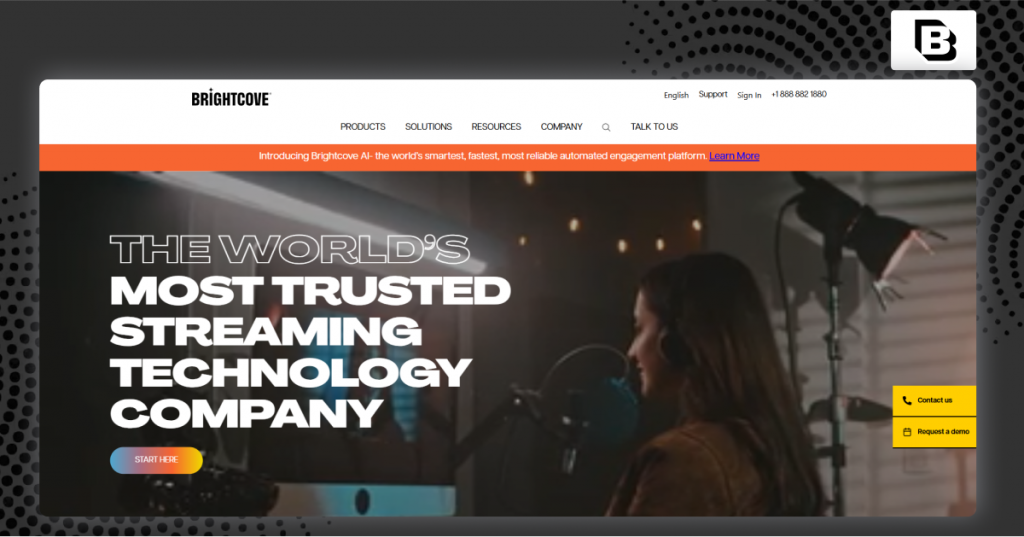
Brightcove is a pay-per-view video platform used by media organizations and enterprise businesses to manage and distribute content at a global scale. It is deployed natively through its Beacon system and offers robust pay per view streaming on a per-title or per-event basis. It delivers videos to viewers across multiple devices with consistent uptime and advanced security.
Key Features of Brightcove
- Flexible monetization: Supports TVOD, SVOD, and AVOD monetization
- SSAI: Server-Side Ad Insertion to bypass ad blockers
- Context-aware encoding: Smart compression technology to reduce bandwidth
- Multi-DRM: Widevine, PlayReady, and FairPlay to protect video content across all devices
- Customizable HTML5 player: A fully responsive web player to align brand-specific styles
- Real-time QoE monitoring: Tracks viewer metrics continuously to optimize streaming performance
- Supports multiple video monetization models
- Comes with analytical tools for tracking performance and engagement
- Reliable multi-device content delivery
- Strong infrastructure for large-scale streaming operations
- Custom pricing structure may not suit smaller businesses
- Platform complexity can require dedicated setup and management
Pricing
Brightcove follows a custom pricing model based on usage, features, and business requirements. Organizations need to contact the sales team for a tailored quote.
Where Brightcove fits well
- Media companies and broadcasters
- Enterprise-scale video deployments
- Organizations requiring structured monetization and governance workflows
Wondering how Brightcove stacks up against competitors? Browse our detailed Brightcove alternative guide.
4. IBM Video Streaming (IBM Cloud Video)
IBM Video Streaming offers pay-per-view video streaming services for virtual events, corporate broadcasts, webinars, and premium content. It allows organizations to offer ticketed town halls and training sessions. It is a highly reliable pay-per-view streaming platform powered by Watson AI that delivers automated captioning and video search across video CMS.
Key Features
- Live transcoding: Real-time video processing based on viewers’ network conditions
- Customizable video portals: Tailored video galleries to showcase content under your branding
- AI-driven video search: Smart Watson AI helps viewers to locate a specific topic easily within a long video
- Multi-CDN delivery: A global network of content delivery servers to minimize buffering
- Individual viewer tracking: Can track a specific viewer’s behavior to understand how each viewer interacts with your content
- Granular access controls: Maintains strict permission settings to keep corporate videos accessible only to team members
- Developer APIs and SDKs: Helps integrate video workflows into existing apps
- Built for enterprise streaming with scalable infrastructure
- Supports both live and on-demand workflows for monetized events
- Strong access control and enterprise video content management security
- Reliable performance for large-scale broadcasts
- Interface and setup may be complex for smaller teams
- Limited flexibility compared to fully customizable OTT platforms
Pricing
IBM Video Streaming offers tiered pricing plans:
- Silver: around $154/month
- Gold: around $773/month
- Platinum: around $1,550/month
Take the First Step Toward Enterprise Streaming Platform Launch
Turn your streaming vision into a deployable product with an enterprise streaming platform solution.
Where IBM Video Streaming fits well
- Enterprise and corporate streaming deployments
- Organizations prioritizing governance and security
- Structured event-based streaming use cases
Build Your Pay Per View Platform With 1000+ Features & 3x Faster
Request Demo
3,500+ happy clients

4.8/5
5. Uscreen
Uscreen offers PPV streaming services for niche-based independent creators who are looking to offer one-time access to individual videos, live streams, and workshops. Though it is primarily a membership-based platform, it also functions as an intuitive pay-per-view streaming platform that allows businesses to sell ticketed live events and rent individual videos
Key Features
- Multiple monetization models: TVOD, SVOD, Content Bundling, Donations, Hybrid
- Netflix-style video catalogue: A user-friendly and well-organized library for easy content discovery
- Advanced member analytics: Performance metrics such as subscriber growth, engagement, and churn
- Marketing tools: Supports abandoned cart recovery and automated email campaigns
- Offline viewing: Allows users to download videos and watch them without internet
- Geo-blocking controls: Restricts content access based on user’s location
- HLS encryption: Offers secure video delivery with HTTP Live Streaming protection
- Audience engagement tools: Real-time chat widgets and interactive polls
- Supports both subscription and transactional monetization models
- Built-in payment processing with multi-currency support
- User-friendly interface for managing content and revenue
- Includes tools for live streaming and audience engagement
- Limited customization compared to fully white-label OTT platforms
- Pricing can scale with subscriber count and feature usage
Pricing
Uscreen offers tiered pricing plans:
- Starter: around $49/month
- Growth: around $149/month + per-subscriber fee
- App Essentials: around $449/month + per-subscriber fee
Create a SVOD Platform That Scales
Build a feature-rich subscription video on demand platform with infrastructure designed for performance and monetization
Where Uscreen fits well
- Creator-led and community-driven video businesses
- Online educators and event-based content providers
- Teams prioritizing ease of use over deep platform customization
Not sure if Uscreen is the right fit? Our Uscreen alternative guide highlights other platforms that might suit your needs better.
6. Vimeo OTT
Vimeo OTT makes it easy to host PPV content, handling both live events and transactional video-on-demand. It helps creators and media brands offer one-time purchases across web, mobile, and TV apps. It is one of the pay-per-view streaming platforms with a SaaS ecosystem offering quick deployments built on a revenue share model. Since it has no upfront costs, it is ideal even for creators who are just starting out.
Key Features
- Global currency checkout: Localized checkout system allows international currencies to reach a global audience
- TVOD buy and rent: Flexibility to offer lifetime ownership or short-term rentals
- Live engagement tools: Live chat and audience poll to encourage engagement
- Real-time viewer analytics: Offers live metrics on audience engagement and content performance
- AI Streaming translation suite: Multilingual subtitles for international reach
- Integrated video CMS: To organize, maintain playlists, schedule and publish videos
- Cross-destination simulcasting: Allows broadcasting across websites and social media of concurrent live events
- Live to TVOD: Helps to repurpose content almost instantly
- Reliable content delivery across multiple devices
- Built-in tools for branding and channel customization
- Integrated analytics for tracking viewer engagement and performance
- Managed SaaS environment with minimal infrastructure requirements
- Limited backend customization compared to other OTT platforms
- Pricing may scale with subscriber base and platform usage
Pricing
Vimeo OTT pricing includes:
- Starter pricing starts at $1 per subscriber/month
- Enterprise plan is for organizations who have custom needs
Where Vimeo OTT fits well
- Creator-led and media brands launching branded streaming channels
- Businesses prioritizing managed SaaS deployment
- Teams seeking simplified monetization configuration
Interested in comparing Vimeo with similar platforms? Check out our Vimeo OTT alternative Guide now
7. Muvi
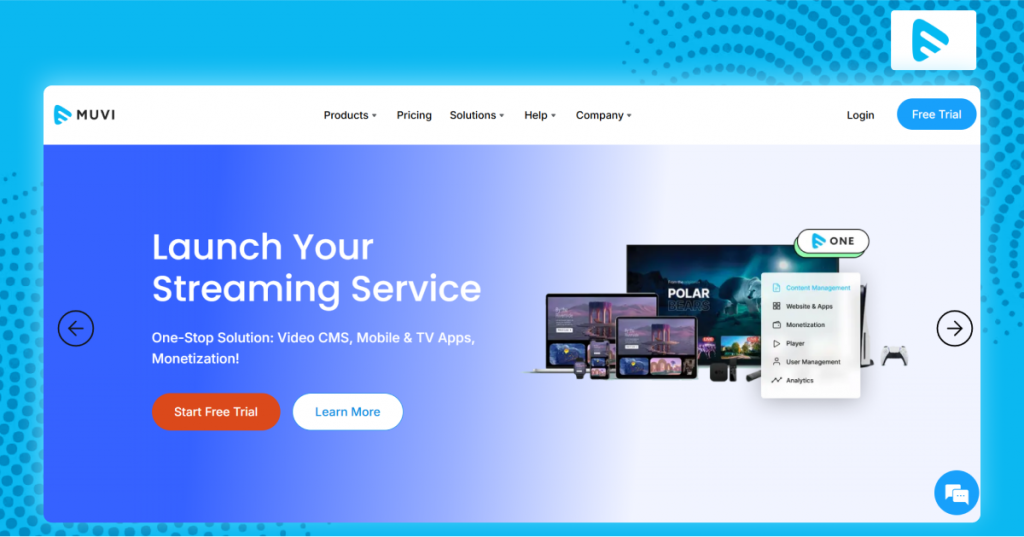
Muvi is a no-code, pay-per-view video platform that provides hosting, CDN delivery, and payment processing right out of the box. The creators can set customizable pricing for different videos and live streaming events like sports and concerts. It offers strong DRM and geo-blocking capabilities to make sure only users who pay can access the content.
Key Features
- Global payment gateways: Integrated checkout system that supports multiple currencies
- PPV and TVOD: Supports one-time ticket sales and video rentals
- Forensic watermarking: An invisible recipient-specific code to track the source of leaked video
- Multi-language and subtitles: Delivers multi-language audio and captions for localization
- AI-powered features: For recommendations and quick video search
- Hybrid monetization support: Combines SVOD, AVOD, PPV and TVOD
- Automated live-to-VOD archiving: For extended sales of on-demand assets
- Analytics and viewer insights: To track user behavior patterns and revenue generated
- Multi-device streaming across web, mobile, and TV platforms
- Built-in content management and distribution controls
- DRM and watermarking options for content protection
- White-label capabilities for branding purposes
- Pricing may be higher compared to entry-level streaming platforms
- Customization depth may vary depending on plan selection
Pricing
Muvi offers tiered pricing across its product suite:
- Muvi One: around $339/month
- Muvi Live: around $84/month
- Muvi Playout: around $169/month
Build Your Own White-label OTT Platform
Explore a white label streaming provider built to help businesses launch and scale their streaming services.
Where Muvi fits well
- Media businesses launching branded OTT services
- Organizations looking for no-code or low-code deployment model
- PPV event-based streaming alongside subscription offerings
Wondering how Muvi stacks up against competitors? Check out our detailed Muvi OTT alternative guide.
8. Dacast
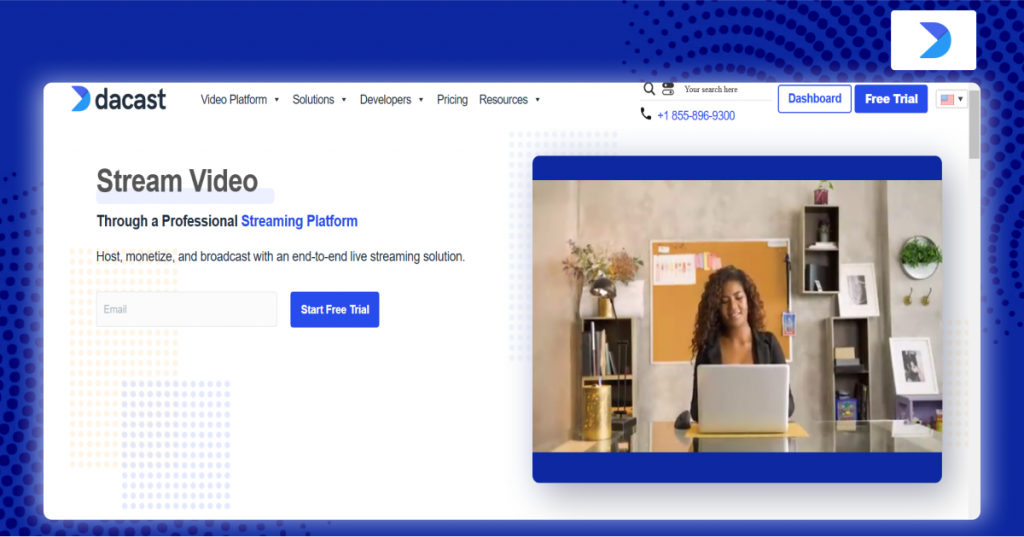
Dacast is a pay-per-view (PPV) platform that monetizes both live and on-demand videos. It has an HTML5 video paywall that takes care of pricing and multi-currency transactions. It enables rapid set-up for multi-tier ticketing without needing to hire developers or integrate any complex merchant accounts. Dacast supports API integrations for businesses that want customized streaming workflows.
Key Features
- In-player integrated paywall: A secure payment gateway for faster checkout
- Automated live-to-VOD archiving: Converting to make profit from on-demand assets
- Geo-blocking: Location-based restrictions.
- DRM and AES encryption: Studio-grade content protection to prevent unauthorized access
- Live countdown clocks: Builds excitement with dynamic on-screen timers
- Viewer activity tracking: Helps keep track of viewer engagement, content performance metrics, and revenue generation
- Global CDN content delivery: Maintains a buffer-free delivery for international audiences
- Promo codes and group pricing: Discounts and bulk pricing structure for promotional campaigns
- Supports both live streaming and VOD workflows
- Global content delivery through CDN infrastructure
- API access for integrations and workflow customization
- Analytics tools for tracking viewer activity and performance
- Advanced features may require higher-tier plans
Pricing
Dacast offers tiered pricing plans:
- Starter: $39/month
- Event: $63/month
- Scale: $165/month
Build Your live Streaming Platform With the Right Technology
Start building your Live Streaming Solution with technology designed for secure streaming and monetization.
Where Dacast fits well
- Event-based PPV streaming
- Organizations seeking a managed cloud deployment
- Professional broadcasting use cases
Interested in comparing Dacast with similar platforms? Our Dacast Alternative guide offers a detailed analysis.
9. JW Player
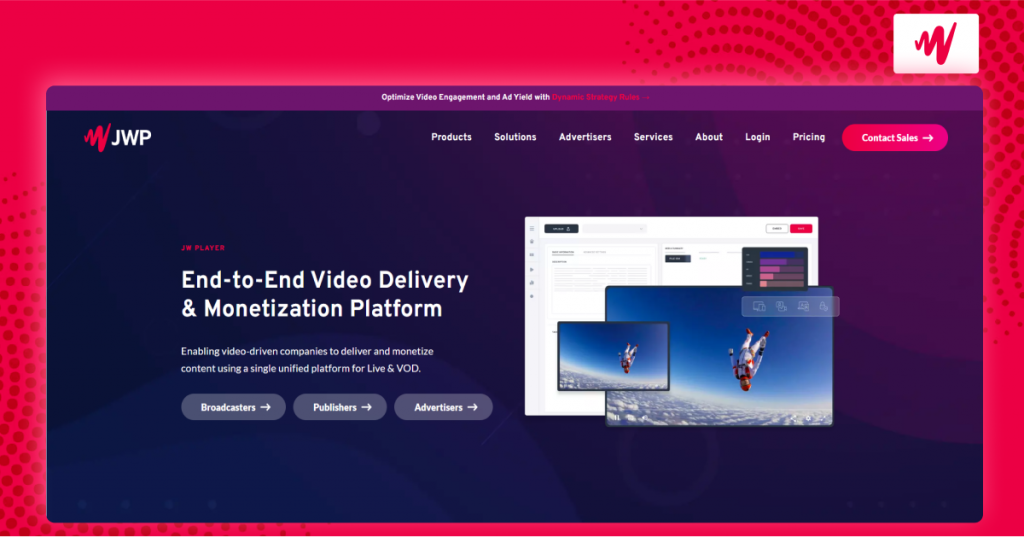
JWZ is unlike other pay per view video platforms that are stand-alone services; It integrates into your existing websites and apps for built-in video monetization. The platform supports API customization to build custom PPV workflows with external tools for payment and access control. It also provides advanced features like SSAI and and Everything is managed from a single dashboard, making it easy to launch and manage video workflows.
Key Features
- Inplayer paywall system: Provides secure payment and content monetization controls
- Developer APIs and SDK ecosystem: To support custom integrations with external applications
- AI-powered content recommendations: Analyzes user trends to suggest personalized matching content
- Studio-grade DRM protection: Blocks unauthorized access and prevents piracy
- Flexible monetization models: SSAI, CSAI, SVOD, TVOD, and PPV
- White-label OTT and CTV apps: Branded streaming experience across web, mobile, and connected TV platforms.
- Viewer behavior analytics: Helps identify drop off points for optimization
- Global pay-per-view localization: Supports regional support to handle multi-currency ticket billing
- Strong HTML5 video player playback performance across devices
- Flexible API integrations for custom implementations
- Reliable analytics for tracking viewer engagement
- Suitable for embedding video into existing platforms
- Not a full OTT platform with built-in app deployment
- Monetization setup may depend on third-party integrations
Pricing
JW Player follows a custom pricing model based on usage and feature requirements. Organizations need to contact the sales team for detailed pricing information.
Launch a Future-Ready OTT Streaming Platform
Looking to build a custom OTT Video platform? Discover a solution engineered for end-to-end deployment.
Where JW Player fits well
- Publishers and media organizations integrating monetization into existing products
- Businesses prioritizing playback performance and analytics
- Teams building custom streaming solutions with API-based infrastructure
Looking for more platform comparisons? Our JW Player Alternative guide covers additional options worth considering.
10. Vixy video
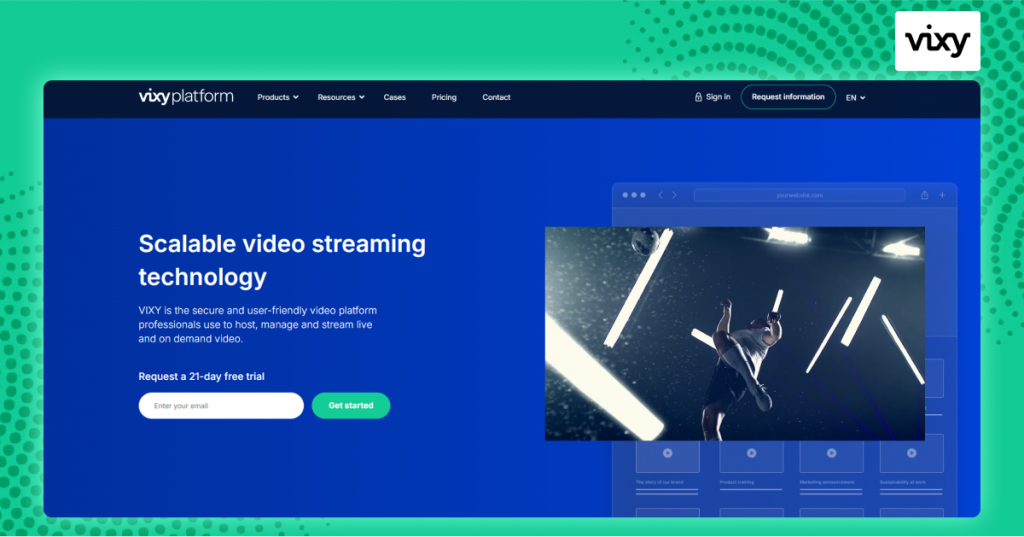
Vixy Video is a pay per view video platform that allows creators to set up their own professional channels to sell individual videos. The platform allows custom payment integrations and tiered pricing for subscriptions. It has security features like DRM, geo-restrictions, and IP-based access rules, which makes it suitable for global-scale video distribution.
Key Features
- Full developer video APIs and SDKs: Supports custom integrations for video workflows
- Role-based user management: Granular team permission settings to prevent unauthorized access
- Tokenized video delivery: Time-sensitive URLs to prevent link sharing and video piracy
- White-label video channel: Allows customizing branding elements to build authority
- Pay-by-resolution options: Lets you create pricing tiers based on video resolution
- Flexible rental and purchase rules: Supports ownership as well as rentals through PPV
- Custom Video Tags: Structured metadata labels for organizing videos in a way that is easy to search
- Pre-roll and post-roll video ads: Ad placements before and after the video for extra revenue
- Advanced access control with geographic and IP-based restrictions
- Strong content protection with DRM and encryption options
- Role-based access management for team collaboration
- Analytics tools for tracking audience behavior
- Limited brand customization options compared to full OTT platforms
- May require integration planning for advanced streaming workflows
Pricing
- Startup – Approx $460 per month
- Professional – Approx $691 per month
- Enterprise – Based on organization’s needs
Turn Your Streaming Vision Into Reality
Bring your streaming business to life with a AVOD Streaming platform built for flexibility, growth, and viewer engagement.
Where Vixy Video fits well
- Firms requiring controlled regional distribution
- Businesses seeking hosted PPV deployments
- Teams needing structured role and permission management
Discover the essential technologies and monetization strategies needed to create your PPV streaming website.
What To Look For In A Pay Per View Video Platform?
Are you impressed by the top pay per view video platform recommendations, but unsure which one to pick? Here are the key considerations that should impact your decision:
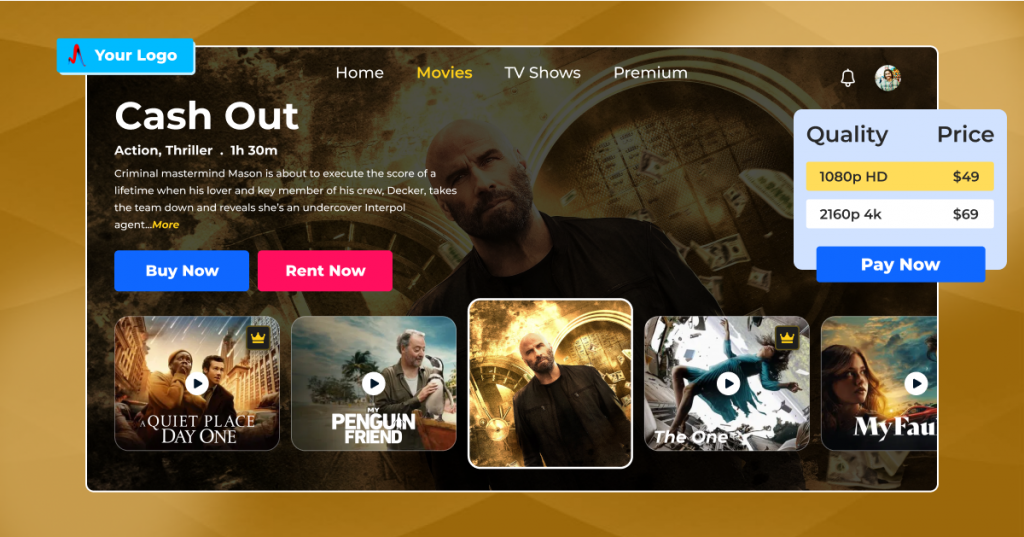
Are you impressed by the top pay per view video platform recommendations, but unsure which one to pick? Here are the key considerations that should impact your decision:
1. Content Delivery (CDN)
A reliable, global CDN is essential to deliver video content to viewers across different regions. Platforms that use geographically distributed servers can reduce buffering and improve playback quality by delivering content from the nearest available source.
Ready for the next step? Learn how to implement it effectively.
More details on the Content Delivery Network that support successful platform development.
2. Video CMS
A video CMS plays an important role in managing content workflows. Look for a system that simplifies content uploads, organization, metadata tagging, and scheduling, helping eliminate operational hold-ups as your content library grows.
A clearer understanding of what is video CMS? helps ensure a stronger implementation strategy.
3. Payment Processing
Payment processing is fundamental to PPV monetization. Platforms should support multiple payment methods such as credit cards, wallets, and region-specific options to reduce friction during checkout and improve conversion rates.
4. Live Streaming Capability and Concurrent Viewer Scalability for PPV Events
For live PPV events, the PPV platform must be capable of handling peak concurrent viewers without performance issues. Important considerations include:
- Support for high concurrent user loads
- Adaptive bitrate streaming for varying network conditions
- CDN failover mechanisms to maintain uptime during traffic spikes
- Low-latency streaming options for real-time experiences
Once your live event is over, you don’t have to stop streaming. You can use a linear channel to keep broadcasting your recorded videos 24/7, just like a regular TV schedule.
5. PPV Pricing Models – Per-Event Fees, Revenue Share, and Platform Costs
Understanding how you can monetize videos using the PPV model is important for long-term growth. Common pricing structures include:
- Monthly subscription fees for platform access
- Per-event or per-viewer pricing
- Revenue-sharing models
- One-time licensing models
Evaluating total cost based on expected audience size and event frequency helps avoid unexpected expenses. Some platforms offer more control over revenue retention depending on their pricing approach.
6. Content Security and Access Control – DRM, Tokens, and Geo-Restrictions
Since PPV content is paid, securing access is essential. Platforms should provide:
- DRM protection for both live and on-demand content
- Token-based access to prevent unauthorized sharing
- Geographic restrictions to control regional availability
- Watermarking and encryption for premium content protection
These features help ensure that only authorized viewers can access paid content. Given the potential of pay per view streaming, selecting the right platform is an important first step in building a sustainable video monetization strategy.
Why Businesses Use PPV for Video Monetization?
Pay per view is commonly adopted in situations where content is event-driven, time-sensitive, or positioned as premium. Key considerations that make PPV relevant include:
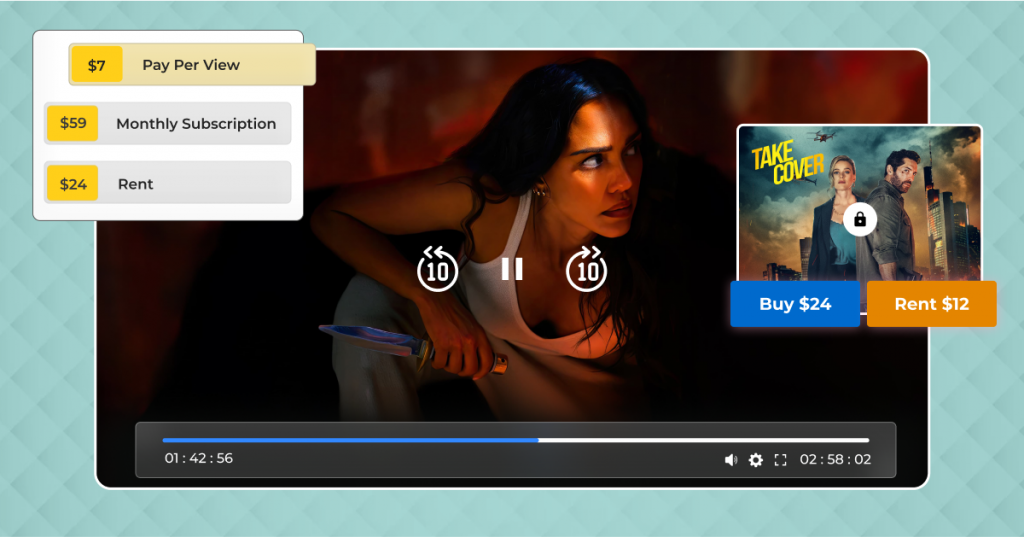
- Direct Transaction-Based Revenue:- Revenue is generated per event or per content purchase rather than through recurring subscriptions.
- Pricing Flexibility:- Content owners can set event-specific pricing based on audience demand and exclusivity.
- Event-Centric Monetization:- PPV is often used for live broadcasts, one-time digital events, and premium releases where recurring subscriptions may not be necessary.
- Access Control and Security Options:- Many PPV platforms include DRM, encryption, watermarking, or token-based access systems to help manage distribution.
- No Audience Size Commitment:- PPV works whether you have 100 viewers or 100,000, without requiring subscription scaling or tier-based pricing.
- Global Payment Processing:- Multi-currency support enables cross-border monetization and access for international audiences.
Between instant revenue generation, more control, scalability, and security measures, PPV streaming platforms present content creators with a chance to build a sustainable streaming business.
Conclusion
Pay per view remains a relevant video monetization model for event-based, premium, and time-sensitive video content. Its transactional structure offers flexibility for creators and organizations that prefer one-time purchases over recurring subscriptions.
However, not all PPV platforms are structured the same way. Differences in deployment models, monetization, content protection features, scalability, and pricing structure can influence long-term viability.
When evaluating a PPV video platform, it is helpful to:
- Define your primary video monetization strategy
- Estimate expected event scale and audience size
- Assess required device compatibility
- Review content protection requirements
- Compare total cost of ownership rather than headline pricing
The platforms reviewed in this guide represent different segments of the video streaming ecosystem, each aligned with specific technical and business contexts.
A structured evaluation process will help ensure that platform selection supports both immediate event needs and long-term monetization goals.
FAQ’s
1. What is pay-per-view (PPV) video streaming?
Pay-per-view (PPV) is a video monetization model where viewers pay a one-time fee to rent or buy an individual video. It is otherwise known as Transactional Video-on-Demand (TVOD). This is ideal for exclusive events like sports, webinars, and other time-sensitive events. Unlike subscriptions, users pay only for the content they want to watch.
2. How Does PPV Streaming Work?
PPV streaming works by charging viewers a one-time fee for a specific event or an individual video. Upon successful payment, users can access the content for a set period of time, depending on the content provider’s pricing and policies.
3. How Can I Start Selling My Video Content Online With a Pay Per View?
To sell your video content online for pay per view, choose a dedicated pay per view video platform like VPlayed. You can upload your content, set specific pricing and access window. Then connect a payment gateway and publish the content.
4. What features should you look for in a pay-per-view video platform?
Look for a built-in paywall with multicurrency support and payment processing. If you are looking for global scale, then geo-blocking controls and multi-DRM are a must. The ticket pricing, rental windows, and the video player have to be customizable.
5. What security features should a pay-per-view platform provide?
A pay-per-view platform should provide multi-DRM protection, encryption, a built-in paywall with multi-currency support, geo-restrictions, tokenized access, dynamic watermarking, screen-recording prevention, and user authentication. This helps prevent unauthorized access and illegal sharing.
6. Which is the best white-label pay-per-view platform for businesses?
VPlayed is the best white-label pay-per-view platform for businesses since it offers complete customization with one-time licensing and source code ownership. It supports both PPV live streaming and PPV video-on-demand with security across multiple devices.
- Request Demo Book a Live, Personalized Demo
- Contact Sales Reach Out to Our OTT Experts

Senior Analyst specializing in Online video platforms, OTT, VOD, and white label video streaming solutions. Expert in analyzing industry trends, technologies, and monetization strategies to help businesses optimize their streaming services. Passionate about innovation and the evolving digital video landscape.