Summarize this article in:


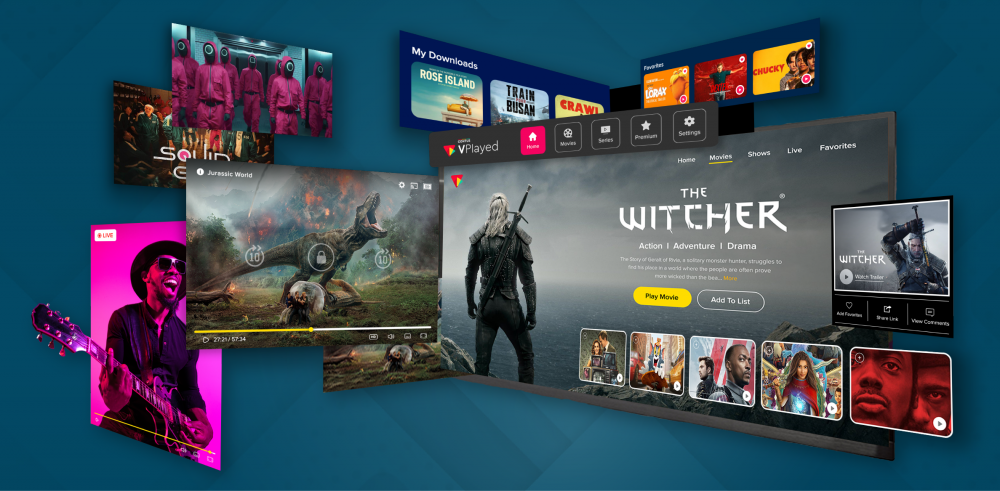
What is OTT & what does OTT stands for? Explore the meaning and definition of Over The Top with its working and why it matters to your video business.
OTT has transformed how people consume content by removing the need for fixed schedules and traditional cable or satellite systems.
Since this allows viewers to watch content anytime and on any device of their choice without the constraint of a rigid schedule, it has created a seismic shift.
The flexibility of not having to chase the content slowly led to watching shows on demand and then streaming a live match, switching from one device to another, and eventually late-night binge-watching. That is the quiet power of OTT Platform.
In this blog, we’ll explore what is OTT, how it works, popular OTT examples, business models, and benefits. Let’s get started.
- Fully Customizable
- Lifetime Ownership
- On-Premise/On-Cloud
- 100% White-label
- Zero Revenue Share
- Hire Developers
What is an OTT?
OTT is a method of delivering video, audio, and other media data directly online without relying on traditional cable or satellite television providers.
So, what does OTT stand for? It stands for Over-the-Top, which emphasizes the circumvention of traditional broadcast networks by OTT streaming services to provide direct and on-demand access to content.
While we often associate OTT meaning with video streaming giants, the technology covers a wide spectrum of digital media, which includes:
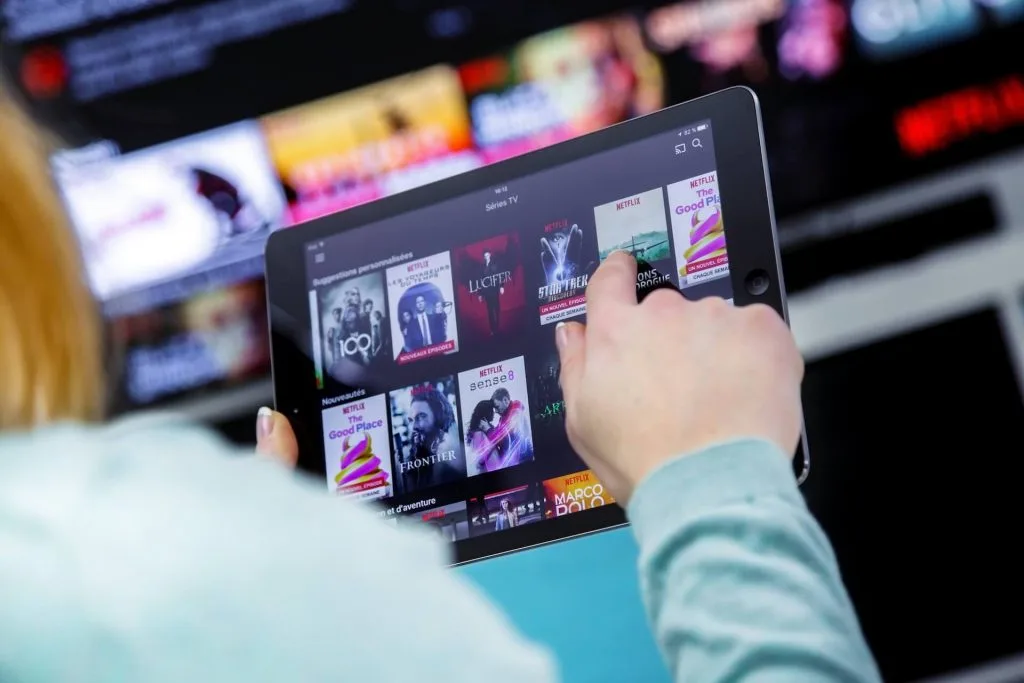
- Video: On-demand services and live stream sites.(e.g., Netflix).
- Audio: Digital podcasts and music streaming (e.g., Spotify).
- Messaging: Internet communication (e.g., WhatsApp).
In contrast to traditional broadcasting, where a fixed schedule is employed and specific hardware, like a set-top box, is required, OTT enables users to access content anytime and anywhere.
You are able to access thousands of titles (with a stable internet connection) and can easily switch between your phone and smart TV, and even download content to watch offline.
Netflix, Amazon Prime Video, and Spotify are the most well-known examples of OTT platforms that provide their users with high-quality streaming services around the world.
On the whole, OTT has revolutionized the experience of consuming digital content by incorporating internet-based delivery, on-demand access, and multi-device compatibility into a single cohesive experience.
How Does OTT Work?
In its most basic definition, OTT is the delivery of media-related content through the internet as opposed to the traditional methods of broadcasting, including cable and satellite. As a viewer selects a video on an OTT, it is downloaded into cloud based playout servers and delivered to his/her device in real time.
Unlike traditional TV, where the shows are aired at a pre-established time, OTT is founded on on-demand broadcasting. Users can access content any time, pause, resume, or even change devices without losing content.
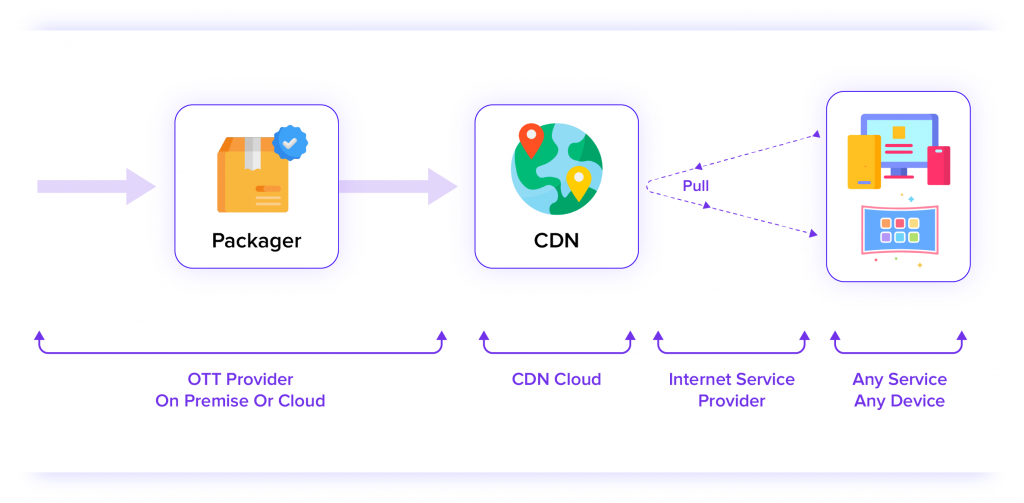
OTT services are technically founded on content hosting, content delivery network (CDN), and adaptive bitrate streaming to offer smooth playback across a broad spectrum of internet speeds and devices.
How OTT Streaming Works
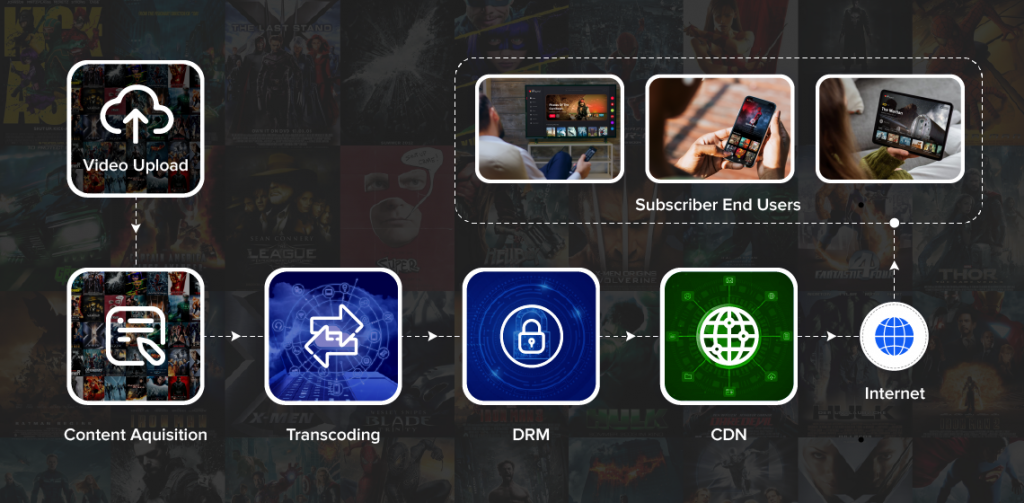
The OTT streaming process involves a series of steps that work together to deliver quality content:
- Content Ingestion
Raw video content is uploaded to the site, such as movies, shows, or live streams; in many workflows, creators first polish the footage with basic color grading tools such as free LUTs for a more consistent look.
- Encoding and Transcoding
The content is transformed into various types and resolutions to suit the devices.
- Content Storage
The files are stored in a cloud server in an easily accessible format.
- Content Delivery through CDN
A video CDN serves its content using worldwide servers, minimizing the latency and enhancing load speed.
- Playback on User Device
Adaptive bitrate streaming streams content in small chunks and varies the quality depending on the internet speed.
Role of Internet and Devices
OTT’s performance is based on the internet connectivity and compatibility with devices. Constant connection ensures continuous streaming, and adaptive streaming minimizes buffering. The content is available on smartphones, smart TVs, laptops, and streaming devices, and can be watched on multiple screens without any friction.
OTT Content Types
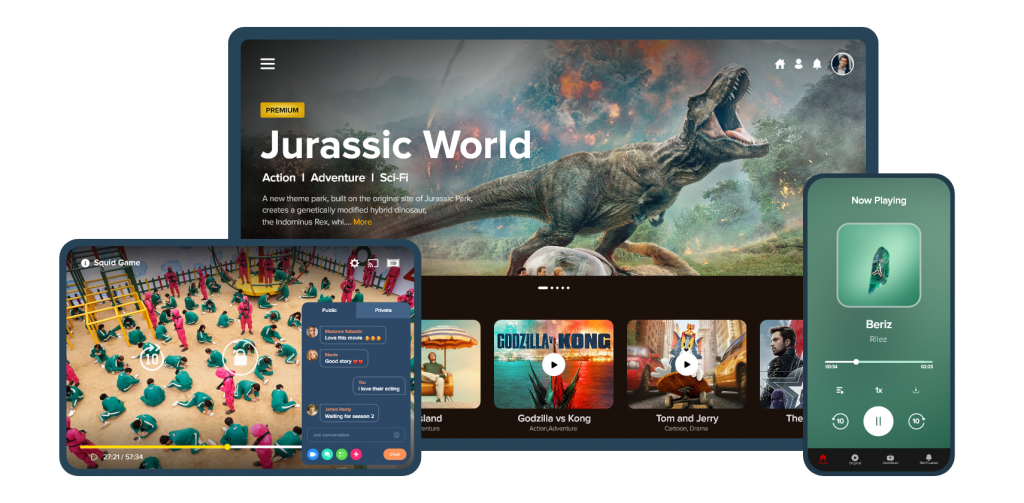
OTT primarily offers two content types: video-on-demand and live streaming, which fulfill two types of viewing needs and user behavior.
Video-on-Demand (VOD)
Video-on-demand allows users to watch pre-recorded content (movies, TV shows and web series) at their convenience. The on-demand streaming model gives the viewer full control over the play-out, such as having the option of pausing, rewinding and taking a break.
OTT services are based on content libraries, cloud-based storage, and adaptive bitrate streaming to ensure a seamless viewing experience on all devices and at various internet speeds. The VOD is popular as a way of binge-watching and getting personalized content.
Live Streaming
Live streaming offers live events such as sporting events, news, webinars, and live performances. Unlike VOD, content is streamed in real time with minimal buffering. This requires low-latency streaming, a good content delivery network (CDN), and a high-speed internet connection to ensure quality and reduce delays.
Together, these formats form the base of the modern OTT streaming, including flexibility and real-time interaction.


Popular OTT Platform Examples
The OTT market has features of niche and hybrid services that attract different viewing habits around the globe. The following are the primary leaders in the 3 key groups:
- Premium VOD (Subscription-Based):
- Netflix: The largest company with over 325 million subscribers, whose originals have large budgets and have recently ventured into live events.
- Disney+: The central hub of franchise-based content (Marvel, Star Wars) and family content.
- Hybrid & Transactional (SVOD/TVOD/AVOD):
- Amazon Prime Video: A versatile application that has a subscription library and allows you to rent or buy new releases.
- Hulu: One of the first of its kind in the ad-supported model, with current season TV programming.
- Specialized & Live OTT:
- Peacock: One of the earliest to combine on-demand archives with live sports (NFL and Olympics).
Crunchyroll: The best niche distributor of anime.
Types of OTT Business Models
Video streaming OTT platforms have four primary revenue models that appeal to the different user preferences and monetization strategies.
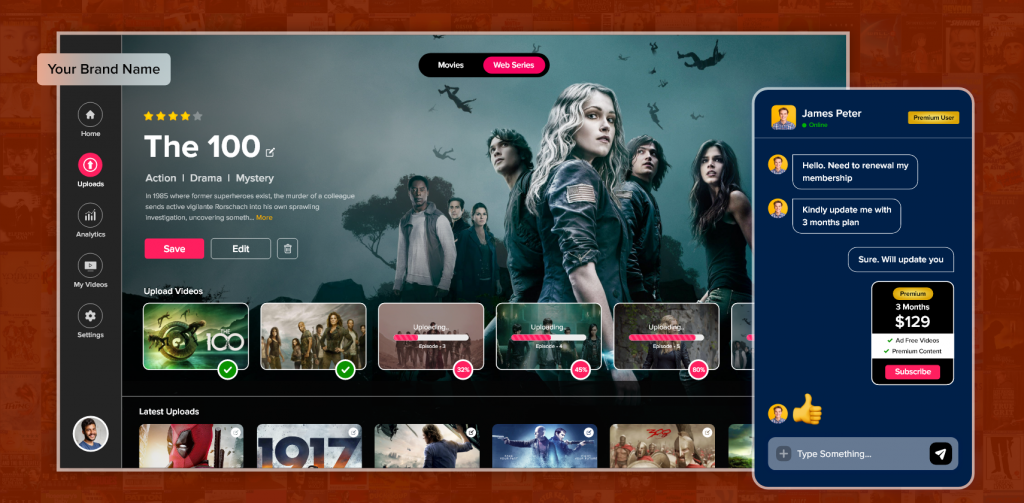
1. Subscription Video on Demand (SVOD)
SVOD is a subscription-only model in which the customer has to pay a subscription fee either on a monthly or yearly basis and, in return, attains unrestricted access to an unlimited library of content.
- Best for sites with high original content (e.g., Netflix, Disney+).
- Key Advantage is that it creates reliable Monthly Recurring Revenue (MRR) and a high retention rate.
2. Advertising Video on Demand (AVOD)
AVOD typically offers free, ad-supported content, though some platforms also include lower-cost ad-supported tiers.
- Best for reaching price-sensitive users and scaling without a paywall (e.g., Tubi, Pluto TV).
- Key Advantage is good user acquisition rates. In 2026, Hybrid-VOD (with a cheaper ad-supported tier) is a best practice in the industry, in terms of ARPU (average revenue per user).
3. Transactional Video on Demand (TVOD)
TVOD may also be known as Pay-Per-View, where individuals may purchase and/or rent individual content.
- Best for new movies, live shows or documentaries with a niche following (ex: Apple TV subscriptions, UFC PPV).
- Key Advantage is the greater short-term margins without an extended subscription contract.
4. Hybrid (The 2026 Industry Standard)
A Hybrid model combines two or more of the above strategies to maximize ARPU (Average Revenue Per User).
- Best for established platforms that are seeking to reduce churn and access different market segments (e.g., Amazon Prime Video, Peacock).
- The key advantage is the flexibility. Applications may also contain a low-tier (AVOD) and a higher-tier (SVOD) with or without advertisements and still have premium blockbusters at a higher cost (TVOD).
Benefits of OTT Platforms
OTT has changed the way of consuming digital media, introducing on-demand streaming, cross-platform viewing, and a flexible attitude towards monetization, which is beneficial to both business and viewers.
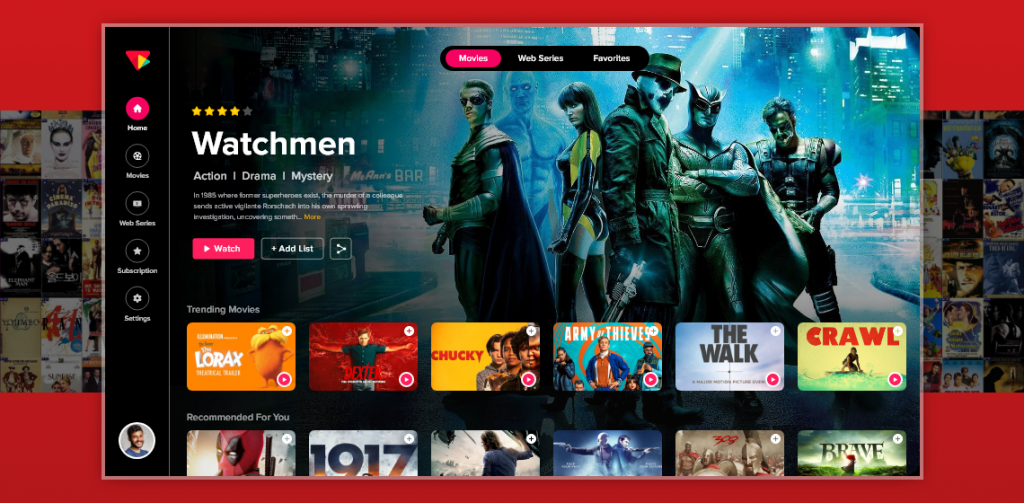
For Businesses
For content creators and enterprises, OTT provides some level of control and understanding that previously did not exist:
- Direct-to-Consumer (DTC) Access: The business will be able to circumvent the distributors, own the customer relationship entirely, and get a higher profit margin and brand loyalty.
- Granular Data Analytics: OTT can provide granular data about viewer activity, including drop-offs, device usage, and geographic heat maps, in contrast to traditional TV ratings that are only updated on a periodic basis. This facilitates hyper-personalized marketing and a better-informed content investment.
- Monetization Flexibility: Platforms can switch to SVOD, AVOD, or Hybrid based on market dynamics to maximize ARPU (Average Revenue Per User).
- Global Scalability: With an effective CDN (Content Delivery Network) a business is able to access an international audience overnight without necessarily investing in local physical infrastructure.
For Viewers
- On-Demand Convenience: OTT is an anytime, anywhere phenomenon that allows viewers to no longer be slaves to a programming grid.
- Cost-Efficiency: Viewers are able to subscribe to individual channels that are considered niches rather than spending money on huge, bloated cable packages that may include 100 channels that they never watch.
- Multi-Device Portability: It is easy to start a movie on a Smart TV and finish it on a smartphone during a commute, thus offering a seamless user experience (UX).
Enhanced Content Discovery: AI-enhanced recommendation engines can enable users to discover new content that is no longer based on the general trends but rather on their personal viewing history.
If You’re Thinking of Creating Your Own OTT Channel To Generation High Revenue
Challenges of OTT Streaming
Despite the ongoing industry boom, the scaling of an OTT platform in 2026 is fraught with significant technical and strategic difficulties. These are the problems that market leaders solve to build successful streaming services.
- Content Fragmentation & Fatigue: Niche sites are too numerous and subscription burnout is a reality. This complexity and high costs of managing numerous accounts overwhelm the users and results in high churn rates.
- Bandwidth & Latency Issues: It is very bandwidth-intensive to deliver high-definition (4K/8K) content. In the absence of a successful Multi-CDN strategy, the platforms experience buffering and latency, particularly when it comes to high-concurrency live events that are being streamed.
- Security & Piracy: Intellectual property protection is a battle. In order to avoid instances of illegal restreaming and sharing of credentials, sophisticated DRM (Digital Rights Management) and forensic watermarking must be put in place.
- Device Fragmentation: They should be continually developed and regression tested to maintain a uniform UX on a huge ecosystem of Smart TVs, consoles, and diverse flavors of mobile OS.
Traditional TV vs. OTT: Key Differences
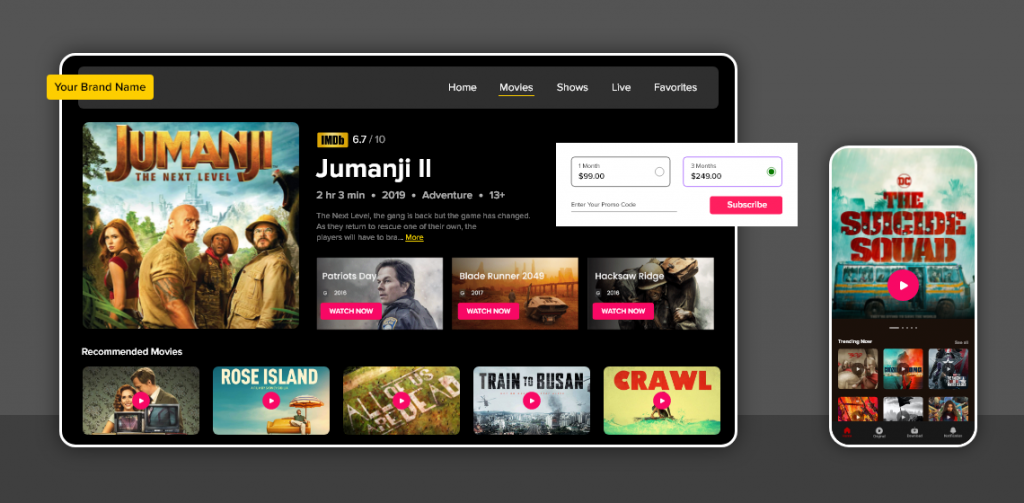
The traditional TV and OTT platforms are fundamentally different in terms of delivery, access, and monetization of content. The comparison below depicts how the hardware-based viewing has transformed into an adaptable, internet-based experience.
- Content delivery: Traditional television is completely reliant on satellite, fiber or cable companies. OTT platforms are those that deliver content via the internet with the assistance of broadband or mobile data.
- Viewing control: Traditional TV has a strict OTT broadcasting schedule (linear broadcast), and OTT allows watching on demand, which means that a user can watch at any time, pause, or continue watching without restrictions.
- Device compatibility: Traditional TV can only be used with television sets with set-top boxes. OTTs can be used with various devices, including smartphones, smart TVs, laptops, and tablets.
- Personalization: Traditional TV broadcasts the same content for all viewers, whereas OTT services rely on AI-based personalized recommendations and it is pegged on personal viewing patterns.
- Pricing and ads: The traditional TV is associated with long-term contracts and generic advertisements. OTT has customizable subscription packages, no- or low-cost ad-supported options, and custom advertising.
History and Evolution of OTT
- 1993–1994: The first streams. It was the band Severe Tire Damage that first streamed live over experimental MBone technology, and this demonstrated that video could be streamed over the internet.
- 2005–2007: Launch Era: As YouTube (2005) was introduced and Netflix became a streaming platform (2007), the Over-the-Top concept became a reality.
- 2013–2015: The Rise of Originals: Netflix’s House of Cards showed that OTT could compete, and even beat, the old studios, in awards and premium subscribers.
- 2019–2021 The Streaming Wars and COVID-19: The launch of Disney + and the pandemic caused the cord-cutting movement to go viral, and OTT became the primary entertainment source across the globe.
- 2024-2026: The Hybrid Revolution: The OTT business has shifted to FAST channels (Free Ad-supported Streaming TV) and hyper-localisation with a profit focus and global local content focus.
The Future of OTT
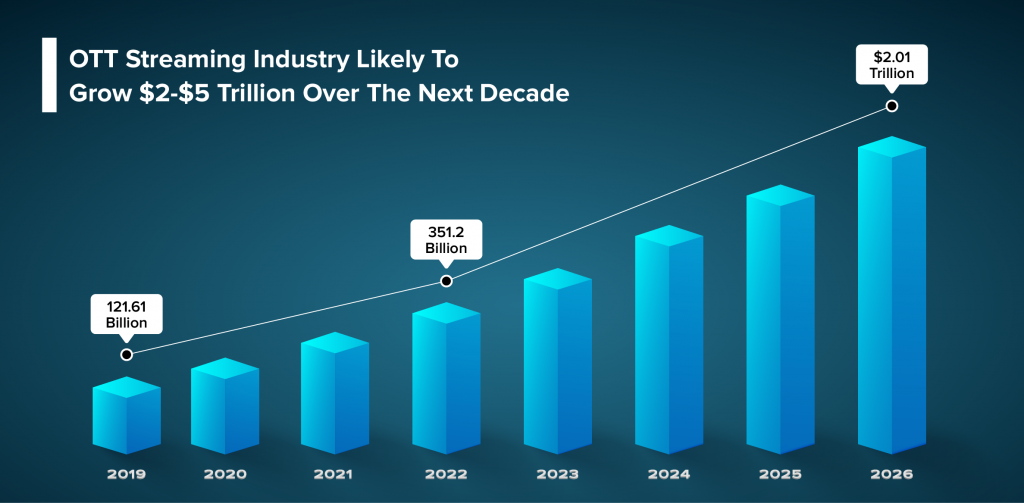
OTT in 2026 is not about hosting videos anymore; it is on the edge of the intelligent orchestration era. As the market is projected to expand to $383.52 billion by the end of 2026, sustainable profitability and progressive technology have been the major targets as compared to sheer subscriber growth.
- The Hybrid Revenue Dominance: Pure SVOD (subscription) is hitting a ceiling. The future is Hybrid models, which will enjoy a growth of 12.81% CAGR. Advertising tiers are increasingly being incorporated with paid subscriptions on platforms as a means of drawing price-conscious viewers.
- Hyper-Personalization through AI: AI Streaming platform has surpassed the if-you-liked-this list of recommendations. In 2026, AI-powered adaptive bitrate streaming reduces buffering by up to 35% by predicting network conditions and adjusting video quality in real time, while predictive analytics helps reduce user drop-offs by anticipating viewer behavior.
- The FAST Channel Explosion: The FAST Channel platform is the fastest-growing sub-sector. By 2030, Global FAST revenue will have a future of $34 billion, and viewers will revert to a channel-surfing experience, without the cable bill.
- Live Sports and Real-Time Low Latency: As major sports leagues have gone Direct-to-Consumer (DTC), the technical standard has been raised. The next generation requires broadcast quality and a latency of less than 3 seconds to ensure social media spoilers are kept at bay.
Conclusion
That is everything about the basics of OTT, from its full form and meaning to its functionality, popular platforms, business models, advantages, and challenges.
OTT stands for Over-The-Top and has actually revolutionized the manner in which the world consumes media. The traditional TV used to dominate with strict schedules and cable deals. Today, viewers want to watch on demand, be able to use the device anywhere, and receive personalized suggestions, all of which are possible through a simple internet connection.
OTT presents a worldwide opportunity, direct-to-consumer data, and the chance to monetize directly through SVOD, AVOD, or a hybrid framework to businesses. To the viewers, it is freedom: freedom to watch what they like, where they please, when they choose.
The OTT market is evolving continuously – the next phase will be AI-controlled customization, FAST channels, and live sports streaming. Understanding OTT is no longer optional for content creators, marketers, or even casual viewers; it defines both the present and the future of entertainment.
- Request Demo Book a Live, Personalized Demo
- Contact Sales Reach Out to Our OTT Experts
Frequently Asked Questions(FAQ)
1. What Is OTT (Over The Top) And Its Meaning?
OTT stands for “Over The Top ” which refers to any kind of streaming service that transmits content through wireless internet. Usually, over-the-top(OTT) is named with reference to devices that allow users to easily access media content by going “over” satellite or cable connection or can say without using a cable box. The key difference is users needn’t depend anymore on traditional broadcast providers, after shifting to OTT.
2. How Does OTT Work?
As the meaning of the name ‘OTT’ implies about services delivered ‘on top of the other service, it depends on providing contended user experience at a wide range of network performance. OTT technologies are designed to minimize the impact of parameters like internet speed, a display device, network loops between provider & end user. Thus, it will adapt to the entire chain of network performance in real-time to scale up the best quality.
3. Why OTT Is Important For Your Business?
The definition of what is OTT carries high importance since its seen as a new phenomenon, where there’s a lot of room for expansion. Many media companies are entering the OTT industry, giving consumers plenty of options to view & boost the amount of content inventory available to broadcasters, advertisers. As more people cut the cord and go-to online media consumption, OTT services will have a huge scope to captivate revenue growth for long years.
4. What Are The Challenges Of Launching An OTT For Your Business?
Talking about what kind of real challenges does bother our OTT businesses in the industry, we get to know the importance of distribution, exclusive pricing, and futuristic affordability. These limitations directly mean that big transitions counter more implications than just cutting cords with cable services. Undoubtedly, the fact can’t be ignored that conventional entertainment has shifted its way of offering services, but also determines how we watch them too.
5. How To Create An OTT Service For Your Brand?
It is important for you to have first-hand benefits of knowing what is all in there in an OTT service. Business components like the bespoke solution, white labelling services, lifetime ownership, one-time licensing cost, cross-platform support & much more. They underplay in creating an OTT service while you can enjoy reaping maximized revenue paybacks supported through customized monetization models.
6. What Is The Way To Become More Successful In The OTT Industry?
The OTT video market stand for global media opportunities for decades, so a wait-it-out approach for growth is not a viable option. Content brands can smartly answer what does it take to create a successful OTT offering. Some of them are: defining content strategy, building core business model agility, sketching a distribution roadmap across streaming, marketing tactics, refine video services with technology, etc.

Blogger & OTT Expert at VPlayed. Interested in digging deep into video streaming media tools, blog, discuss and share views on the legal OTT solution' & latest technologies tips, and tricks. Also passionate about photography loves to capture the pure essence of life.