Creating an OTT platform for niche communities is the new way to monetize digital audiences. More businesses are moving towards this trend as personalized content has become the industry standard, and this surge is backed by growth statistics.
According to Grand View Research, the OTT services market size was estimated to be $280 billion in 2024 and is projected to reach $1.35 trillion in 2033.
This indicates a booming revenue and a continued need for online video streaming platforms as viewers move out of the traditional broadcasting models.
Whether you are a content creator, media company, or entrepreneur, this guide will walk you through how to create your own OTT platform that fits your specific business goals.
- Fully Customizable
- Lifetime Ownership
- On-Premise/On-Cloud
- 100% White-label
- Zero Revenue Share
- Hire Developers
Why Create an OTT Platform in 2026?
Starting an OTT platform in 2026 is a strategic choice as it removes middleman fees while capturing the global demand for niche, on-demand content. Upon launching an OTT platform, businesses can build loyal audiences and reliable income streams through flexible video monetization models.
The main benefits of having your own OTT platform include:
⚡️Direct-to-Consumer Access
The foremost benefit of having an OTT platform is that you have the authority to distribute content directly to your audience.
Platform ownership will also provide greater profit than collaborating with a third-party platform. You do not need to pay any commission fee, and you are not bound to the controlled recommendation algorithm, external rules, and content guidelines.
⚡️Monetization Flexibility
Select a video monetization platform strategy that suits you.
- SVOD (Subscription Video-on-Demand): Your users subscribe to your OTT service and access your content library for a monthly or annual subscription fee.
- TVOD (Transactional Video-on-Demand): Pay-per-view service, where the user pays for individual content. They can rent or buy permanently, which gives you flexibility in terms of premium or exclusive releases.
- AVOD (Advertising Video on Demand): Videos can be viewed free of charge, but ads are shown either at the beginning, middle, or end of the videos.
- PVOD (Premium Video-on-Demand): A more advanced type of model in which the user pays a premium price to view content first or exclusively before it is made available elsewhere.
- Hybrid Models: A strategic combination of monetization models, such as subscriptions, advertisements, and pay-per-view, to attract different groups of audiences.
⚡️Content Versatility
Owning an OTT platform gives you the flexibility to adapt, repurpose, and distribute content based on your audience’s preferences. You can live-stream events, such as webinars, sports events, and product launches, and turn them into on-demand content automatically.
This versatility satisfies the diverse preferences of the viewers. Live viewers enjoy exclusivity, and on-demand users enjoy the option of watching anytime.
⚡️Global Scalability
Reach global audiences with an effective video Content Delivery Network to reduce the load on your origin server.
It prevents downtime when millions of concurrent viewers are watching your content. Adaptive bitrate offers seamless playback to users irrespective of their geographic location.
⚡️Actionable Insights
Advanced analytics offers visibility into how users interact with content, including engagement metrics, watch time, drop-off points, device usage, and subscription activity.
By analyzing engagement patterns and behavior trends, you can determine high-value user segments and improve churn prediction accuracy.
⚡️Strengthen Brand Identity
Create a fully branded streaming experience that feels like yours, not a generic platform. White-label your OTT platform using custom logos, color schemes, fonts, and UI layouts.
Create a premium experience that makes your platform immediately recognizable and sets it apart from your competitors.
What Core Features Should an OTT Platform Include?
In order to remain competitive in the OTT space, you must develop an OTT platform with the right mix of core functionalities. The following features are the building blocks for a successful OTT platform.
⭐ Multi-Device and Multi-Platform Support
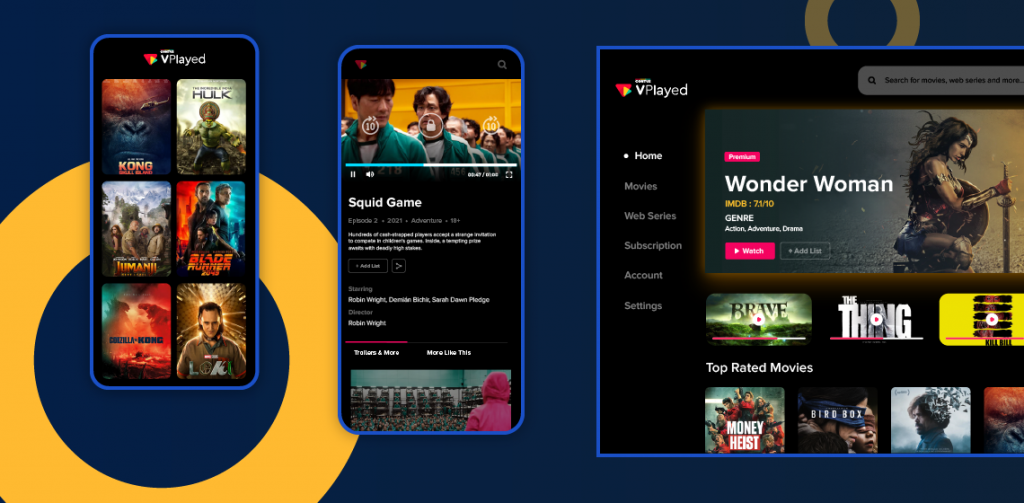
Your OTT video streaming platform must offer smooth and uninterrupted playback on various devices. Cross-platform streaming allows ‘continue watching’ from any device of their choice.
For viewers to have a buffer-free experience, reliable cloud transcoding and adaptive bit rate are essential for dynamically switching video quality based on their network conditions.
⭐ Flexible Video Monetization Models
A single revenue stream isn’t sustainable in the long run. Make sure the OTT platform supports standard monetization models like subscription plans, pay-per-view purchases, ad-based viewing, or hybrid models.
Furthermore, features like catch-up TV and Server-Side Ad Insertion (SSAI) are used to monetize delayed linear viewing and dynamic ad delivery. Having coupons and promotions is another strategic advantage to incentivize viewers while getting better engagement.
⭐ Scalable Video Content Management System
A good video CMS should be capable of supporting centralized content uploads, metadata tagging, category management, content scheduling, and playlist management.
Look for the content partner portal to allow external contributors to upload and manage their videos without needing access to core settings. Ensure the video CMS also has an integrated media center, which is a unified hub that aggregates media from various sources.
⭐ Advanced Video Player (HLS/DASH)
HLS and DASH protocols automatically adjust video quality to ensure buffer-free, low-latency streaming to maintain high user engagement.
Features such as screen casting, screen mirroring, picture-in-picture, playback speed control, multi-language audio, and subtitle tracks add flexibility and improve content accessibility.
⭐ Built-in Security and DRM Protection
Your content must be protected with multi-layered security. Your OTT platform should have DRM encryption, geo-blocking, and screen recording prevention to stop unauthorized content redistribution.
Dynamic token security and access control must be implemented to verify user sessions in real-time. To prevent unauthorized access, the OTT platform must restrict simultaneous logins and apply password protection for identity authentication.
⭐ Analytics and User Engagement Tools
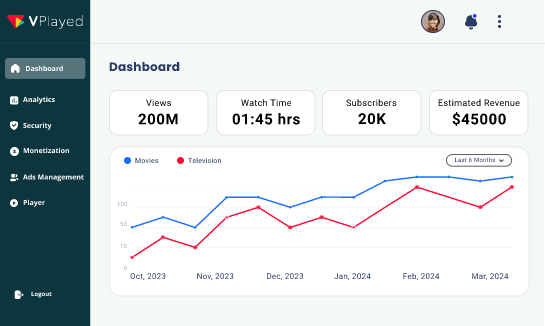
For long-term growth, you need to know audience behavior. The analytic dashboard shows viewer demographics, engagement metrics, content performance, and watch time patterns.
Revenue reporting and location metrics identify high-value geographic regions and determine the Lifetime Value of your viewers for revenue forecasting.
⭐ White Label Branding
Having a white-label customization will let you launch your OTT platform under your own branding. You can customize everything from fonts to navigation layouts to reflect your brand.
Developer-friendly RESTful APIs allow you to integrate your own authentication and billing systems. Also, removing third-party markers lets you build a stronger brand identity and foster deeper trust with your audience.
Guide: How to Build an OTT Platform
| Steps to Start an OTT Platform | What It Means |
| Define your OTT objectives | Identify target audience, define content niche, and set business goals |
| Conduct market research and feature analysis | Carry out market research and feature analysis. |
| Plan UX, UI, and platform architecture | Design a user-friendly interface for high user retention and engagement |
| Select the right technology stack | Finalize CDN providers, video players, databases, and integrations for smooth content delivery. |
| Decide on the OTT video monetization model | Choose a revenue model based on audience preferences, such as subscriptions, pay-per-view, ads, or hybrid options. |
| Choose an OTT development partner | Find a provider with OTT expertise and a track record in video tech. |
| Develop core OTT platform features | Begin the development of core features, such as multi-device compatible video players, CMS, and user authentication and management. |
| Integrate security and compliance | Implement security protocols like DRM, encryption, geo-blocking, and other regulatory compliance measures. |
| Test and launch the OTT platform | Perform rigorous cross-device testing to provide smooth playback and stability for a positive first impression. |
✅ Step 1: Define Your OTT Objectives
The business and platform objectives should be outlined in advance before entering into development, as they’d guide every technical decision you make.
Action items:
- Start with the demographics and content preferences of your viewers.
- Pick a content niche that fits your audience’s interests to strengthen brand positioning.
- Set growth milestones and revenue targets for the first year.
- Identify the existing content gaps in your niche and develop a content strategy.
- Set a realistic budget range and timeline expectations based on the technical requirements.
Deliverables:
- Content strategy document with a detailed audience profile.
- Short-term goals and expected KPIs.
Have outcome-based goals. For example, ‘hit 500 active users in a month’ rather than vague goals.
✅ Step 2: Conduct Market Research and Feature Analysis
Market research helps find feature gaps and market dynamics like trending content formats. This helps create an OTT platform with features that feel personalized to your audience.
Action items:
- Get a Potential Path Volume analysis done for an estimate of your audience size.
- Study what features your competitors lack and add them to your must-have features.
- Also, get a feel of competitor user feedback to find unmet pain points.
- Analyze audience behavior like device usage and average watch times.
Deliverables:
- A competitor analysis document comparing the features of 5 to 10 competitor platforms.
- A structured feature prioritization list with future enhancements clearly outlined.
Get free trials of competitors to find friction points, such as complicated navigation, a long sign-up process, and loading times. Whatever irks you, it will irk the subscribers, too. Deliver those features better to reduce early churn.
✅ Step 3: Choose an OTT Development Partner
At this stage, find a team with deep expertise in developing an OTT platform that understands video streaming architecture from top to bottom.
Action items:
- Shortlist companies that specialize in creating white-labeled OTT platforms.
- Go through their case studies to evaluate their OTT expertise in your industry or niche.
- Check client testimonials, delivery timelines, and compare pricing structure.
- Ask if they offer full source code ownership and intellectual property rights.
Deliverables:
- A vendor scorecard comparing different technical aspects and pricing points.
- Signed Service Level Agreement (SLA) outlining performance benchmarks and security compliance.
Consider partnering with an experienced OTT development company that offers source code access and full ownership rights to prevent vendor lock-in. If required, you can hire OTT developers for custom feature enhancements.
✅ Step 4: Decide on the OTT Monetization Model
Finding a monetization platform that balances audience preferences and business goals is the backbone of creating a successful OTT platform. It provides predictable revenue and long-term growth.
Action items:
- Analyze which monetization model works for your content. For example, SVOD works best for an evergreen content library, and TVOD suits well for live events.
- Integrate a reliable payment gateway to support multi-currency transactions.
- Try a tiered pricing plan to find which plan gets the highest sign-ups.
Deliverables:
- Revenue model breakdown with income projection of the first year.
- Configure payment processing with fraud detection and regional tax compliance.
Start with a hybrid monetization model to engage casual viewers through ads and upsell loyal viewers to subscriptions.
✅ Step 5: Plan UX, UI, and Platform Architecture
The design has to feel natural with a logical structure to keep the viewers engaged and minimize the time the audience spends searching for content.
Action items:
- The primary UX focus should be on easy navigation. Aim for 3 clicks to reach their favourite show.
- Prioritize an intuitive user interface that requires no learning curve.
- Implement a responsive design that adapts consistently across different devices.
Deliverables:
- Wireframes and mockups for all user-facing screens.
- Technical architecture diagram showing data flow between the frontend and the database.
Choose a CMS with a drag-and-drop interface to update homepage carousels, banners, and categories without needing help from the technical team.
✅ Step 6: Select the Right Technology Stack
Choosing the right tech stack to create an OTT platform impacts everything from loading speeds to monthly infrastructure bills. It forms the basis of managing millions of viewers and ensuring consistent video quality.
Action items:
- Select a video player that supports multi-device streaming.
- Choose a trusted CDN to deliver the content worldwide (AWS CloudFront, Cloudflare, or Akamai).
- Pick a user data and metadata content database (PostgreSQL, MongoDB, or MySQL).
- Select DRM vendors to provide security to the content (Widevine, FairPlay, or PlayReady).
- Choose necessary integrations, such as payment gateways (Stripe, PayPal, Razorpay), CRM (Mailchimp, HubSpot, Salesforce), analytics (Google Analytics, Mixpanel, Adobe Analytics), and Ad integration (Google Ad Manager, FreeWheel, The Trade Desk)
- Choose whether to have your OTT platform on-cloud or on-premise.
Deliverables:
- Full technology stack documentation containing scalability plan with all the tools and services, and their integration.
- Cost comparison of different CDN, hosting, and third-party service providers.
✅ Step 7: Develop Core OTT Platform Features
Develop the necessary features that will allow users to view content. In addition, include features to help them maintain their accounts on any device of their choice.
Action items:
- Develop a user authentication system, sign-up/register, password recovery, and profile management.
- Include play/pause, seek, quality selection, and subtitles to the adaptive bitrate video player.
- Add subscription management, such as billing, plan updating, and cancellation.
- Create an administrative dashboard to track user activity and content analytics.
Deliverables:
- A fully-developed OTT platform with all the must-have features running in the staging environment.
- Comprehensive feature documentation for future reference.
First launch core streaming features with authentication and payment. Then add advanced features such as content recommendations, social sharing, and AI-powered features after you have real user data.
✅ Step 8: Integrate Security and Compliance
When you create OTT platform architectures, security measures must be built to stay compliant with global laws. Failure to comply not only harms trust but also leads to massive fines.
Action items:
- Add multi-DRM encryption (Widevine, FairPlay, PlayReady) to deter illegal downloading and screen recording.
- Use token-based authentication to avoid unauthorized access.
- Configure password hashing and two-factor authentication to authenticate safely.
- Implement geo-blocking and IP restrictions for region-specific authentication.
- Add dynamic watermarking to protect your intellectual property.
Deliverables:
- Documented security compliance checklist.
- PCI-DSS compliance for secure payment processing and fraud detection mechanisms.
You should aim to implement security controls in all features as early as possible instead of fixing the vulnerabilities after deployment.
✅ Step 9: Test and Launch the OTT Platform
Test the performance of the OTT platform in advance before launching it to real users. This helps verify its stability and a convenient playback experience across devices.
Action items:
- Conduct load testing to verify the number of users that your CDN can process at a given time.
- Conduct functional testing across multiple devices and operating systems.
- Test adaptive bitrate streaming under various network conditions.
- Conduct A/B testing on critical elements like CTA buttons and homepage layouts.
Deliverables:
- A final QA report confirming all features work as planned.
- App store submissions for iOS (Apple App Store) and Android (Google Play Store) with approved listings.
After the launch, monitor the first 72 hours for playback errors, payment failures, and user support tickets to catch issues early.
Looking To Build Your Own OTT Video Platform?
Start and Grow Your Video Streaming Service With 1000+ Features & 9+ Revenue Models.
 Highly Customizable
-
Life Time Ownership
-
Own 100% of Your Revenue
-
Full-Branding Freedom
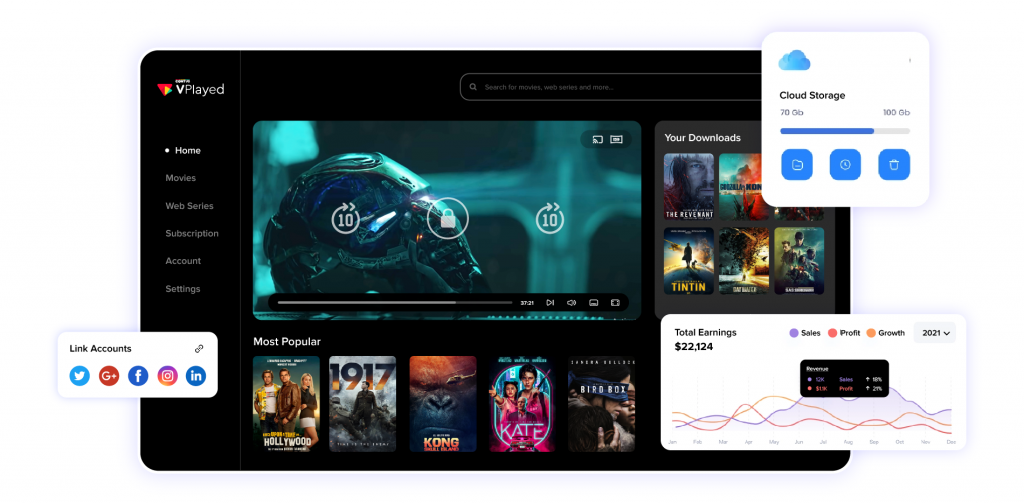
 Highly Customizable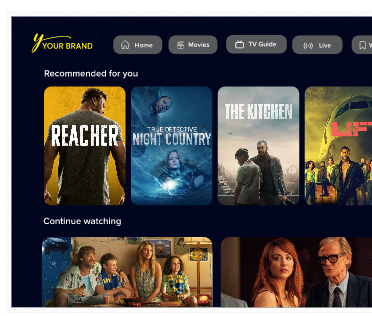
AI-Driven OTT Platform in 2026
AI in the OTT space has become one of the benchmarks for user retention. Creating an AI-based OTT platform keeps you ahead of the pack. It reshapes how customers browse and engage with your video library.
The following are some AI-driven OTT capabilities that improve interaction.
✨ AI-Powered Content Recommendation: Predicts content preferences based on viewing history and recommends content, delivering a highly personalized experience.
✨ AI-Based Subtitle Generation: Automated speech recognition generates subtitles within seconds in multiple languages, eliminating the need for transcription services.
✨ AI Ad Targeting: Places ads at high-receptivity moments based on viewer behavior to increase ad engagement and ROI for advertisers.
✨ Instant AI Trailers: AI identifies exciting parts of a video and automatically generates engaging trailers, saving hours of editing.
✨ AI Video Summarization: Provides quick “TL;DR” recaps for sports or news content. This is perfect for busy users on the go.
✨ AI Visual Asset Creation: Creates custom posters and thumbnails depending on what a user likes. Personalized visuals lead to higher click-through rates.
How Much Does It Cost to Create an OTT Platform?
The cost to build and launch an OTT platform lies between $30,000 to $500,000+ and depends on the technical scope, device compatibility (browser, mobile apps, smart TVs), and infrastructure necessities like CDN integration and server capacity.
- Basic OTT Platform: Includes basic features like user logins, a video player, and a simple interface design. Cost range: $30,000 to $100,000.
- Intermediate OTT Platform: Provides additional features such as cross-platform streaming, offline streaming, content recommendation, and content protection. Cost range: $100,000 to $250,000.
- Enterprise Grade OTT Platform: Offers real-time broadcasting, ultra-high definition video player, machine learning driven personalization, military-level encryption, and multiple language support. Cost range: $250,000 to $500,000+.
Why VPlayed Is a Preferred Choice for OTT Development?
Conventional SaaS OTT services are built to drive as much lifetime value as possible out of your business. VPlayed switches that model with a one-time license fee and ownership of the complete source code.
The majority of SaaS OTT services cost between $500 and $2000 monthly, and 10-30% of revenue. But with the one-time payment model of VPlayed, businesses can save up to 675% in the streaming infrastructure cost.
You can reinvest the retained revenue in content production or audience acquisition. This model has delivered better results across different industries.
VPlayed has shown strong market performance across the industries. Practyce, one of the largest US yoga sites, grew to 100K+ users with 3x engagement. A Brazilian fitness site has seen its revenue grow by 30% after removing recurring platform charges.
VPlayed is built on a microservices architecture and supports 200+ third-party integrations, delivering enterprise-grade scalability with a cost-efficient business model.
Wrapping Up
In a nutshell, you do not need to have a large team to develop and launch an OTT platform. All you need is a clear roadmap and the right technology stack.
The OTT streaming business is not only about hosting videos, but it is also about owning your audience, securing your content, and staying updated with AI-powered capabilities like automated metadata tagging, content recommendations, and churn prediction models.
Whether you are launching a specialized niche service or a large-scale AI-powered OTT platform, VPlayed provides the architecture required for rapid deployment and global scalability. The infrastructure is built to handle immediate requirements as well as to accommodate increasing traffic and content volume.
The features are ready, and your audience is waiting; it’s time to take control of your content and start streaming.
- Request Demo Book a Live, Personalized Demo
- Contact Sales Reach Out to Our OTT Experts
How to Create OTT Platform (FAQ)
1. Why You Should Invest In An OTT Business?
If you’re thinking about why and how to start your own OTT platform, the important aspect of having access to streaming data and the necessary infrastructure is crucial. This is due to the fact that customers now spend more time than ever before watching video content on their mobile devices. By investing in OTT services, you can take advantage of chances that pay TV can’t provide & directly contact your target audience.
2. What Are The Methods To Create An OTT Platform?
Before you could get into the process of OTT platform development, you should know a bit about the must-haves for any over-the-top based business. Some of the main elements that go into creating your own OTT platform are: complete customization, multi-supportive adaptive video player, access to robust CDN, easy-to-use CMS, branded UI & website, secure payment processing, analytical video metrics, and more.
3. How Much Does It Cost To Start An OTT Platform?
Like anything else, building an OTT platform has key criteria which play a dominant role in its cost factor. Some of them consist of varied customization, brand objectives along with its target market, platform integration either on cloud/on-premise, and other deliverables that can power up your streaming business such as marketing, analytics, advanced tech-stack like HLS player, centralized CMS & much more.
4. How To Generate Revenue From Your OTT Platform?
Accelerate your streaming revenue potential by utilizing the top-most monetization lucrative opportunities offered in the industry. VPlayed lets you have them with a flexible solution that can be tailored to your business niches & audiences. Some of them are Subscription-based (SVOD), Transactional-based (TVOD), or Advertising-based (AVOD). Other than that, you can explore options like Catch Up TV, Coupons & Promotions, Hybrid model, & more.
5. What Are The Opportunities And Challenges For Starting An OTT Platform?
The OTT entertainment industry has now a plethora of opportunities with the increasing demand for subscription services. Services like Disney+, Amazon Prime, Hulu, Peacock have been drawing enormous revenue upscale, with their creative streaming platform. One who is looking to build video infrastructure needs to know that high-end technologies necessitates investing hugely. Also, platforms need to compulsorily enable seamless content delivery to maintain their ever-growing subscriber base.
6. Which Is The Right Time To Launch An OTT Platform?
As we come to know that OTT solution are leveling the playing field for independent creators you can actively look into the process of how to create and own one for yourself. Some of the key factors to consider will count with an established audience set to target, regular content addition that can help to sell others existing in the archive transactionally, unique content with a niche following, long-term & making a consistent content publishing calendar.
7. How Long does it Take to Create an OTT Platform?
Creating an OTT platform usually takes 8 to 16 weeks, depending on the feature complexity, integrations, and testing phases. White-label solutions like VPlayed let you launch a fully branded OTT platform in as little as 2 days.

Blogger & OTT Expert at VPlayed. Interested in digging deep into video streaming media tools, blog, discuss and share views on the legal OTT solution' & latest technologies tips, and tricks. Also passionate about photography loves to capture the pure essence of life.