Summarize this article in:


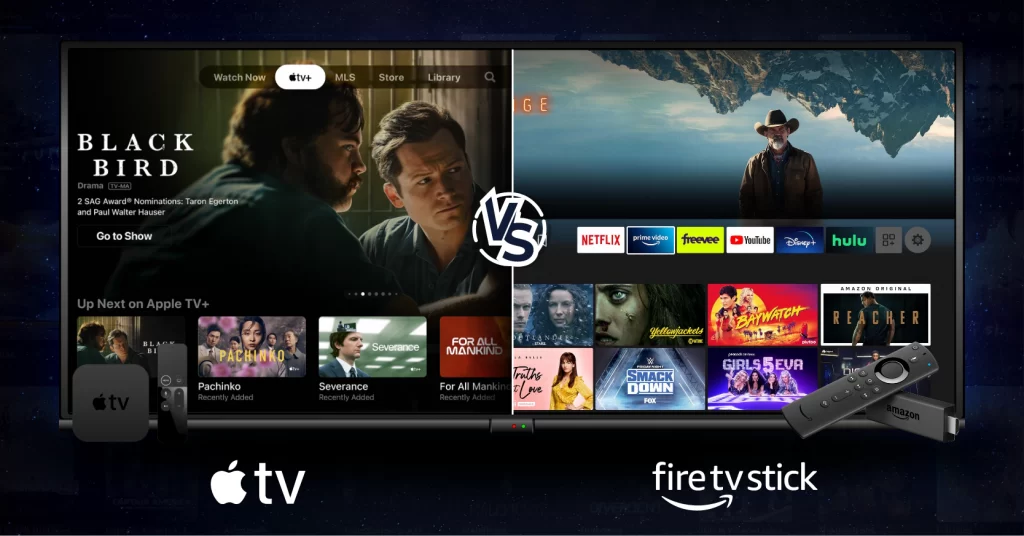
Launching a TV streaming app today is no simple feat. For content owners and media companies, it’s a strategic choice that directly impacts reach, monetization, discoverability, and long-term scalability.
Platforms like Apple TV and Fire TV are often discussed as consumer devices, but in practice, they operate as distinct content ecosystems. Each has its own rules for app distribution, revenue models, and audience access.
This comparison is not a consumer buying guide, nor does it evaluate hardware or features. Rather, it evaluates Apple TV vs Fire TV from the content distribution standpoint.
In this blog, you’ll have a clearer understanding of how these platforms differ in terms of ecosystem reach, monetization flexibility, operational complexity, and strategic fit within a modern OTT distribution strategy.
- Fully Customizable
- Lifetime Ownership
- On-Premise/On-Cloud
- 100% White-label
- Zero Revenue Share
- Hire Developers
Understanding Apple TV as a Content Distribution Platform
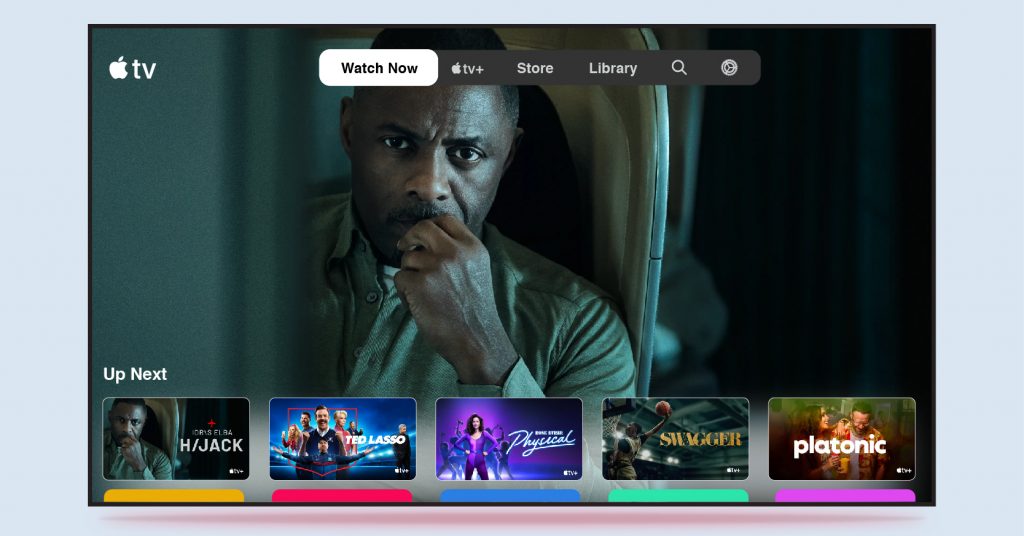
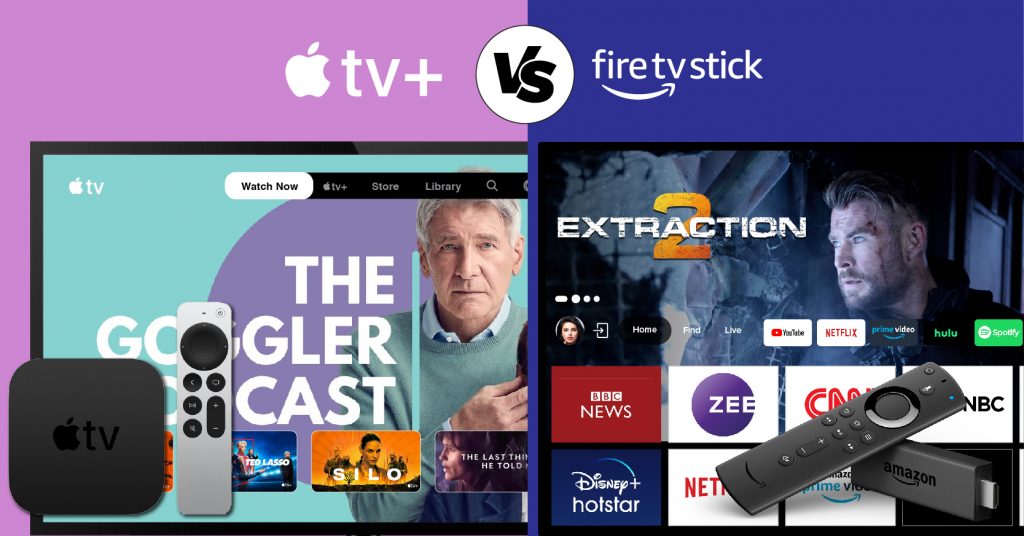
Apple TV is a small, puck-like streaming device that viewers can connect to their smart TVs via an HDMI cable. Apple TV isn’t limited to Apple’s streaming content; it integrates well with popular online video streaming services like Netflix, Disney+, Hulu, and more.
Apple TV functions as a controlled content distribution ecosystem, with clearly defined rules around app quality, monetization, and user experience. For content owners, distributing content via Apple TV is more about aligned value, where platform expectations and brand standards closely match.
Apple TV is widely adopted by the content owners, broadcasters, and movie production houses because of these capabilities:
* Predictable Governance: Apple TV’s predictable governance standards enforce stability, which is appealing for established media brands that value reliability over rapid experimentation.
* Subscription Alignment: Apple TV’s allegiance with subscription-led OTT businesses is a clear sign for content owners focusing on long-term subscriber value rather than ad-led growth.
Overall, Apple TV offers a controlled and value-led environment for content owners across Apple ecosystem devices. It offers media companies a predictable pathway to reach defined Apple ecosystem audiences, while operating within a tightly managed platform ecosystem.


Understanding Amazon Fire TV’s Role in Content Distribution
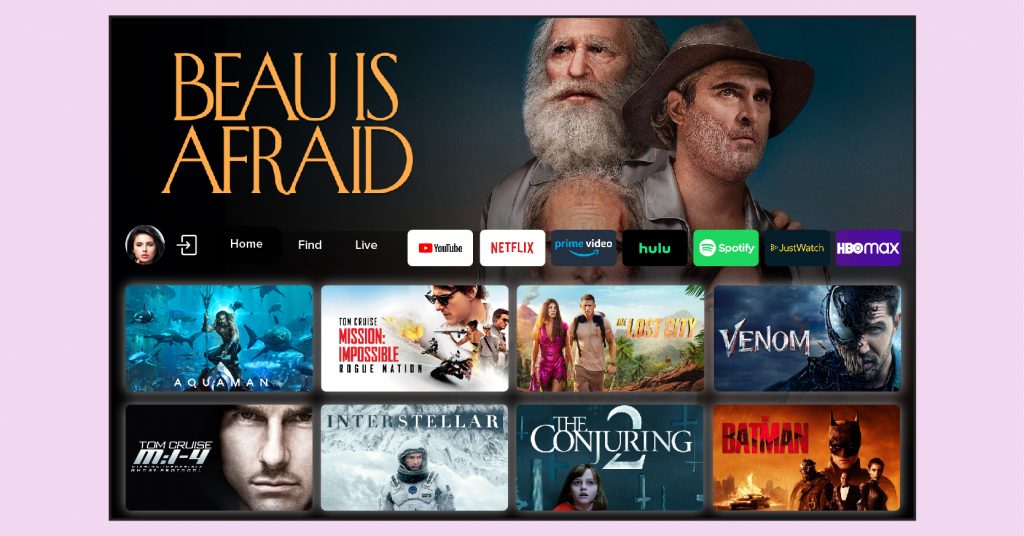
Amazon Fire TV Stick is a smart TV device that allows you to access a range of channels and platforms on your TV simply by plugging it in. Every smart stick device comes with Alexa voice control, meaning you can search for shows and control what you’re watching without having to use the remote.
Amazon Fire TV functions as a high-reach distribution channel that prioritizes advertising integration and rapid market penetration.
Unlike a tightly controlled ecosystem, Fire TV functions as an open and growth-oriented platform, making it ideal for the best video streaming services, aiming to reach broad and diverse audiences.
Amazon Fire TV Stick is widely adopted by media-tech enterprises, content creators, and production studios because of these capabilities:
* Low Barrier to entry: Fire TV Stick offers immediate reach at scale, making it a natural platform for broad content distribution. It also facilitates faster audience acquisition than premium streaming platforms.
* Ad-supported Flexibility: Fire TV Stick is closely integrated with Amazon’s advertising ecosystem, making it particularly attractive for ad-led OTT platforms. This works wonders for content owners who prioritize free and low-cost content strategies.
Overall, Fire TV plays a reach-driven role in modern OTT distribution strategies. It complements more controlled platforms with discoverability at scale. It offers media companies a scalable pathway to reach a broader audience within a multi-platform OTT ecosystem.
Apple TV vs Amazon Fire Stick: What Are the Differences?
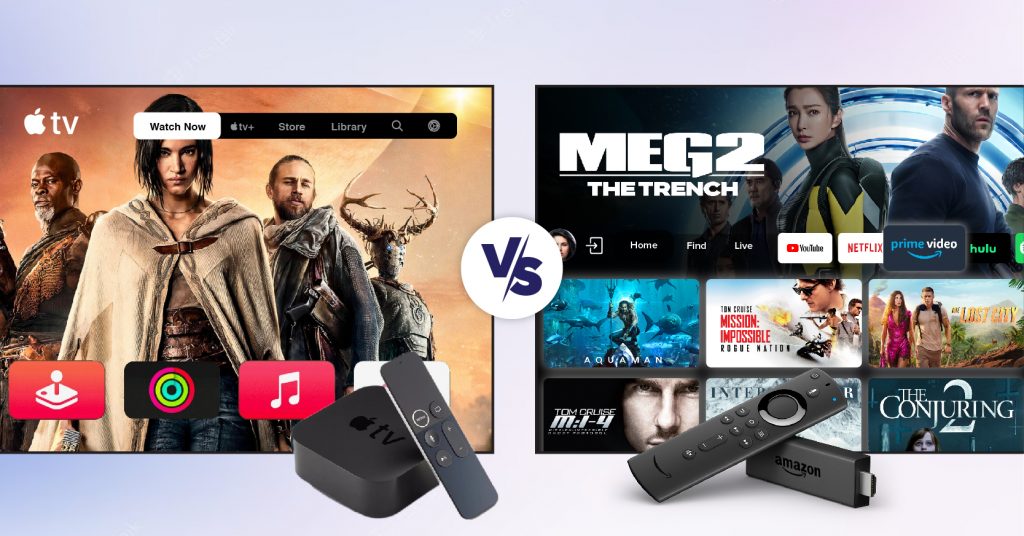
Apple TV offers a premium, ad-free streaming experience, while Amazon Fire TV provides a budget-friendly, Alexa-enabled streaming experience packed with ads. While evaluating Apple TV vs Amazon Fire Stick, we found several observations, starting with:
1) Platform Reach
Apple TV is native to an ecosystem-loyal audience, who are invested heavily in Apple’s broader ecosystem. As a result, Apple TV is often the first choice for content owners building a smart TV app in the premium segment.
Whereas the Amazon Fire TV Stick is native to a broader audience across. As a result, Fire TV is often the first choice for content owners and broadcasters prioritizing maximum reach and volume.
From a strategic standpoint, these differences shape how each platform is used. Apple TV often fits into an OTT roadmap as a premium or strategic presence, while Fire TV Stick frequently acts as a scale and growth engine.
2) Monetization Model Alignment
Apple TV as a hardware doesn’t require a recurring fee (that is, subscriptions). However, viewers gain access to Apple TV originals and other streaming services like Netflix with a dedicated subscription.
Apple TV provides structured and familiar in-app purchase flows that support recurring subscriptions. This creates a predictable revenue environment for content owners who prioritize long-term subscriber value over short-term monetization.
On the other hand, the Amazon Fire TV Stick is ideal for advertising-led and hybrid monetization models. This creates a scalable revenue environment for AVOD and FAST TV Channel. Its close allegiance with Amazon’s advertising ecosystem allows content owners to monetize through ads more flexibly.
3) Operational Complexity
Apple TV enforces a more structured approach; apps should meet strict quality, performance, and user experience standards. While this demands a massive upfront effort from content owners, it also leads to greater stability and consistency.
On the contrary, the Amazon Fire TV Stick follows an experimentation approach: updates and user experience upgrades roll out more often within short intervals. While platform updates evolve regularly, this leads to increased operational overhead. This encumbers smaller content teams or budding broadcasters operating within a tight budget.
From a scalability standpoint, Apple TV fits best for content owners who prioritize operational stability. Whereas the Fire TV Stick is ideal for media companies or content businesses that prioritize continuous iteration.
4) Analytics Expectations
Apple TV’s privacy-first approach is familiar. With an OTT app for Apple TV, content owners can track platform-level analytics, like usage, engagement trends, and subscription activity. While viewers can access detailed analytics data, content owners get access to granular, limited user-level data.
On the contrary, the Amazon Fire TV Stick offers greater flexibility with analytics and experimentation. Content owners and media companies get detailed insights into optimization and monetization tuning.
Apple TV engenders a stability-oriented analytics channel. Fire TV Stick, on the other hand, functions as an experimentation platform, where analytics are actively used to monitor, purchase, and optimize ad inventories.
5) Speed of Iteration
Apple TV works on its native operating system (tvOS) that enforces a controlled approach to iteration. App updates go through an extensive review process. While this slows down regular software updates, it also reduces the risk of clunky user experiences.
Amazon Fire TV Stick operates on Fire OS—Amazon’s Android-based operating system for Fire TV sticks, cubes, and tablets. App updates go through frequently, and monetization strategies see the light with fewer constraints.
Apple TV often suits content businesses that value consistent and controlled growth. Whereas Amazon Fire TV benefits fast-paced media companies and full-service broadcasters that rely on continuous experimentation. Having said that, many OTT platforms leverage Fire TV as they can test and refine several business/app ideas.
6) Screencasting
On Apple TV, the screencasting feature is closely tied to Apple’s ecosystem. This means users can leverage AirPlay to mirror certain content from a mobile device onto the Atv display. For content owners, the screencasting feature on Apple TV means more about supporting user retention and engagement within a tightly controlled ecosystem.
Whereas Amazon Fire TV follows a broader approach. It is more flexible across devices and operating systems. While it does not replace native OTT apps, it can help introduce content to an early-stage audience.
Screencasting, in itself, can never replace native OTT app distribution. However, content owners should be aware that it ably supports their primary distribution channels, like instilling user continuity on Apple TV and reducing entry friction on Fire TV.
Conclusion:
For content owners and media companies, the ultimate decision between Apple TV vs Fire Stick isn’t really about devices. It’s about how you want to distribute your content and earn revenue.
Apple TV works best for content owners and production houses that own high-value content and can attract recurring subscriptions. Fire TV Stick, on the other hand, works best for high-volume content businesses that want to grow quickly and experiment with monetization.
In reality, many OTT businesses develop their apps and distribution strategy around both. However, the key lies in understanding the role each platform plays in your overall distribution plan.
- Request Demo Book a Live, Personalized Demo
- Contact Sales Reach Out to Our OTT Experts
Frequently Asked Questions(FAQ)
1. What are the differences between Apple TV and Fire TV stick ?
While both Apple TV and the Fire TV stick share similar media coverage, they differ in several ways. Apple TV belongs to an Apple-exclusive streaming device with integration into the Apple ecosystem. It offers access to the Apple App Store and Apple TV+ for original content. In contrast, the Fire TV stick is purely Amazon’s offering, connected to Amazon services and Alexa voice control. Your choice will depend on your ecosystem preference and content needs.
2. What are the benefits of launching an Apple TV app for smart TV?
There are a lot of benefits of launching an Apple TV app for smart TV. It gives you the liberty to access a large audience who belong to the Apple ecosystem. Monetization options, such as in-app purchases & subscriptions, enable you to generate more revenue. Furthermore, launching on Apple TV enhances your app’s visibility and credibility, contributing to the overall success.
3. What are the benefits of launching a Fire TV app for smart TV?
Launching a Fire TV app comes with several benefits. It gives you access to a large community of users within Amazon’s ecosystem, as well as potential exposure to a broad media audience. The integration of Fire TV with Alexa voice control enhances the overall user convenience. Also, you can monetize your app through various ways (in-app advertising, subscriptions, etc)
4. Can I install third-party apps on Apple TV?
Yes, it is quite possible to install third-party apps on Apple TV. While the Apple TV App Store offers a wide selection of compatible apps, you also have the option to sideload or install apps from external sources too. Yes, you read that right! However, To maintain the security and functioning of your Apple TV, make sure that the apps you install come from reputable sources.
5. Can I install third-party apps on Amazon Fire TV?
Yes, you can attempt to download and install third-party apps on Amazon Fire TV. For your knowledge, this process is commonly referred to as sideloading – Allows you to install apps that are not available in the official Amazon Appstore. However, it is advised to be very cautious when sideloading apps, as they may not undergo the same level of checks as that of official apps.

Blogger & OTT Expert at VPlayed. Interested in digging deep into video streaming media tools, blog, discuss and share views on the legal OTT solution' & latest technologies tips, and tricks. Also passionate about photography loves to capture the pure essence of life.