Summarize this article in:


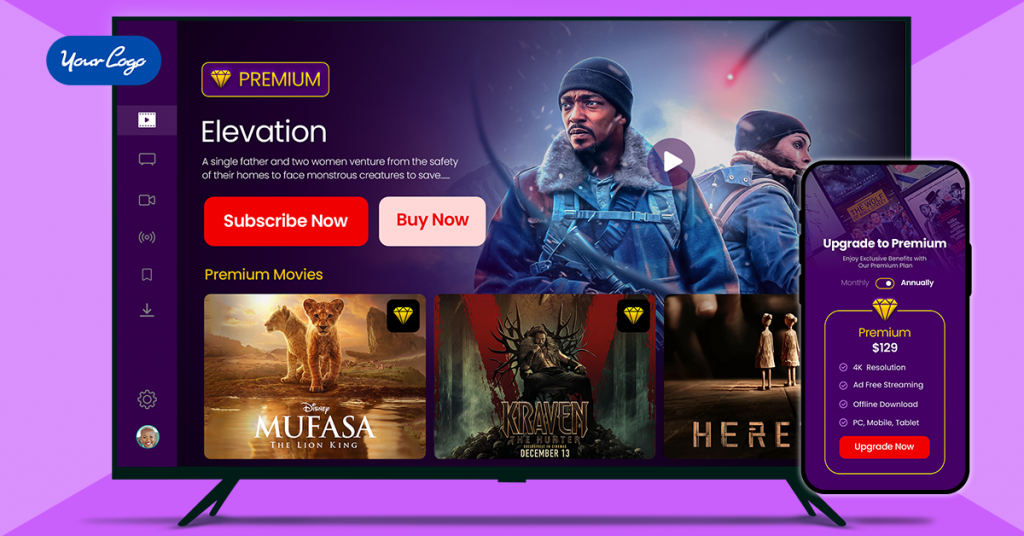
- There are several ways for OTT platforms to monetize their services: video advertising, sponsorships, subscriptions, pay-per-view, and hybrid video monetization models.
- The blog details the various ad formats, including pre-roll ads, mid-roll ads, and post-roll ads, and how they can help to cater to viewers while boosting streaming income.
- Further, it examines the best OTT monetization models for 2026 and offers guidance on which monetization models work best in terms of the consumers’ viewing habits and content types.
Subscription is not the only source of revenue for OTT service providers in 2026. More and more streaming companies are diversifying their business model, ranging from AVOD to SVOD, sponsorships to hybrid business models.
According to MarketsandMarkets, the worldwide OTT market will swell to $434.5 billion by 2027, with the demand for flexible streaming experiences on the rise.
This blog will explore the most successful monetization strategies, ad formats, and video revenue models that OTT platforms use to ensure high levels of engagement and sustainable revenue.
- Fully Customizable
- Lifetime Ownership
- On-Premise/On-Cloud
- 100% White-label
- Zero Revenue Share
- Hire Developers
How Do OTT Platforms Make Money in 2026?
OTT platforms can monetize their service in a number of ways, such as through subscription fees, advertising, pay-per-view streaming, sponsorships, content licensing, and hybrid revenue models.
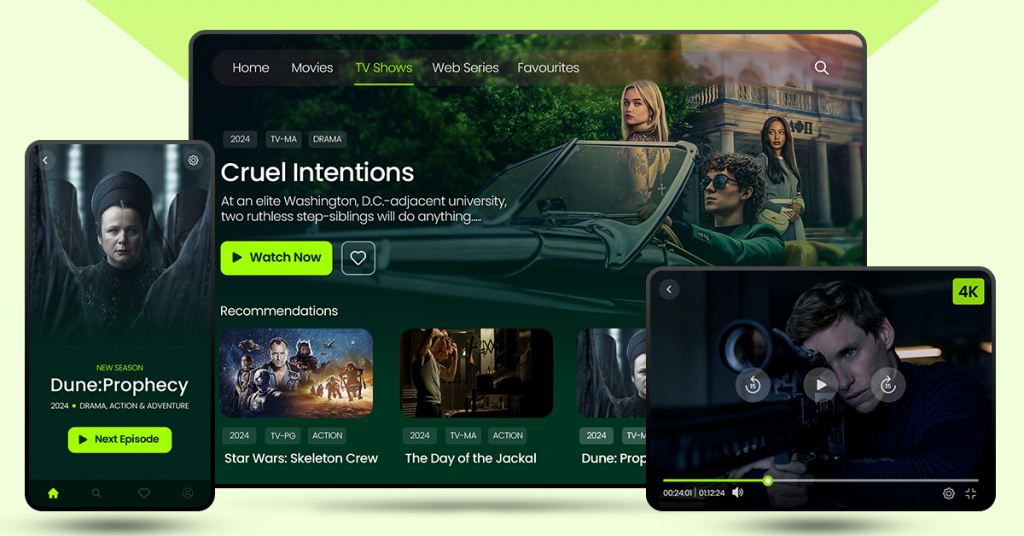
Most of the contemporary OTT platforms have a number of revenue streams, which ensure the maximum retention of viewers and also recurring revenue.
OTT monetization models extend beyond subscriptions, whether they’re global streaming services like Netflix or Amazon Prime Video, or niche video streaming companies.
Common OTT Revenue Models at a Glance
| OTT Monetization Model | How It Generates Revenue | Common Example |
| SVOD | Subscription service – monthly/yearly | Netflix |
| AVOD | These ads can appear before, during, or after the program content | YouTube |
| TVOD | Rental or sale on a one-off basis | Pay-per-view sports or concerts |
| Hybrid Model | Includes ad, subscription, and rentals together in one package | Amazon Prime Video |
| Sponsorships | The placement and association with brands | Sports streaming apps |
| Direct Advertising | The sale of advertising space directly to a brand | Independent OTT apps |
| Freemium | The site offers some free content, which can be upgraded if desired | YouTube Premium |
How OTT Platforms Monetize Video Content
For most of the OTT platforms, the core of their revenue engine is video monetization. It offers platform owners an opportunity to monetize their viewership continuously through subscription to the platform, rentals, premium access, or a mix of multiple revenue streams.
Let’s take a look at some of the best monetization strategies for OTT video platform in 2026.
Subscription Video on Demand (SVOD)
SVOD lets customers subscribe to video content on a monthly, quarterly or yearly basis.
One of the most popular business models that has been adopted by platforms like Netflix. Users pay for a service that lets them watch movies, TV shows, documentaries and original content, without the need to pay for each one.
SVOD is perfect for niche and religious websites, fitness streaming platforms, entertainment streaming platforms, and educational OTT apps.
Real-World Example: Netflix’s subscription strategy
Netflix follows an SVOD model, which means that they have a monthly fee for subscribers to watch any amount of Netflix content they want. The platform provides better retention through:
- Exclusive content that is new, fresh, and encourages viewers to remain subscribed for future shows.
- Multi-device streaming, which lets users seamlessly bounce between their smartphones, smart TVs, tablets, and laptops.
- Recommendation systems that boost watch time by recommending content based on viewing patterns, and make them personalized.
- Flexible pricing options depending on the quality of the video, the number of devices allowed, and advertising preferences.
This subscription-based business model gives OTT platforms the ability to calculate future revenues more effectively than one-time purchase revenues.
AVOD (Advertising Video on Demand)
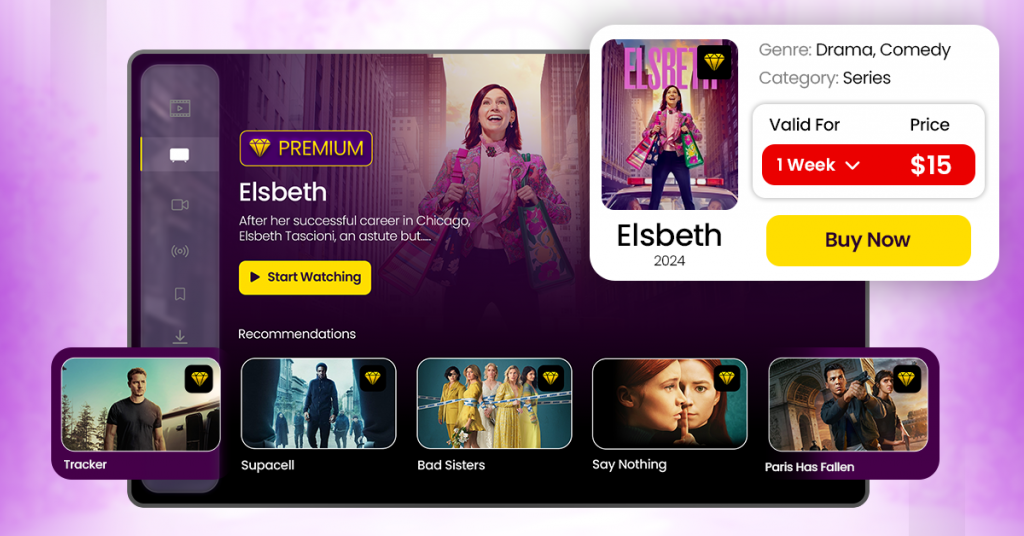
AVOD is a video streaming service model that delivers content for free and relies on advertising to generate revenue through ads that roll before, during, or after the content.
Other OTT platforms offer premium versions, which are “ad-free” and enable users to pay to view without interruptions. YouTube Premium is one of the most widely popular examples, where paid users do not have to face any ads.
Many free movie streaming sites and news streaming applications, regional OTT services, and user-generated content platforms use AVOD extensively.
Real-World Example: YouTube’s Advertising Model
YouTube’s main source of revenue is through free viewing of videos via advertising. The platform makes money via:
- Pre-roll ads that show before the video tend to be high visibility ads with viewers
- Mid-roll ads are placed into longer videos to boost the advertising inventory and watch-time monetization for the video
- Sponsored campaigns give brands the opportunity to partner with creators who already have an audience that they can trust
- Creator ad revenue sharing programs, where YouTube will split advertising revenue with creators
TVOD (Transactional video on demand)
TVOD is where viewers pay for what they watch, rather than being required to pay for an entire season of a show.
It is a common design which normally includes:
- Single sales, whereby users get immediate access to a film, TV series or e-release, with no subscription fees.
- Movie rentals that give temporary access to movies for a specific amount of time.
- Exclusive and live events (sports, movies, etc.) are paid per view.
TVOD is typically used in live events like high-quality sports, boxing rings, wrestling shows, etc.
The most suitable scenario for TVOD is when the content being offered is very exclusive, when events are time-sensitive, if users are not interested in recurring subscriptions, and for creating urgency with live premium experiences.
Real-World Example: Pay-Per-View Sports Streaming
Typically, combat sports networks with larger events like boxing and MMA matches have a TVOD model. Individuals do not take a subscription but instead pay for one show.
Hybrid OTT Monetization Model
Hybrid monetization is the combination of several OTT monetization models to optimize the revenue from the same content library.
For example, a hybrid OTT platform can:
- Offer a monthly subscription for users who wish to have access to unlimited content
- Display ads to users with the free version of the app
- Apply different rental rates to movies or event streams that are being released
It offers OTT platforms the opportunity to serve different segments of an audience and grow their revenue.

Revenue Split Example in Hybrid OTT Platforms
A hybrid OTT platform can come up with revenue streams such as this:
| Revenue Source | Estimated Contribution |
| Subscriptions (SVOD) | 50% |
| Advertisements (AVOD) | 30% |
| Rentals & Pay-Per-View (TVOD) | 15% |
| Sponsorships & Promotions | 5% |
Freemium Model
In the freemium model, visitors can access some of the content for free, and other content and premium features can be accessed at a cost.
The following are ways in which a Freemium OTT service can monetize:
- The ads are displayed when the user is viewing free content.
- To encourage users to pay for premium content or uninterrupted streaming, premium subscriptions are offered.
- Sponsored content enables brands to advertise their products directly on the platform.
- Exclusive feature upgrades provide extra benefits to the viewer, such as offline viewing or VIP access.
Using it can be a strategy to gain more audience as quickly as possible, and then turning them into paying subscribers
Premium Access
Premium access means that a consumer may get access to high-value content ahead of the public, typically without commercials.
OTT platforms support premium monetization in the following ways:
- Access to films that are released before the general public.
- Live events (sports, concerts, creator-led) that are exclusive to this service
- Ad-free viewing experience for subscribers who want to see uninterrupted streaming.
- Fast and dependable streaming without any quality restrictions or buffering, along with extra member benefits or features.
- Access to restricted premium content libraries with exclusive or high-value content
Is suitable for sports, entertainment, and creator-owned OTT services.
Coupons and Promotional Campaigns.
The other sources of OTT revenues consist of promotional partnerships with companies.
This can involve:
- Discount offers to draw viewers to a show during a specific time of year or a special event
- Providing viewers with a coupon code they can use for a product or service
- Encouraging sponsored releases of movies, apps, or consumer brands
- Utilizing affiliate relationships where the platform receives money from customers that they refer to other stores or websites
Such campaigns lead to targeted audiences and add an extra revenue stream for the OTT platform.
Catch-Up TV
A TV broadcasting service that provides access to television programs, movies, and television broadcasts that have been previously broadcast.
It is widely used by:
- Television networks that wish to keep their scheduled programmes alive for longer.
- Broadcasters that cater to audiences in various regions and time zones, with different viewing habits.
- News streaming platforms that offer a replay feature for live news reports and special reports
- Content services that bring revenue into older entertainment libraries, such as retro and archive materials
Catch-up TV is a chance for OTT to turn its old library into revenue and increase viewership.


When Should OTT Platforms Use AVOD vs SVOD?
AVOD is better suited for services that are designed to attract an audience with free content distribution, while SVOD makes more sense for services that have a premium or exclusive content library.
Select AVOD If You Want To:
- Ramp up your views and subscribers without a hitch
- Provide free streaming, but revenue from ads
- Reach out to key target audiences that might not have the means to pay subscription fees monthly
- Develop regional or mass-market OTT platforms with high viewer traffic
Select SVOD If You Want To:
- Create a subscription-based revenue stream, e.g., monthly or yearly, for predictable income
- Provide unique content that will prompt long-term subscriptions
- Limit reliance on ads and improve the ad-free experience
- Ensure high retention rates on a continuous basis with sustained engagement of content
- Leverage niche premium audiences willing to pay for niche content access
When a Hybrid Model Makes More Sense:
Many OTT companies mix AVOD with the SVOD model to promote a balance between audience growth and recurring revenue.
It is best to use a hybrid OTT model if:
- You’d like both free and paid users to be alike
- Your site has a variety of content categories
- You’re looking to upsell higher-priced experiences
- You want to have more monetisation options than just one
Many of the leading OTT platforms are not relying on a single monetization model in 2026, as that isn’t sufficient.
How Do OTT Platforms Earn Revenue From Advertising?
OTT platforms can generate ad revenues from programmatic ad networks, sponsorships, or payments for premium video ad formats that are integrated into the video stream. Digital video ad spend in the U.S. is expected to surpass $81.9 billion this year, according to the 2026 Interactive Advertising Bureau (IAB) Report.
This growth is because of the shift from linear TV to connected TV (CTV). This represents an 11% increase over the previous year and represents over 61% of all TV/Video advertising spend for the first time.
Video Advertising Networks (VAN)
They are networks that automatically play targeted ads to users via a programmatic third-party network. It assists the streaming businesses in automatically monetizing free users, dynamically filling empty ads, and targeting empty audiences based on real-time behavioural data.
Direct Advertising Sales
Owners of the platforms negotiate directly with brands for specific marketing campaigns. For an international beverage brand, it might be able to pay an upfront fee or fixed cost per impression to an independent OTT site where it runs exclusive campaigns and the OTT owner retains 100% of the ad money.
Sponsorship Deals
Brands may pay a premium price to be linked with some of the most valuable visitors to an OTT application. Such a model is commonly used in sports broadcasting, live entertainment, and, in a sports streaming version, or a sports-themed home screen.
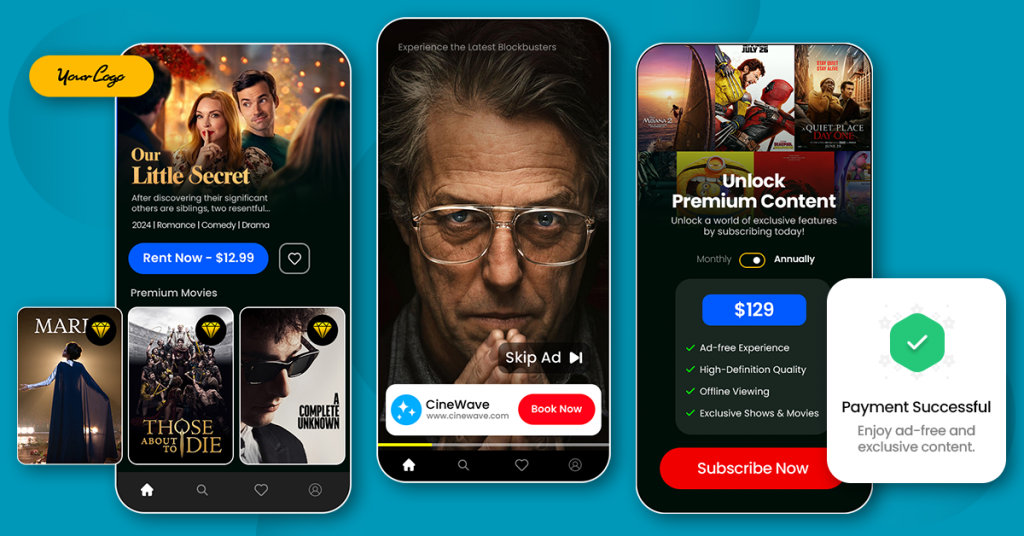
Which Video Ad Formats Maximize OTT Revenue?
| Ad Format | Where It Appears | Viewer Impact & Performance |
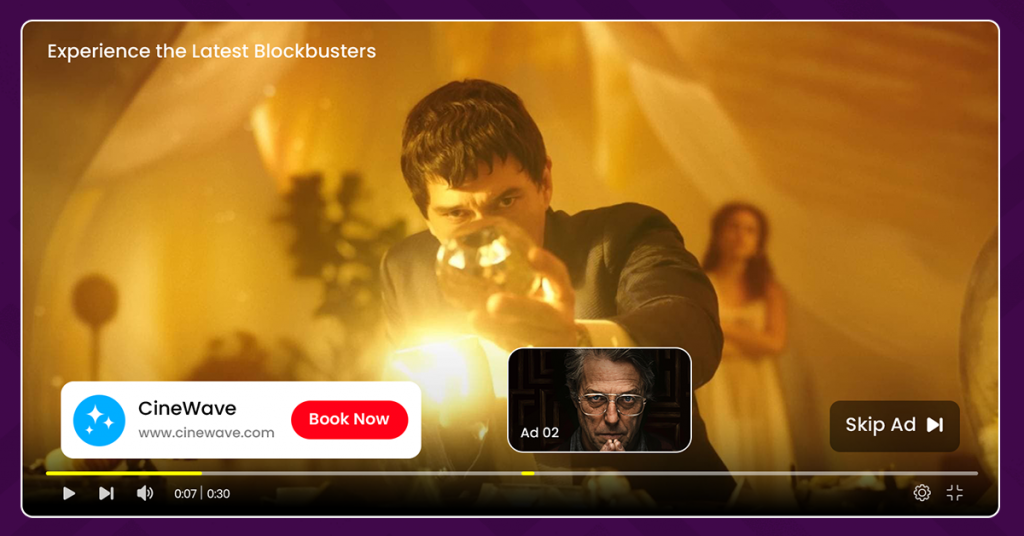
| Pre-Roll Ads | As soon as the video player session is launched | Attracts the most attention and click-through rate (CTR) before the viewer has gotten too far into the content. Platforms can do this placement at a premium price |
| Mid-Roll Ads | Spliced in-line into a video stream | Mid-rolls can be good in terms of keeping the viewers on the page, and they have extremely high completion rates when it comes to long-form streaming media |
| Post-Roll Ads | Played immediately following the video material is complete | Makes a strong lasting impression when a viewer is highly engaged and so effectively converts after viewing and recalls the brand and message |
How Are Advertisements Technically Delivered into an OTT Stream?
Technically, OTT content management systems employ different ad delivery methods to optimize performance and maximize revenue.
Server-Side Ad Insertion (SSAI)
The video content and the ad are blended together at the server level to create a single digital video stream, which is then played out via SSAI. This approach removes any buffering wheels in between web content and advertising, and smoothly avoids consumer-side web browser ad blocking.
Client-Side Ad Insertion (CSAI)
Streaming companies can make use of software development kits (SDKs) to embed native video gamers with enterprise ad suites, such as Google Ad Manager. This enables external enterprise clients to program the live ad inventory on the OTT Software to bid on it.
Conclusion
So, we’ve explored the various methods OTT platforms can monetize in 2026, ranging from subscription streaming services to advertising revenues, pay-per-view events, sponsorships, and hybrid strategies.
The most successful OTT platforms are not dependent on one source of revenue. Rather, they mix SVOD, AVOD, TVOD, and advertising according to the audience’s behavior, content type, and long-term business objectives.
The right monetization model affects every facet of your project, whether it’s starting a niche streaming service, a live sports service, an educational OTT app or an entertainment platform.
- Viewer retention
- Revenue scalability
- Subscriber growth
- Advertising potential
- Long-term profitability
The real challenge isn’t just about introducing monetisation elements, but about creating an OTT platform that offers superior streaming quality, seamless access to customizable content, varied pricing options, and steady viewer engagement.
In 2026, platforms with a mix of premium content and flexible revenue structures will have a competitive advantage in boosting revenues and keeping audiences engaged in the rapidly evolving streaming domain.
- Request Demo Book a Live, Personalized Demo
- Contact Sales Reach Out to Our OTT Experts

Blogger & OTT Expert at VPlayed. Interested in digging deep into video streaming media tools, blog, discuss and share views on the legal OTT solution' & latest technologies tips, and tricks. Also passionate about photography loves to capture the pure essence of life.