Summarize this article in:


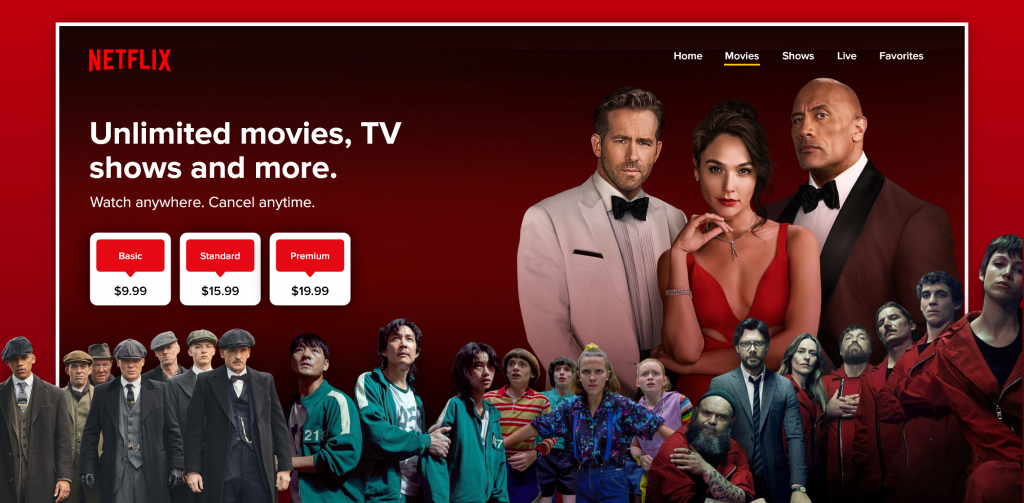
Want to know the secrets to Netflix’s OTT success? How does Netflix make money through their business models and strategic streaming partnerships?
Netflix makes money through five fundamental streams: subscriptions, advertising, content licensing, gaming, and live events. Subscriptions are the biggest contributor, with more than $43 billion every year, and ads and other newer segments are on the rise.
This revenue is driven by a massive audience. The Hollywood Reporter and The Wall Street Journal report that Netflix has 325 million global subscribers in 2026 and aims to reach 410 million subscribers in 2030.
This growth is not accidental. It comes from a well-structured business and revenue model built for scale. If you plan to create your own OTT platform, understanding the Netflix revenue model can help you build a streaming business that earns you consistent revenue.
In this blog, we unpack how Netflix makes money and how you can apply it.
Key Takeaways:
- Primary revenue: 85%+ of the annual revenue of Netflix is made up of Tiered SVOD subscriptions.
- Fastest-growing stream: AVOD reached 190M monthly users and is very likely to increase ad revenue to ~$3B in 2026
- Live events: NFL Christmas Day game reached 27.5M viewers and attracted approximately 430K subscribers.
- Gaming: Netflix has 100+ mobile games to enhance retention and engagement.
- Fully Customizable
- Lifetime Ownership
- On-Premise/On-Cloud
- 100% White-label
- Zero Revenue Share
- Hire Developers
What Is Netflix’s Business Model?
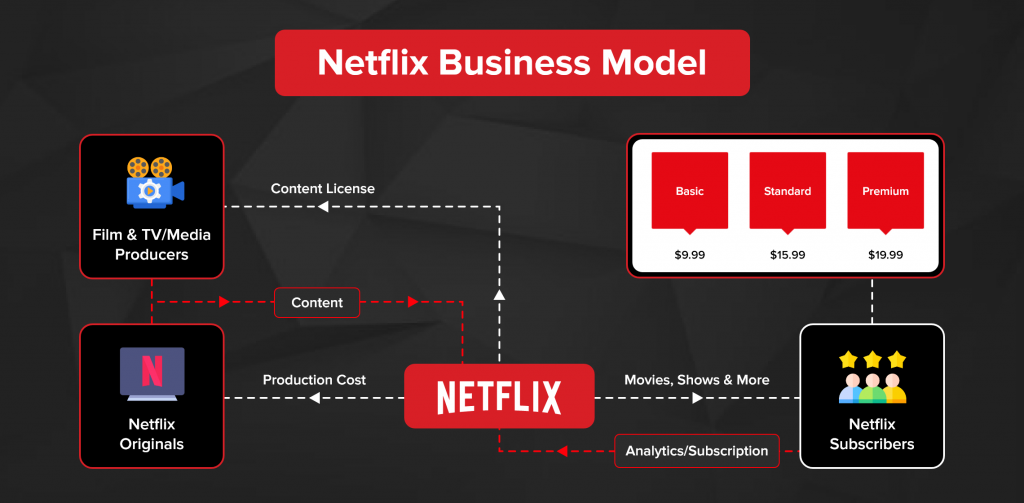
In 1997, Reed Hastings co-founded Netflix as a DVD rental company after being charged a late fee of $40. That point marked what we call today the Netflix business model, and here is a closer look.
Overview of the Subscription-Led Model
The underlying revenue model is predictable and recurrent monthly fees. Consumers are charged a monthly subscription fee to access unlimited content. The model ensures that there is predictable income and less dependence on single purchases.
Over time, Netflix has included an ad-supported option to target price-sensitive customers. This maintains stable growth and safeguards its existing subscription base.
Evolution from DVD Rentals to Streaming Giant
- 1997-2006: Mail DVD service
- 2007: Introduced streaming as a free bonus to DVD subscribers
- 2013: House of Cards demonstrated that originals lead to retention.
- Today: 325M world subscribers (2026)
How Does Netflix Makes More Money?
Netflix earns revenue as a combination of subscriptions, advertisements, content licensing, and alliances. This Netflix revenue breakdown reveals how every stream helps to promote sustainable development.
1. Subscription-Based Revenue (SVOD)
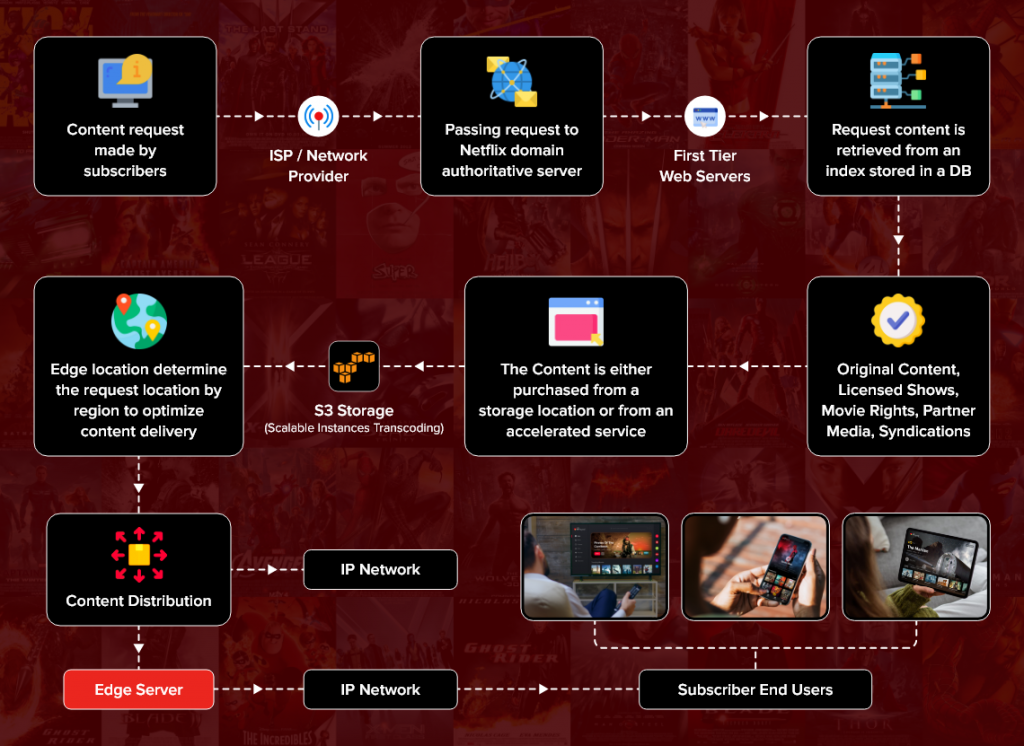
Subscription fee is how Netflix makes money. The users select plans such as single screen in standard definition, two screens in high definition, or four screens in high definition.
Such differentiated pricing appeals to both the high-end and price-sensitive users. It generates a stable monthly revenue and lays the basis of the Netflix revenue breakdown in the international markets.
- Single screen. Standard definition Basic plan (no longer offered in most markets)
- Two screens. High-definition, most popular globally, Standard plan
- Four screens plus ultra-high definition (HD) – Premium plan
The Premium Plan is still a high-ARPU (Average Revenue Per User) contributor to Netflix, particularly with the addition of more Extra Member slots, which enable users to pay less but still add individuals outside their household.
2. Ad-Supported (AVOD Hybrid Model)
Netflix added an ad-supported tier for cost-conscious viewers. This hybrid business model integrates subscription and advertisement. Users pay a little less and see fewer ads. Smart TVs and mobile devices give brands access to a global audience.
This strategy increases coverage and reinforces the ways Netflix generates revenue without replacing its subscription-first business model.
Large brands such as Peroni Nastro Azzurro and Doritos have already used the platform to run 360-degree campaigns, which demonstrate that Netflix can earn the highest ad rates similar to live sports.
3. Content Licensing & Distribution
Netflix makes money based on licensing and distribution agreements with third-party studios. It streams popular titles and occasionally grants licenses to its originals to other platforms.
The deals aid in increasing its content and reach. Licensing also helps in revenue diversification and is a major contributor to Netflix’s profit.
Netflix has recently licensed older original content to competitors such as HBO Max and Disney+ in certain international markets. It is part of a strategic decision to increase revenue diversification, transforming older content into new revenue.
4. Partnerships & Bundling Deals
Netflix collaborates with ISPs and telecommunication providers via partner deals and bundles. These packages comprise the Netflix subscriptions together with the internet or mobile packages.
This enhances subscriber gain and retention. It also provides a stable flow of revenue and makes the service more accessible in various regions and on various devices.
In the US, T-Mobile has its own program, called Netflix on Us, with certain mobile plans including a subscription to Netflix with no additional cost to the user.
5. Merchandising & Other Revenue Streams
Netflix also earns more revenue by selling consumer products associated with popular shows. These are merchandise, games, and brand collaborations.
These streams may be less than subscription revenue, but they enhance engagement and brand value. They also create new monetization opportunities outside streaming.
Netflix is moving beyond streaming and into the experience economy. Netflix House venues in cities such as Dallas and Philadelphia in 2026 will enable fans to shop, eat themed food, and play immersive games, transforming its shows into a lifestyle brand.
6. Netflix Gaming Revenue
Netflix is into gaming to enhance engagement and create additional revenue streams. It provides an increasing number of mobile games that are part of subscriptions. This enhances platform stickiness at no added cost to the users.
Netflix currently boasts more than 80+ games in the library, and millions of active users per month. Direct revenue is still in its early stages, but in the meantime, gaming lowers churn and raises lifetime value.
7. Live Events & Sports Streaming
Netflix has started investing in live events to have a real-time interaction. This includes sporting and entertainment programs with a massive following.
Netflix entered into a big contract to stream WWE content beginning in 2025 and has experimented with live sports content such as NFL games. Live streams attract advertisements and retain users on the platform.
Netflix Pricing Strategy
Pricing by Netflix is intended to understand different categories of users and maximize long-term revenue. This pricing, along with premium features, assists Netflix in ensuring that there is sustained growth and retention of subscribers in the global market.
Tiered Pricing Model
Netflix has a price hierarchy that is geared towards meeting the requirements of different users. The plans will vary in terms of the number of screens, quality of the video, and features.
This enables them to select depending on the budget and watching patterns. It makes it more accessible and promotes upgrades. This architecture has a direct positive impact on Netflix revenue channels as it is possible to maximize both entry-level and premium subscribers.
The advertisement strategy is an entry point. Netflix is aware that after experiencing the annoyance of advertisements, a percentage of users will move to Standard or Premium. That is a so-called pricing ladder, which Netflix operates flawlessly.
Regional Pricing Variations
Netflix employs local pricing to match the local purchasing power. The price in the new markets will be lower and therefore more users will be attracted, and in the developed markets, the price will be higher, hence more revenue.
This dynamic approach will help it to grow its number of international subscribers. One of the main sources of Netflix’s revenues is the concept of regional pricing, which is also the means to achieve competitiveness in various markets.
Expert Insight: Netflix, according to industry analysts at Ampere Analysis, follows a local pricing strategy that is based on the local purchasing power. Netflix will charge based on the purchasing power of the individuals in a given nation. It is intended to be not equal everywhere but accessible.
Netflix uses VPN to prevent individuals in less affluent regions from accessing pricier catalogs. Once you buy an Indian subscription in the US with a VPN, Netflix will not enable you to watch the content until you can switch your payment system to a local one.
Password Sharing Monetization Strategy
Netflix can also opt to share passwords by charging extra members outside of a household. This turns revenue lost into an alternative source of revenue.
It also promotes individual subscriptions. This plan boosts Netflix’s revenue sources and retains users. It shows how Netflix puts the focus on price adjustment in line with the shifting user behavior.
In the US, the cost of a supplemental membership is around 7.99/month. This is cheaper than a full new “Standard” subscription, and is a simple yes to most families.


Netflix Revenue Breakdown and Important Statistics
The Netflix financial development proves the strength of its global presence and monetization system. Its income is increasing annually because of the ever-increasing number of subscribers. Here’s a closer look at how much money Netflix makes and where it comes from.
Annual Revenue
The overall revenue Netflix obtained over the whole year 2025 was $45.2 billion, which is 16% growth per year. Netflix forecasts a revenue of between $50.7 billion and $51.7 billion by 2026, and growth is expected to be approximately 14%. It is projected that it will rise to $57.2 billion and 62.9 billion by 2027 and 2028, respectively.
| Fiscal Year | Revenue |
| 2023 | $33.7 billion |
| 2024 | $39.0 billion |
| 2025 | $45.2 billion |
| 2026 (Projected) | $50.7B–$51.7B |
| 2027 (Estimate) | $57.2 billion |
| 2028 (Estimate) | $62.9 billion |
Monthly Revenue Estimates
Netflix’s quarterly revenue trend had steadily grown in 2025:
| Quarter | Revenue | Key Drivers |
| Q1 2025 | $10.54 billion | Subscriptions, pricing, and ad revenue. |
| Q2 2025 | $11.08 billion | Hike in price, Squid Game S3 release |
| Q3 2025 | $11.51 billion | Record ad sales, live boxing event |
| Q4 2025 | $12.05 billion | Ad doubling, NFL games, and holiday slate |
Netflix Revenue by Region (2025)
Netflix divides its activities across the globe into four segments. The revenue in 2025, in terms of region, is as shown below.
| Region | Revenue (USD) |
| United States & Canada | $19.96 Billion |
| Europe, Middle East & Africa (EMEA) | $14.51 Billion |
| Latin America | $5.36 Billion |
| Asia-Pacific (APAC) | $5.35 Billion |
How Netflix Maximizes Revenue & Profitability
Netflix pushes its margins with exclusive content and proprietary technology. This is not just subscriptions, and this is where Netflix makes money by being structurally efficient and by growing assets over time.
Investment in Original Content
Originals, such as Stranger Things or Squid Game, cost Netflix about 17 billion a year. Why? Owned content does not require any licensing fee, has no expiry date, and has no limitations on worldwide distribution.
Every view is a profit margin after production costs. The originals also lead to new subscriptions and less reliance on third-party studios.
Data-Driven Personalization
Originals, such as Stranger Things or Squid Game, cost Netflix about 17 billion a year. Why? Owned content does not include any licensing fee, it has no expiry date and no restrictions to global distribution. All views are after-production costs profit margins. The originals also result in new subscriptions and a reduction in dependence on third-party studios.
Reducing Churn & Increasing Retention
Netflix records your viewing history, pause history, and search history. Its algorithm gives individualised suggestions and thumbnails.
This causes users to spend a lot of time watching. Increased watch time is equal to decreased churn. Reduced churn cushions the Netflix revenue model by not increasing acquisition cost to retain recurring subscriptions.
Scalable Tech Infrastructure
Netflix has its own video content delivery network (Open Connect), which allows it to provide high-definition content with low latency. They are able to reduce the price of bandwidth by choosing servers that are physically closer to the users through ISP partnerships, and by providing a perfect experience that underfunded competitors are not capable of replicating.
Launch a Netflix-Style Video Streaming Website
Learn how to create a video streaming website like Netflix that offers premium viewing experiences and seamless content access.
Key Lessons for OTT Platforms & Businesses
Netflix can teach any platform a few very valuable lessons that will allow it to grow within a competitive streaming environment. Its approach shows that content is not enough to be successful.
The appropriate mix of monetization, user experience, and continuous adaptation is the result. Such lessons would help companies to develop more robust and sustainable OTT platforms.
Hybrid Monetization Is the Future
Depending on one source of revenue restricts development. Netflix provides a blend of subscription and advertisements to make it appealing to more individuals. This is a hybrid approach that will attract the luxury and cost-conscious consumers.
It increases the revenue potential, but there is no impact on accessibility. OTT sites with dynamic monetization strategies can grow faster and are not dependent on one source of income.
Content + Data = Growth Engine
Users are retained by data, and are attracted by content. Netflix leverages viewing behavior to suggest content and inform production choices. This enhances user experience and retention. Data-driven insights are also used to reduce the content risks. Robust analytics and content strategy can be used to develop a sustainable OTT platform.
Pricing Flexibility Drives Conversions
Inflexible pricing is a deterrent to growth. The new price adjustments of 2026 reflect the value-based strategy of Netflix. With an extremely affordable entrance point ($8.99 for ads) and the ability to upgrade to the high-value features, they can guarantee an option to suit every budget.
Strategic Tip: Tiered pricing based on the use of the device (Single vs. Multi-screen) and quality of the video. This will give the option of upselling users as their demand goes up so as to keep the revenue flowing.
Netflix vs. Competitors: Revenue & Subscriber Comparison (2026)
| Platform | Subscribers | Annual Revenue | Key Differentiator |
| Netflix | 310-325M | $45.2B | Worldwide, live events |
| Amazon Prime Video | 265M | $18B (est.) | Part of the Prime shipping |
| Disney+ | 165M | $12B | Franchise IP (Marvel, Star Wars) |
| HBO Max/Discovery+ | 98M | $8.5B (est.) | Prestige, Warner Library |
| Apple TV+ | 55M | $3.2B | Device ecosystem integration |
| Paramount+ | 72M | $4.5B | Sports, CBS library |
| Peacock | 38M | $2.8B | Live sports on the NBC library |
Build your own Netflix-like streaming platform with VPlayed
When you are tired of being a spectator of the industry and start leading it, VPlayed is the ultimate technical base to establish your empire. VPlayed provides you with a white-label OTT solution, which is based on the same high-end architecture, with an in-built Video CMS software, global HLS player, and source-code ownership.
A white-label approach allows you to escape the infrastructure tax and move straight to profitability. The same Netflix revenue model (multi-tier subscriptions (SVOD)) can be easily applied to high-margin ad insertions (AVOD) and retain 100% of your revenue.
VPlayed does not charge monthly commissions as other SaaS applications do, and it provides you with the financial latitude to invest in original content, as the streaming giants do.
| Feature | Netflix Experience | VPlayed Capability |
| Monetization | SVOD & AVOD Hybrid | 10+ Models (SVOD, AVOD, TVOD, PPV) |
| Ownership | Proprietary Stack | 100% source code and white labelling. |
| Content Security | Multi-DRM & AES | Military-grade Multi-DRM & Watermarking |
| Reach | Smart TVs, Mobile, Web | Multi-platform (10+) fully responsive apps. |
Conclusion
As we already know how Netflix makes money, there remains one question to be answered: Is Netflix profitable? The answer is a definite yes. Netflix has already proven that an effective, data-driven subscription business can work, and it has a 29.5% operating margin and annual revenues of 45.2 billion.
However, with a rising OTT enterprise, it is not only the model that is the challenge, but also the infrastructure.
There are OTT app builders like VPlayed who give you the same level of technical sophistication. This transformation enables companies to prioritize all their energy on content and marketing rather than the heavy lifting of the backend engineering.
The results of this transition are measurable. Platforms built with VPlayed and powered by Netflix-caliber features such as multi-tier monetization, multi-DRM, and global CDNs.
This is an encouraging sign that once the revenue model has been validated and your infrastructure is in place, the only thing you need is your content and your desire.
- Request Demo Book a Live, Personalized Demo
- Contact Sales Reach Out to Our OTT Experts
Frequently Asked Questions (FAQ)
1. What Is Netflix And How Does It Operate?
Netflix is a subscription site where one can find movies, television shows, and documentaries. It is also the provider of original content and on-demand content via its Open Connect content delivery network and AWS to stream reliably across the globe.
2. How Does Netflix’s Business Model Work?
The business model of Netflix is based on the subscription video-on-demand (SVOD) model, based on which individuals pay their monthly fees to have access to personalized and on-demand content. It has an AVOD plan, pushing the users towards normal and premium packages. It also offers password sharing to additional users, which will bring in some incremental revenue without having to subscribe fully.
3. How Much Money Does Netflix Make?
In 2025, Netflix earned about 45.2 billion in revenue, which is a high growth on a yearly basis. Its earnings are propelled by over 325 million subscribers, growing ad revenue and sustained investment in content and platform expansion.
4. Is Netflix Profitable?
Yes, Netflix is very profitable, having approximately $45 billion in revenue and almost 11 billion in net income in 2025. The high margins, the rise in ad revenue, and password-sharing monetization all keep fueling the steady profitability and growth.
5. What Is Netflix’s Plan For The Future?
By 2030, Netflix aims to become a trillion-dollar company with an annual revenue of about 80 to 90 billion and much larger operating profits, and 410 million subscribers. Its platform is aimed at broadening the ad-based layer and spending a great deal of money on content. It is also venturing into live sports and gaming to enhance interaction and expansion.
6. How To Start A Streaming Service Like Netflix?
To start a streaming service like Netflix, adopt the white-label OTT solution like VPlayed. It provides 100% source-code ownership and multi-tier monetizing (SVOD/AVOD) with no monthly commissions. Develop on a premium architecture with a global HLS player, multi-gadget scalability, and superior DRM security.

Blogger & OTT Expert at VPlayed. Interested in digging deep into video streaming media tools, blog, discuss and share views on the legal OTT solution' & latest technologies tips, and tricks. Also passionate about photography loves to capture the pure essence of life.