Summarize this article in:


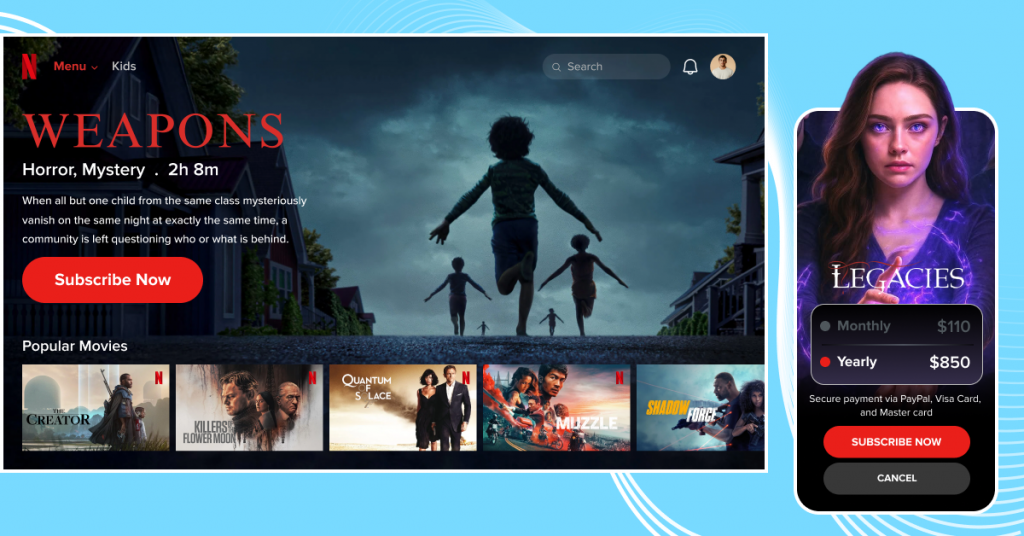
- A Netflix-like streaming service is a dedicated platform that delivers on-demand, personalized video content across multiple devices.
- This guide outlines the essential steps to launch and grow a profitable streaming website:
- Strategy: Finding a highly specific content niche and defining your target audience.
- Compliance: Securing proper distribution rights and video content licensing agreements.
- Technology: Selecting a scalable, white-label streaming solution with global CDN and DRM security.
- Monetization: Setting up flexible models like SVOD, AVOD, or hybrid plans.
- Launch: Deploying your platform and continuously optimizing based on analytics.
If you are thinking about creating a subscription streaming service like Netflix, it is a smart move to start strategizing as early as possible. Why? Because you’ll be stepping into a massive market that is projected to reach $416.8 billion by 2030, according to Grand View Research.
You might wonder but why the huge growth? Simply put, people like the convenience of watching what they want, when they want.
Whether you own content, run a media house, or create niche videos, an SVOD platform is what you need to monetize your content and build a subscriber base.
But launching a subscription streaming service needs careful planning. This blog guides you through the steps to create a streaming service like Netflix, starting from finding a niche to launching. It also gives you a cost estimate, the benefits and the key features for a successful streaming service.
Why Create a Subscription Streaming Service?
Consumer viewing habits have rapidly changed, and streaming has become a staple. One of the biggest reasons is convenience and the demand for personalized content. What this means for you as a content owner, media house or an enterprise is that you get complete control over content distribution and audience engagement while also generating a recurring revenue stream.
Here are some compelling reasons why you should create a streaming service like Netflix:
- Flexible Monetization: You don’t have to limit yourself to one type of model in video monetization platforms. You can offer blended monetization of subscriptions (SVOD), ads (AVOD), or pay-per-view tickets (TVOD). Furthermore, you can integrate a dedicated FAST channel platform to launch linear, ad-supported channels alongside your subscription tiers.
- Recurring revenue streams: You can create subscription tiers and get monthly or annual revenue streams instead of just relying on advertising revenue
- Direct audience relationship: Eliminates the dependency on third-party platform algorithms and lets you engage your audience directly.
- A branded viewing experience: Helps you create a business identity and strengthens customer loyalty
- Niche content monetization: Creating a Netflix-like platform isn’t just for movies. It works well for niche content creators as well, for areas like education, fitness, faith-based content, sports, entertainment, or professional training.
- Valuable audience insights: You get audience insights on viewer behavior, watch time, and content performance, which will help you optimize content based on it
- Fully Customizable
- Lifetime Ownership
- On-Premise/On-Cloud
- 100% White-label
- Zero Revenue Share
- Hire Developers
How to Start a Subscription Streaming Service Like Netflix in 7 Steps?
Here’s the exact roadmap to go from concept to a fully-launched subscription streaming service in 7 steps:
1. Identify Your Niche and Target Audience
2. Design the Perfect UI/UX
3. Build Your Video Library
4. Choose Your Monetization Model
5. Choose Your Platform Wisely
6: Choose Your Hosting
7: Launch Your Streaming Service
1. Identify Your Niche and Target Audience
For those who wonder how to start a subscription streaming service, identifying and understanding your target niche and audience is the first actual step.
A buzzing niche has constant traction and growth potential. You can monitor the buzz behind every niche, including key metrics like cumulative interest, region-based interest, related topics, and queries.
What To Do?
Use tools like Exploding Topics and Google Trends to measure audience interests over any niche over time. For example, use this term (categorical documentary) to track demographic interest in this niche. You can interpret the data yourself; 100 remains the peak interest in a specific date, time, and location, whereas 50 means half as popular.
After that?
Monitor social forums like Discord, Reddit, and Quora to know what your ideal audience sounds like. Look for specific terms and queries they search answers/solutions for; this might help you offer what someone is missing.
2. Design the Perfect UI/UX
An easily accessible subscription streaming service comprises all the necessary aspects and basic principles of UI/UX. Convenience is the cornerstone of any video streaming platform, and the interface that carries convenience is the differentiating factor.
Navigation is mandatory to achieve improved usability of the video streaming platform. Design navigation items in a way that you want an average viewer to explore. For example, if most users land on your platform to watch recently released movies, you can place a “New Releases” row at the top so they discover trending titles without scrolling.
3. Build Your Video Library
A successful streaming service relies on a solid video library. Regardless of whether you already own a content library or are about to create one, you need to look at two things:
One, you can create original content. But it does require a lot of time, resources, and effort. On the other hand, as the name implies, you needn’t worry about time-specific licensing issues with original content, as it holds no barriers for use.
Two, you can source/license your content from production houses or third-party content companies. While implementing this, you need to be careful about the underlying hidden fees and copyright issues.
ProTip: Start small with content and consider what you can afford while starting your own subscription streaming service. Remember, you can always scale up after.
4. Choose Your Monetization Model
With the perfect UI and content library ready, it’s time to figure out the proper monetization strategy. Consistent revenue is how you can scale up your subscription streaming business.
Like Netflix, content owners can deploy a subscription-based (SVOD) monetization model for generating recurring revenue. You can also use the advertising model (AVOD) that grants free content access with advertisements stitched within (pre-roll or mid-roll).
Apart from these;
* TVOD (Transactional Video-on-Demand): Pay-per-view pricing for specific content.
* Hybrid Model: Combination of all major video monetization models, including subscriptions with advertisements (SVOD+TVOD), advertisements with subscriptions (AVOD+SVOD), or a mix of all (SVOD+TVOD+AVOD). Combining on-demand libraries with linear TV streaming gives viewers scheduled viewing options, boosting engagement and ad revenue potential.
If you’re unsure how to monetize, comparing the SVOD and AVOD monetization models can clarify which approach fits your business goals.


5. Choose Your Platform Wisely
While starting your subscription streaming service, you may be tempted to launch across all platforms (mobile, web, and smart TV). Continue with this strategy at the peril of drying up your budget in a matter of weeks.
Before deciding, explore where most of your target audience consumes content. This way, you can launch your streaming service on that specific platform first, and then launch on other platforms.
If the bulk of your target audience consumes content on a smart TV, try launching the smart TV app version of your streaming service.
Why VPlayed?
VPlayed is a self-hosted, whenever-customizable video streaming solution that allows content owners, broadcasters, and media enterprises to launch their branded subscription streaming service.
It is always advisable to hire a professional platform that has tested and done things in the video streaming industry.
VPlayed swiftly addresses the requirements of businesses that wish to scale up their operations. Moreover, built-in video content management system, adaptive bitrate (ABR) streaming, faster time-to-market, and complete platform ownership are undeniable characteristics of the platform, VPlayed.
6. Choose Your Hosting
Your content library is ready, your platform choice is ready, and now you have to choose the infrastructure (On-premise or Cloud).
Get your choice wrong, and you will witness spiraling costs, buffering complaints, and a negative viewer experience. If you get it right, you can offer an impeccable streaming experience.
While choosing, you need to consider some factors: bandwidth requirements, target demographics, and budget constraints.
7. Launch Your Streaming Service
After building your content library, choosing your platform, and picking the infra set-up, it’s time to launch your subscription streaming service like n\Netflix. You can use your streaming platform for multiple testing strategies: measure streaming metrics, playback quality, and load testing.
Some content owners may focus on launching their streaming service on a single platform. Focusing on a single platform can simplify the development process and reduce costs. However, this approach may limit your potential viewer base.
Developing a cross-platform streaming service that ensures good visibility and the potential for more users. Consider your target audience and resources when deciding which platform(s) to launch on.
Upon satisfying results, you can start your subscription streaming service to a limited number of users (beta testing). Seek valuable insights and implement them to embellish the subscription streaming platform.
Key Features Required for Creating a Subscription Streaming Service
To build a premium subscription streaming platform that attracts and retains subscribers, you need a solid foundation of essential features. Here is a list of must-have key features:
- Multi-Device Support: Users need access to use your streaming service across different devices of their choice, like smartphones, tablets, smart TVs, and web browsers.
- Adaptive Bitrate Streaming: Users expect little to no buffering, and for that, your streaming service should adjust its video quality according to the viewer’s network condition.
- Content Delivery Network (CDN): A global network of servers that delivers your video files from the closest geographic location. This ensures instant loading.
- Video CMS: A central dashboard to easily organize and categorize your playlist. A scheduling feature will also make it much easier to manage posting and managing
- Digital Rights Management (DRM): This protects your videos from digital piracy and illegal downloads. It makes sure only authorized users can access your content
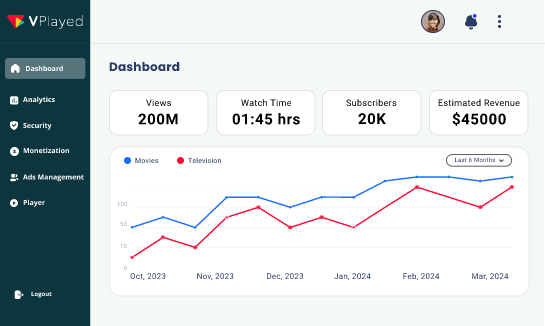
- Analytics: Clear data that shows watch time and popular content, as well as drop-off rates to help optimize your content
Benefits of Starting Your Own Subscription Streaming Service with VPlayed
Let us break down the benefits of employing VPlayed to create your own streaming service in the growing market:
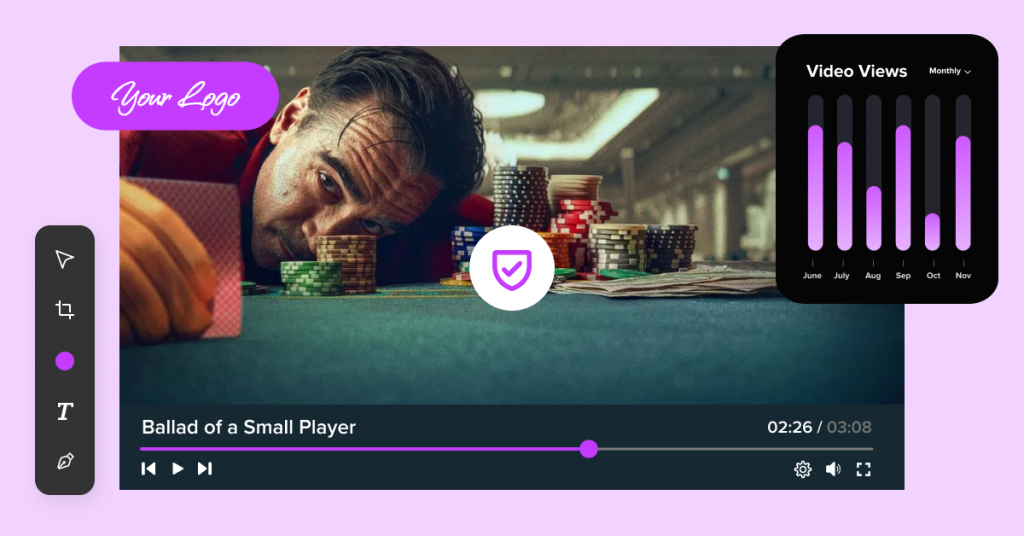
1. Endless Customization Options
Generic platforms modify your vision to suit their infrastructure and characteristics; however, VPlayed puts creative control in your hands with comprehensive customization capabilities. Unlimited customization freedom means your subscription streaming service doesn’t resonate with someone else’s vision. You can customize color schemes, layouts, user flows, and navigation to reflect your brand.
2. Lifetime Ownership
How about incorporating a platform with no recurring fees? That’s possible with VPlayed. With just a one-time license fee, you can own the streaming platform forever. While you own your streaming platform, you also enjoy complete control over the revenue.
Choosing a white label streaming platform gives you lifetime ownership, allowing you to scale and customize your streaming service on your own terms.
3. Third-Party Integrations
VPlayed’s flexibility of supporting 200+ integrations means that you offer your viewers a connected subscription streaming experience. Google Analytics for valuable insights, Mailchimp for targeted marketing campaigns, and Stripe for payment gateways. You can integrate more tools to deliver an impeccable streaming experience.
4. Global CDN
This enhances the responsiveness of your streaming service by serving user requests from the nearby video streaming server. It decentralizes the traffic from the host system, thereby reducing the latency issues.
VPlayed uses a global CDN to bypass one of video streaming’s biggest challenges: latency. The multiple, distributed servers cache the content while the platform minimizes load times, thereby ensuring reliable content delivery even during peak traffic.
Avoiding slow load times should be the top priority of your subscription streaming service, which VPlayed’s global CDN helps you realize with immediate effect.
5. Security Protocols
Your content and user information are the goldmine for your subscription streaming service. Compromising on both aspects can be fatal for your streaming business.
VPlayed’s built-in digital rights management (DRM) forbids unauthorized copying of video content (like taking screenshots). With encryption, token security, domain restrictions, and SSL certification, VPlayed safeguards your video library to its maximum capacity!
6. Video CMS
The Video Content Management System (video CMS) is the engine of your subscription streaming service. This is where you can manage, organize, and categorize video content.
VPlayed’s video CMS helps you add metadata to your video assets, video sitemaps to improve discoverability, and add performance reports of content.
7. HLS Video Player
The video player is equipped with adaptive bitrate streaming (ABR) technology to optimize the playback, depending on the receiving device’s internet bandwidth. VPlayed’s HLS video player facilitates buffer-free streaming, enhancing the viewer experience.
8. Video Analytics
They assist in real-time monitoring of audience viewing trends, from analyzing previous data to geographic viewing patterns that answer business-related questions for upscaling growth.
Make business decisions based on the authentic data, ensuring content strategy remains relevant for the audience. Monitor platform performance with analytics reports time-to-time, making important platform optimizations, infrastructure decisions, and feature enhancements.
Check out the essential OTT platform features required to launch and scale your streaming service.
How Much Does It Cost to build a Subscription Streaming Service?
Starting a subscription streaming service like Netflix can cost anywhere from $15,000 to over $100,000, or even more, depending on the functionality and sophistication. A basic platform with limited features might cost between $15,000 and $40,000, while a complex, feature-rich app could cost upwards of $100,000.
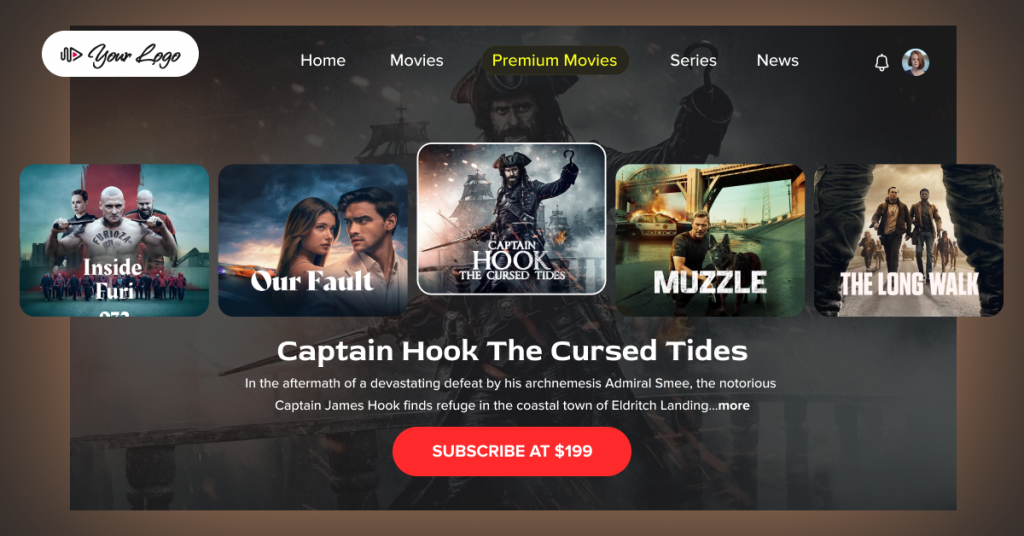
But an alternative and more affordable option is to use a white-label solution, where you can build your subscription streaming service with pre-built software that can be customized to your needs.
A white-label solution costs between $50,000 to $75,000 and gives you flexibility in design, functionality and integrations at a fraction of the cost of developing from scratch.
Here are some factors that affect the cost:
- Platform (Web, Mobile, Smart TV): Developing for multiple platforms will increase the cost. A single platform app will cost around $10,000 to $25,000, while a multi-platform subscription streaming service will cost more than $50,000.
- Features: Advanced features like personalized recommendations, offline viewing and multi-language support add to the cost.
- Licensing and Content Acquisition: If you plan to start a subscription streaming service, purchasing rights will cost between $1,000 to $50,000 or more depending on the content.
- Storage and Bandwidth: Depending on the user volume, you will need sufficient cloud storage and bandwidth which will cost $5,000 to $15,000 annually.
All in all, using a customizable white-label solution gives you the balance of affordability and flexibility to launch a streaming service without the big cost of building from scratch. If you are thinking of White label streaming solution then VPlayed can provide the platform to you to create a streaming service.
To Sum Up:
This concludes our discussion on the quest to create a subscription streaming service like Netflix, from identifying your target niche to building a content library, and choosing your monetization model to picking the right infrastructure setup.
Creating a subscription streaming service requires careful planning, from understanding your audience to implementing robust technology infrastructure.
While the subscription streaming market is bustling with competition, there are still opportunities for services that offer unique value positions and cater to underserved audiences.
Whether you choose to launch a new subscription streaming service or upgrade an existing one, the key is to start with a clear vision and remain agile.
- Request Demo Book a Live, Personalized Demo
- Contact Sales Reach Out to Our OTT Experts
Frequently Asked Questions (FAQ):
1. How Can I Create a Subscription Streaming Service Like Netflix?
To create a subscription streaming service like Netflix checkout the step by step procedure below:
1. Identify Your Niche and Target Audience
2. Choose Your Interface
3. Build Your Video Library
4. Choose Your Monetization Model
5. Choose Your Platform Wisely
6. Pick Your Infrastructure Setup
7. Launch Your Streaming Service
2. How to Choose the Perfect OTT Provider to Start a Streaming Service?
Choosing the right OTT provider for your streaming service means comparing features, scalability, monetization options and device compatibility. Once you have done that, consider cost, customer support, security, and user feedback.
3. What Are the Key Features to Consider When Building a Subscription-Based Streaming Service?
The key features that should be on the consideration list are security, flexible membership management, device compatibility, multiple monetization models and secure payment system. Also you need to have a smooth user interface with easy navigation and support for high quality video streaming. Don’t forget to include analytics to track viewer engagement.
4. How Much Does It Cost to Build a Streaming Service?
Cost depends on the size of the project, infrastructure setup, licensing, maintenance and marketing. Smaller platforms with limited features may cost around $30,000 to $50,000 and full scale service with advanced features could go beyond $75,000. Ongoing costs for updates, customer support and cloud storage will add up to the cost.
5. Can I Customize Streaming Service’s User Interface and Branding?
Yes, you can fully customize your platform’s UI with colors, logos, fonts and unique branding elements like watermarks through top providers like VPlayed. In fact a customized UI will strengthen your brand identity and user satisfaction to a much greater extent.

Senior Analyst specializing in Online video platforms, OTT, VOD, and white label video streaming solutions. Expert in analyzing industry trends, technologies, and monetization strategies to help businesses optimize their streaming services. Passionate about innovation and the evolving digital video landscape.