Summarize this article in:


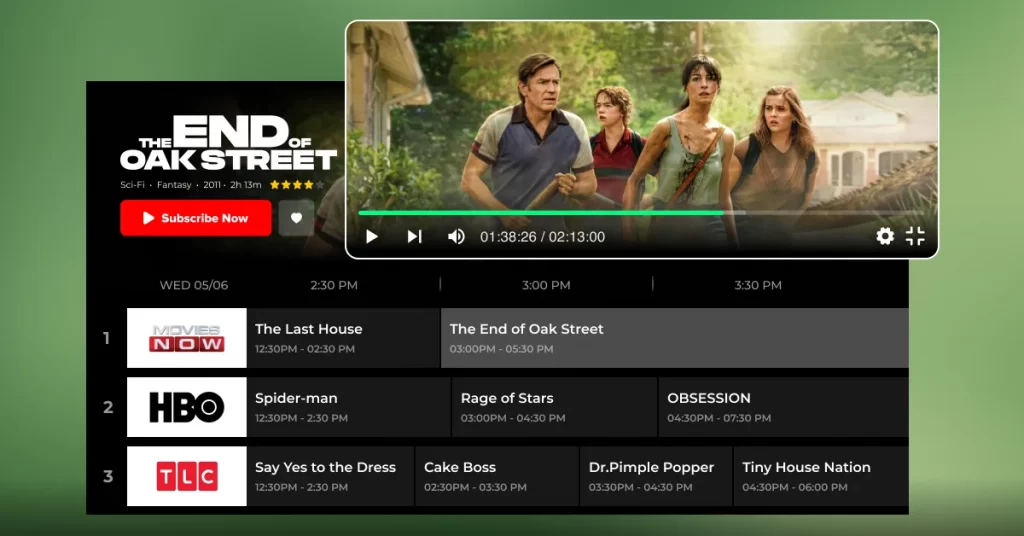
Imagine you are going live with a flawless broadcast, but your viewers haven’t tuned in because the schedule shows the wrong title. This shows the importance of the Electronic Program Guide (EPG) for your channel.
EPG is a TV program guide that shows the audience what is playing now and what is upcoming. It is like a bridge between video content providers and the audience that makes content discovery easier.
According to Growth Market Reports, the global EPG market will reach $2.97 billion by 2033.
Media enterprises, OTT businesses, and TV operators depend on an accurate cloud playout solution to manage EPG schedules. This blog will explain what EPG is, how it works, and its use cases. Let’s get started.
- Fully Customizable
- Lifetime Ownership
- On-Premise/On-Cloud
- 100% White-label
- Zero Revenue Share
- Hire Developers
What is an Electronic Program Guide (EPG)?
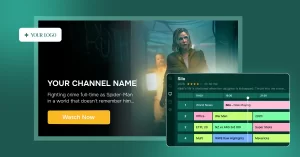
EPG stands for Electronic Program Guide, which is an on-screen interactive menu that shows the TV program guide. EPG meaning refers to organizing current and upcoming broadcasts into a visual schedule.
EPG systems give viewers instant channel details on what was aired recently, what is playing now, and upcoming shows. Modern playout platforms use structured metadata like titles, genres, ratings, and runtimes to make it easier for audiences to discover and engage with the content.
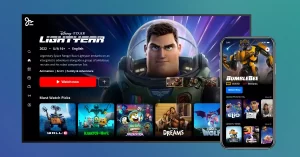
EPG technologies extend far beyond traditional television and set-top boxes. They are used across FAST channels and OTT TV apps as the ultimate content discovery engine.
How EPG Systems Work
Consider modern EPG systems as automated data pipelines that perpetually convert raw scheduling data into on-screen menus for seamless content discovery. Here is a detailed view of how the delivery process functions: Content → EPG Data → EPG System → Streaming/TV Platform → Viewer
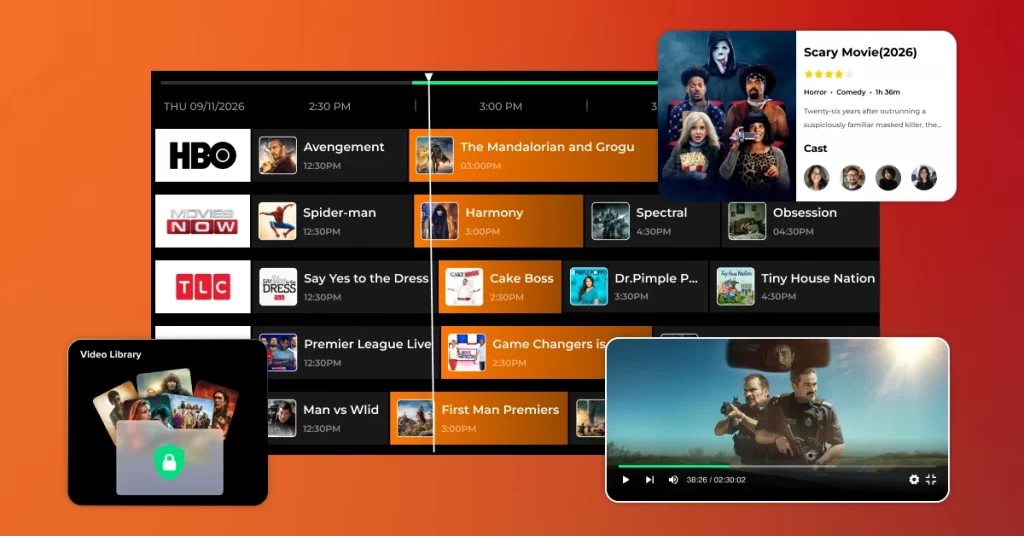
Content
The process begins with the video content management systems. Media operators and broadcasters come up with linear lineups based on the video library. They use them to arrange shows and advertisements into strategic time slots to increase viewer retention.
EPG Data
When the lineup is finalized, the schedule is set along with metadata for each video. Metadata includes key details such as title, description, airing date and time, cast details, ratings, genres, and thumbnails.
EPG System
The EPG software is ingested with this data and which transales the data into media formats like XMLTV, JSON, or M3U files. Advanced EPG services automate updates using secure APIs and real-time cloud synchronization feeds.
This maintains the schedule accuracy of live shows, extended sports runtimes, and breaking news overrides synchronized instantly across all devices.
Streaming/TV Platform
Once scheduled the headend, OTT solution fetches the streams at regular intervals. The EPG system auto-adjusts the schedules based on local time zones, regional programming compliance, if any, and multi-screen delivery requirements without any manual intervention.
Viewer
Finally, the platform delivers the data as an interactive grid interface on the user’s screen. Viewers can use it to navigate through program listings, preview upcoming shows, set reminders, catch-up feeds, or just tune in with a single click.
Must Have Features of Electronic Program Guide’s
Modern EPG software comes with functional capabilities that optimize stream management and viewing. Here are the core features that an EPG guide contains:
Program Scheduling
Program scheduling enables media operators to organize linear broadcasts and ad insertion points. It lets them schedule upcoming broadcasts days or even weeks ahead, and since it is automated, it keeps human operational errors at bay.
This maintains a seamless continuity for streaming channels 24/7 and optimizes channel workflows for peak viewer times.
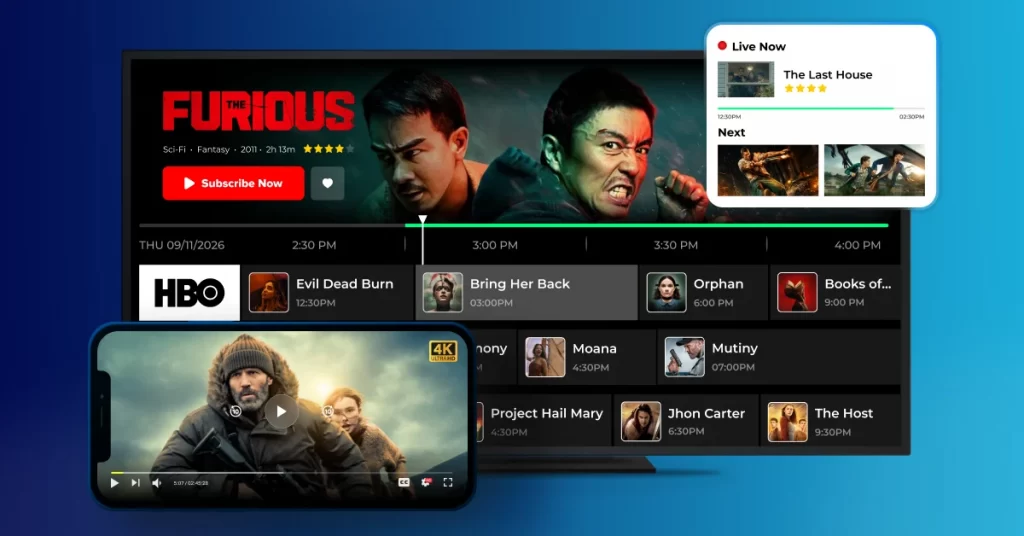
Current and Upcoming Programs
This displays the now/next programs, giving viewers visibility into what program is currently airing and what comes immediately after. This clear visual timeline helps audiences create a viewing habit. Ultimately, this reduces bounce rates, and viewer retention remains high across live channels.
Program Metadata
Rich program metadata displays show summaries, cast members, episode titles, ratings, and thumbnails. Structured metadata feeds drive instant indexing. This allows platforms to fetch content faster, which improves brand credibility and viewer discovery across all the apps.
Channel Listings
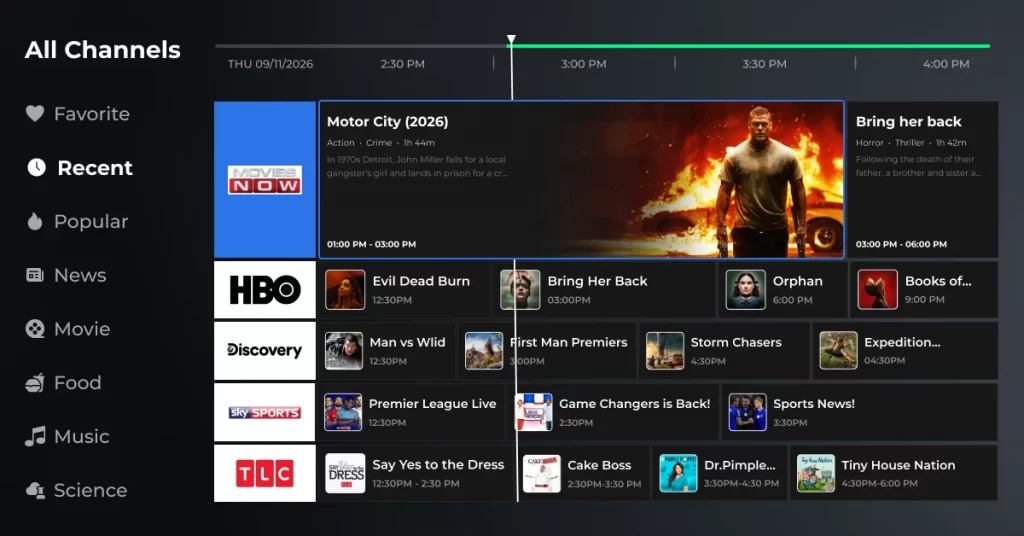
Channel listings make a compilation of all available broadcast channels into a visual, easy-to-navigate grid layout. This allows viewers to scroll through it vertically while scanning schedules of multi-channel programs horizontally.
Structured channel organization removes confusion and makes content discovery easy for diverse audiences across platforms.
Program Search
There are built-in program search tools that allow users to search for titles, actors, or keywords in a matter of seconds. Advanced search functionality depends on indexing engines to fetch results.
When the search is quick and the content is quickly discoverable, it significantly reduces search friction and keeps audiences active on the platform. Also, integrated personalized recommendations assess audience viewing habits to suggest personalized titles.
Genre-Based Navigation
Another key navigation method is genre-based, which can be based on specific categories such as news, sports, drama, or documentaries.
Filtering linear content streams by genres enables users to discover specific shows without having to scan through full lineups. This customized navigation increases user engagement and retains viewers who look for niche content.
Catch-Up TV Integration
Catch-up TV integration allows time-shifted viewing directly from the Electronic Program Guide menu. This lets viewers just scroll back and replay any missed broadcasts or restart any live streams immediately.
It is a flexible functionality that extends content value and keeps viewers engaged longer without needing any external playback software.
Multi-Channel Support
Multi-channel support enables platform owners to handle and stream different channel lineups from a single centralized dashboard. It allows broadcasters to scale as many channel lineups as they require without any slow loading times.
EPG delivery is accurate across multi-channel operations with smooth data synchronization. Viewers can also set reminders and alerts so they never miss their favorite programs.
Multi-Device Compatibility
Multi-device compatibility offers a consistent EPG layout across multiple devices such as smart TVs, connected TV devices, mobile apps, and web browsers. It uses responsive UI layouts to adapt to different screen sizes.
Also, built-in interactive elements let viewers customize watchlists instantly. This provides a uniform schedule interface and maintains brand consistency on every screen.


Electronic Program Guide & Streaming Types
EPG technology is the central pillar of digital video distribution. It converts raw video streams into structured, discoverable channels across internet television ecosystems. Here’s how EPG enhances modern streaming platforms:
EPG for OTT
Many media operators integrate EPG for OTT, and it helps them merge live linear feeds with an on-demand video library and bring together a complete service offering. The EPG guide helps users navigate from a scheduled broadcast to VOD episodes, catch-up replays, or even purchase premium content.
With OTT, the improved user experience and reduced user fatigue helps retain users and increase subscription revenue. The seamless switching between live and on-demand content drives total video consumption per session.
EPG for FAST Channel
An accurate schedule of shows is critical for Free Ad-Supported Streaming TV (FAST) services to provide a lean-back cable experience. A service needs a dynamic EPG to arrange a linear stream in an uninterrupted time grid to facilitate natural channel surfing.
In addition, structured metadata helps FAST channel platform aggregators to place fully dynamic ads to maximize ad fill rates and CPM. Seamless ad positioning ensures user engagement is never impacted and revenue is generated continuously.
EPG for Online TV
An EPG for TV serves as the main navigation hub for any online TV service across multiple platforms e.g. web browsers and mobile devices. It consolidates multiple live feeds in a central interface, and users can set reminders and manage their watchlists.
Real-time cloud synchronization helps maintain accurate broadcast schedules across multiple time zones. Online TV channel operators are able to deliver an experience that provides high user satisfaction and ensures that viewers continue to engage with their services.
EPG for Linear Streaming
Linear streaming platforms rely on EPG software to create frame-accurate programming schedules to deliver 24/7 streaming services. Automated schedule feeds enable seamless broadcast streams that can be accessed at all times.
This precise programming avoids scheduling conflicts. It ensures live sports, news, and events are aligned across different streaming services. Schedule management also avoids broadcasting interruptions and enhances video broadcasting quality to gain and retain trust of online TV viewers.
VPlayed Cloud Playout: Streamlining Streaming Content Delivery
VPlayed’s playout platform enables content owners to manage linear channels seamlessly. It simplifies media ingestion, automated scheduling, and multi-device delivery all from one central cloud infrastructure.
Scalable Delivery
VPlayed has cloud native infrastructure that allows media broadcasters to scale their channel counts rapidly without any physical hardware limitations. The flexible architecture can dynamically handle huge viewer surges during high-profile live sports events or breaking news feeds with no downtime,
- Global CDN reach: Delivers live feeds worldwide with ultra-low latency and adaptive bitrate performance.
- Resource optimization: Removes the need for expensive on-premise hardware costs by replacing it with cloud-based encoding systems.
Multi-Platform
The playout system delivers frame-accurate video feeds across diverse endpoints simultaneously. Content owners distribute linear streams to FAST platforms, OTT apps and Smart TVs without rebuilding schedules for every separate device delivery route.
- Unified workflow: Publishes schedule once and sends program lineups to all platforms instantly.
- Cross-device compatibility: Maintains uniform UI across all devices such as mobile, web, and television screens to protect brand identity and improve user retention.
Automation for Efficiency
Automated playlist generation eliminates repetitive manual labour for busy content owners and media operators. It allows broadcasters to set up weekly schedules and ad insertion points in advance. This helps keep linear channels running smoothly without manual intervention.
- Smart scheduling: Transforms existing VOD libraries into 24/7 linear channels seamlessly.
- Error reduction: Keeps human errors at bay during round-the-clock channel playback.
Real-time Playout and Metadata Updates
The EPG guide is updated across all streaming platforms. Live schedules or unexpected program overruns override program listings without any delay and preserve total electronic program guide accuracy on every device as viewers tune in.
- API synchronization: Pushes real-time schedule changes instantly to maintain accurate broadcasts.
- Dynamic metadata handling: Updates show synopsis, ratings, and thumbnails spontaneously.
Conclusion
An Electronic Program Guide (EPG) is integral for modern streaming services as it serves as the primary means for finding live TV and FAST channels as well as OTT offerings.
EPG software converts video into structured data by providing accurate schedules and metadata for video libraries that can be displayed across a multitude of devices. User engagement and retention on the platform are improved by the addition of features such as catch-up TV, genre-based navigation, and search.
The integration of VPlayed’s cloud playout service simplifies playlist scheduling for automated distribution of video across multiple services and updates of metadata in real time. Having solid EPG technology provides assurance of accurate delivery with no time conflicts and increases viewer satisfaction in the competitive market of digital streaming.
- Request Demo Book a Live, Personalized Demo
- Contact Sales Reach Out to Our OTT Experts

Blogger & OTT Expert at VPlayed. Interested in digging deep into video streaming media tools, blog, discuss and share views on the legal OTT solution' & latest technologies tips, and tricks. Also passionate about photography loves to capture the pure essence of life.